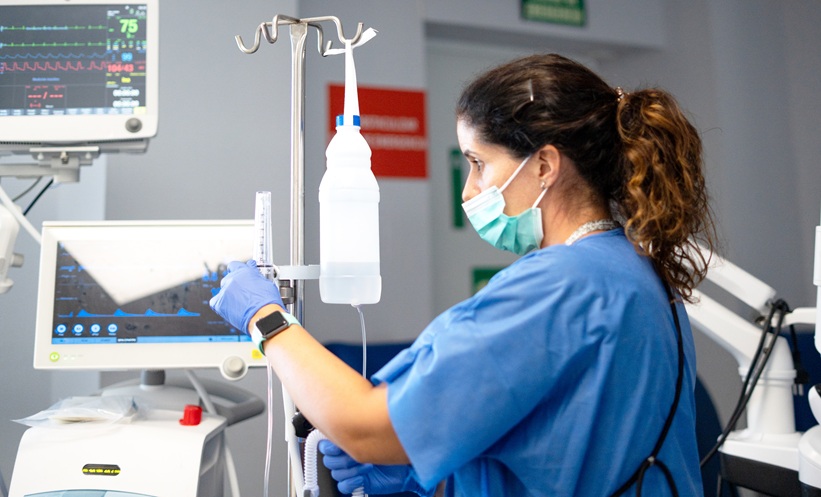
ICU ALARM fatigue may be reduced by targeting brief ventilator alerts, which accounted for nearly 80% of events.
A prospective audit of mechanical ventilator alarms in a medical intensive care unit (ICU) found that alarm frequency was nearly four times higher than previously published benchmarks. The findings, presented at CHEST 2026, suggest that incorporating alarm duration into notification protocols could reduce unnecessary alerts and improve alarm management.
ICU Alarm Fatigue Exceeds Published Benchmarks
Researchers prospectively analyzed electronically recorded ventilator alarms across nine ICU beds between May 18 and June 17, 2026. The audit included 58 ventilator-days, with events categorized by priority, type, duration, and clinical shift.
Across 4,998 recorded events, the mean alarm rate was 86.2 per ventilator-day, compared with a published benchmark of 22.5. The median was 58 alarms per ventilator-day, although individual daily counts ranged from one to 499.
High-priority alarms accounted for 68.8% of events, followed by low-priority (17.6%) and medium-priority alarms (13.6%).
Most Ventilator Alarms Lasted Under 10 Seconds
Despite the high frequency of alerts, 78.8% resolved within 10 seconds, and only 7.1% persisted beyond 30 seconds.
Among alarms with measurable duration, the median was just 4 seconds. High-priority alarms were particularly brief, lasting a median of 3 seconds, compared with 5 seconds for medium-priority and 7 seconds for low-priority events.
Airway Pressure High alarms accounted for nearly half of all events (49.4%), with a median duration of 2 seconds. Meanwhile, 64% of disconnection alarms were instantaneous, and Respiratory Rate High alarms had the longest median duration at 17 seconds.
Alarm frequency also varied by shift. Evening shifts accounted for 40.8% of events, compared with 32.8% during the day and 26.4% overnight.
Targeted Changes Could Reduce ICU Alarm Fatigue
The findings highlight opportunities to refine ventilator alarm thresholds without compromising detection of clinically significant events.
Proposed interventions include introducing delays of at least 5 seconds for Airway Pressure High alarms, confirming disconnection events before triggering alerts, and individualizing tidal volume alarm limits at admission.
Targeting alarms lasting 10 seconds or less could theoretically reduce the average burden from 86.2 to approximately 18 alarms per ventilator-day.
However, these interventions remain proposed rather than clinically validated. Further evaluation is needed to establish whether duration-based alarm management can reduce ICU alarm fatigue while maintaining patient safety.
Reference
Anand DP et al. Reducing alarm fatigue in a medical ICU: a quality improvement initiative in a high-volume tertiary hospital. CHEST Annual Meeting, October 18–21, 2026.