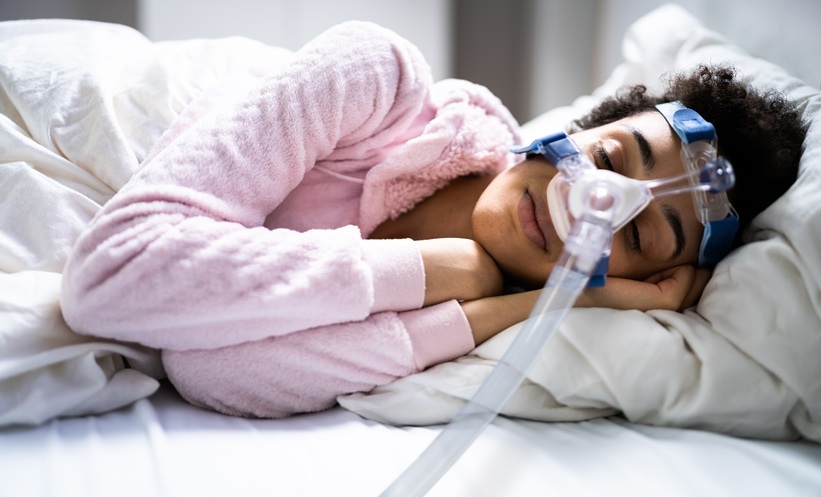
Greater hypoxic burden was independently associated with increased systemic inflammation in patients with obstructive sleep apnoea (OSA), while reduced inspiratory muscle strength was linked to greater nocturnal hypoxaemia and higher inflammatory marker levels, according to a multicentre study.
Assessing Hypoxic Burden and Muscle Strength
Researchers conducted a cross-sectional study involving 137 adults with suspected OSA recruited from five specialist centres. Participants underwent overnight polysomnography to assess sleep-related breathing events and calculate hypoxic burden, which measured the cumulative depth and duration of oxygen desaturation during sleep.
Fasting blood samples were analysed for inflammatory biomarkers, including C-reactive protein (CRP), interleukin-6, and tumour necrosis factor-alpha. Respiratory muscle strength was assessed by measuring maximal inspiratory pressure (MIP) and maximal expiratory pressure (MEP).
Participants were categorised as having mild, moderate, or severe OSA according to their Apnoea-Hypopnoea Index.
Greater Severity Linked to Inflammation
Hypoxic burden increased significantly with OSA severity, rising from a mean of 22.0 min·% in mild disease to 54.0 min·% in moderate disease and 110.5 min·% in severe disease.
Inflammatory markers also increased with disease severity. Mean CRP levels rose from 3.4 mg/L in mild OSA to 8.1 mg/L in severe OSA, while interleukin-6 increased from 2.6 pg/mL to 6.2 pg/mL.
Respiratory muscle strength declined. Multivariable analysis found that higher body mass index, older age, greater daytime sleepiness, and lower MIP were independently associated with greater hypoxic burden.
Higher CRP levels were independently associated with greater hypoxic burden, higher body mass index, older age, and lower MIP.
Further Research Needed
Researchers concluded that greater hypoxic burden was independently associated with systemic inflammation, while reduced inspiratory muscle strength was associated with both greater hypoxaemia and higher CRP levels. They suggested that respiratory muscle strength could complement the assessment of OSA severity.
However, the cross-sectional design prevents conclusions about causation and measurements were based on a single night of polysomnography, and respiratory muscle assessments did not directly measure diaphragmatic function or fatigue.
Researchers called for longitudinal studies to clarify the relationships between hypoxic burden, systemic inflammation, and respiratory muscle dysfunction.
Reference
Tariq A et al. Hypoxic burden, systemic inflammation and respiratory muscle dysfunction in obstructive sleep apnoea: a multicentre cross-sectional study. BMJ Open Respir Res.2026.13(1).