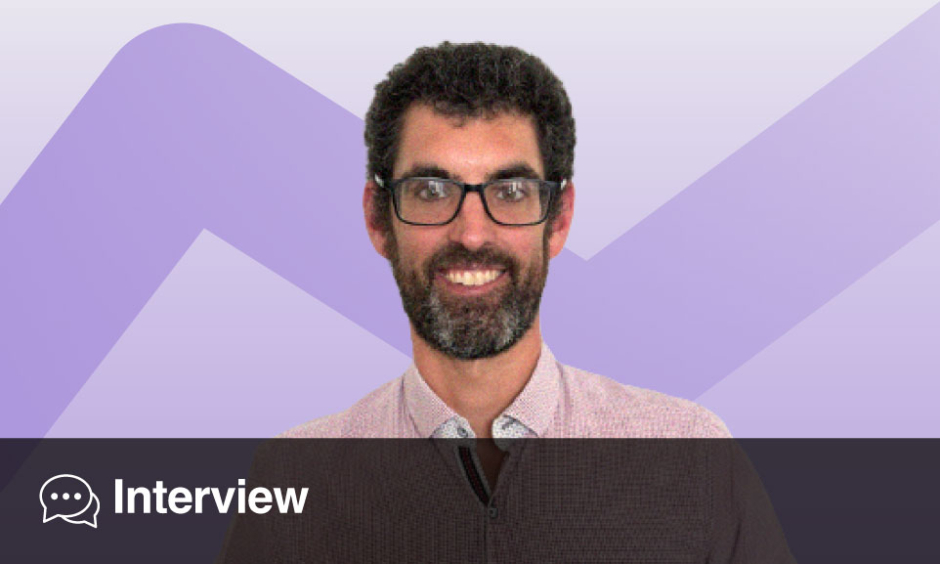
Congratulations on your receipt of one of the ‘Rising Star’ awards at the European Association for the Study of Diabetes (EASD) Annual Meeting 2026. What does it mean for you to have received this prestigious award at this stage of your career?
For me, it means two things. Firstly, it’s positive reinforcement that you’re doing good science. We sometimes live in relatively small worlds, so it means a lot to have it externally recognised that you’ve made a difference to research, to clinical practice, and, therefore, to patients, which is really what gets me out of bed in the morning.
Secondly, the landscape of research funding is difficult right now, and when you’re a very small fish in a big pond, recognition really helps. When you introduce yourself, people have some idea of who you are, which helps collaborations flow rather than having to start from the beginning. Everyone has been incredibly kind, from across the field, the wider clinical world, and locally in the hospital. There’s been a real sense of warmth and positivity.
Regarding the work that went into your receipt of this award, what questions were you looking to answer when planning the research, and how did this translate into the results?
I’m a clinical academic, and, in the UK, you come to research relatively late in your training; I was finding my feet as an NHS registrar in 2015. My interest in adult-onset Type 1 diabetes (T1D) was a collision of opportunity and serendipity: the recent development of a T1D genetic risk score, which captures genetic predisposition as a single, easily interpretable number, and UK Biobank, the first big, internationally available cohort with genetic and clinical outcome data. For the first time, I could study T1D across all ages using a biomarker that was agnostic of clinician-reported diabetes type.
T1D in adults is far more similar than different to T1D in children. The key word, which has nothing to do with the disease itself, is context. Around 95% of diabetes in children is T1D. That completely flips in adults over 30 years, where there is less than a 5% chance that new diabetes is T1D. It’s not that T1D in adults is significantly different; it’s just much harder to spot, so misclassification inevitably occurs. That matters for patients, and for research. Data from Scotland showed that around one in six adults diagnosed with and managing T1D over the age of 30 years were reclassified as not having T1D when biomarkers were measured. If one in six of your cohort don’t have the disease you think you’re studying, you’re not getting a true phenotype.
My first work showed that over half of T1D develops in adults; we perhaps hadn’t realised the burden of adult-onset disease, again because of this problem of recognition. In my PhD, I took that forward using biomarker definitions. The StartRight study, the brainchild of my colleague Angus Jones, University of Exeter, UK, recruited 1,800 adults with diabetes from across the UK, irrespective of clinician-reported type, allowing us to define T1D as two or more positive islet autoantibodies.
Defined this way, T1D presented severely in both young adults (18–35 years) and older adults (>35 years): roughly 20% presented in diabetic ketoacidosis, over 95% had osmotic symptoms, and mean HbA1c was over 100 mmol/mol. Yet those diagnosed older were far less likely to be admitted to hospital or to start insulin initially. Over 3 years, C-peptide, a surrogate marker of insulin production, halved roughly every 1.4 years: a loss of 30–40% a year. That’s slightly slower than in children (around 1 year), but far faster than in Type 2 diabetes (T2D) (well over 10 years).
Meanwhile, the UK-wide ADDRESS-2 study showed that, in clinically diagnosed T1D, antibody positivity fell from over 90% in those diagnosed as children to around 70% in those diagnosed at 50 years. Either autoantibodies are less common in older-onset disease, which would matter for early detection, or the drop reflected the one in six who were misclassified. Genetics gave us the answer. Antibody-negative children had the same elevated T1D genetic risk as antibody-positive children, so all had T1D. Antibody-negative adults, however, had intermediate risk, suggesting a mixture of T1D and non-T1D. We found a handful of monogenic cases, and the rest were highly likely to be atypical T2D; follow-up has since shown that some retain C-peptide, consistent with non-autoimmune diabetes. Excluding misclassified cases, around 90% of adults with T1D are antibody positive, just like children. This work directly informed the joint American Diabetes Association (ADA)/EASD guidance, which recommends measuring autoantibodies in all adults clinically diagnosed with T1D and reconsidering the diagnosis where they’re negative as we showed many of these individuals can successfully stop insulin.
So, adult-onset T1D is common and, when robustly defined, far more similar than different to childhood-onset disease, with no difference across adult ages in genetics, progression, or severity at diagnosis. The antibodies do differ, though: adults are far more likely to be single antibody positive, and around 95% of those who are positive are glutamic acid decarboxylase positive.
Given these findings, how well is adult-onset T1D recognised amongst clinicians? What needs to be done before these key insights are well understood nationally and internationally?
This isn’t a fundamentally different disease. Recent work has shown that the biology of T1D differs significantly in very young children, under around 7–10 years of age. My feeling is that once you remove them, you don’t see significant differences between older children, younger adults, and older adults. There are subtle genetic differences, mostly because the highest-risk human leukocyte antigens (HLA) types, such as HLA-DR3/DR4, are less common in adults. That makes sense, as people carrying them tend to develop the disease younger.
There’s also a circularity problem. If clinicians’ T1D cohorts include people who progress slowly because they don’t actually have T1D, it becomes a self-fulfilling prophecy that adult-onset T1D isn’t aggressive. My key message is that it’s hard; you should challenge your diagnosis. Measure autoantibodies in everyone, put a question mark against the diagnosis where they’re negative, and have a low threshold for measuring C-peptide at 3 years’ duration, because retained C-peptide can inform management.
It works the other way around too. Around 40% of T1D with onset over the age of 30 years isn’t picked up at diagnosis. Because it’s an autoimmune disease driving insulin deficiency, the disease dictates the treatment. If someone diagnosed with T2D progresses to insulin within 3 years, measure antibodies; if they’re positive, treat them as T1D. If they’re negative, they probably have a more progressive form of T2D.
In both of the above scenarios, rapid insulin requirement or clinical T1D suspicion, the prior likelihood of T1D is high, so an antibody is confirmatory. But in adults who likely don’t have T1D, even a highly specific test has a positive predictive value a long way from 100%. The general rule in medicine is: don’t do a test unless it will change your management. A positive antibody in rapidly progressing T2D, or a negative one in presumed T1D, changes management. But in someone with T2D who is behaving as expected, a positive antibody will just cloud your judgement, so don’t do the test.
What’s next for you and the team at the University of Exeter? What would you like the team to have achieved over the next 5–10 years?
The world is changing, and it’s really exciting. We’ve seen changes in T1D across three areas: fantastic new technology; real progress in cell replacement therapy, such as islet transplants and stem cell-derived islets; and therapies for T1D delay and prevention, which is my area of interest.
Picking up T1D before symptoms develop has two benefits. Firstly, around one in five adults and two in five children present with life-threatening diabetic ketoacidosis; if individuals know they have the disease, you can monitor them and start treatment early and prevent this. Secondly, we now have licensed immune therapies that delay progression. For the first time, rather than replacing the missing hormone, we have drugs that dampen down the autoimmune process. We’re hopeful that, like buses, now one has arrived, more will follow, and we’ll have a suite of options to keep people in remission and off insulin, or to slow progression in those already diagnosed.
Most work to date has targeted children, who are easier to identify and face a longer lifetime with diabetes. But half of T1D develops in adults, and it progresses rapidly, so preventing severe presentations matters for them too. I’m looking at the natural history: why similar genetic risk leads to disease at 5 years of age in some people and 55 years in others, and whether adults have had autoantibodies for decades or are seroconverting in adulthood. That matters for how we detect, monitor, and risk-stratify. Dysglycaemia is rare and highly pathological in children but very common in adults: by some international definitions, 40% of adults with an average age of 40 years have mildly elevated blood glucose, so its predictive value is likely to be different.
There are also logistical challenges. Teplizumab is licensed in Europe and the UK and approved by the National Institute for Health and Care Excellence (NICE), so we’re working out how to deliver it in the NHS and how to find people to benefit: who to test first, how to test well people who aren’t necessarily your patients, and how to set up remote testing with appropriate thresholds and assays. You want to be very specific, targeting those at the very highest risk. The flip side of early detection is anxiety. Work has shown that it tempers over time in people who go on to develop T1D, but we don’t want to cause anxiety in people who never would have developed it. There’s a lot to work out.
While the subject of your ‘Rising Star’ talk, adult-onset T1D, was a relatively niche topic at EASD 2026, T1D itself was a major theme. Were there sessions in T1D that specifically stood out to you as especially important or impactful?
In my area, there’s a really collaborative group of researchers worldwide working towards unified strategies for identification, early management, and new therapies to delay disease progression. It was really nice to see that represented across the Congress, from the Claude Bernard prize lecture from Annete-Gabriele Ziegler, Helmholtz Munich, Oberschleißheim, Germany, through the prevention sessions, to some of the short oral presentations, which had a lot of great data on different testing strategies. This is going mainstream, and that was reflected in the airtime it got. I hate using buzzwords, but the energy was fantastic.
A known hurdle in the field of diabetes research is the translation of research into improved clinical outcomes for patients. As a physician scientist, where do you currently see the greatest potential to improve patients’ quality of life?
For me, the best part is that this field is transitioning from early adopters and relatively niche research into clinical translation, which means clinical benefit for patients across Europe and the world. We heard at EASD from colleagues in the USA who have treated more than 50 patients clinically. That’s more than 50 people whose disease has been slowed, and that number is only going to grow. The more people we test, the more get treatment, the fewer have a severe presentation, and the more can potentially take part in trials to move the field forward.
Classification is another area. We’ve shown that when antibody-negative results are fed back to clinicians, with support to consider stopping insulin, some individuals can stop insulin with no deterioration in glycaemic control at 2 years. In my practice, if antibody-negative individuals have retained C-peptide for 3 years with little progression, I’m probably reclassifying them as having non-autoimmune diabetes and moving them on to T2D medications. Five or 10 years ago, insulin was a very reasonable treatment for T2D diabetes. Now we have glucagon-like peptide-1 receptor agonists and sodium‑glucose cotransporter‑2 (SGLT2) inhibitors, which are fantastic drugs for T2D, but which we’re cautious with in T1D. This means it’s important to reclassify those who don’t actually have T1D so they can benefit from these therapies.
Ultimately, this work is starting to benefit patients, and that’s the reason we do all of this.