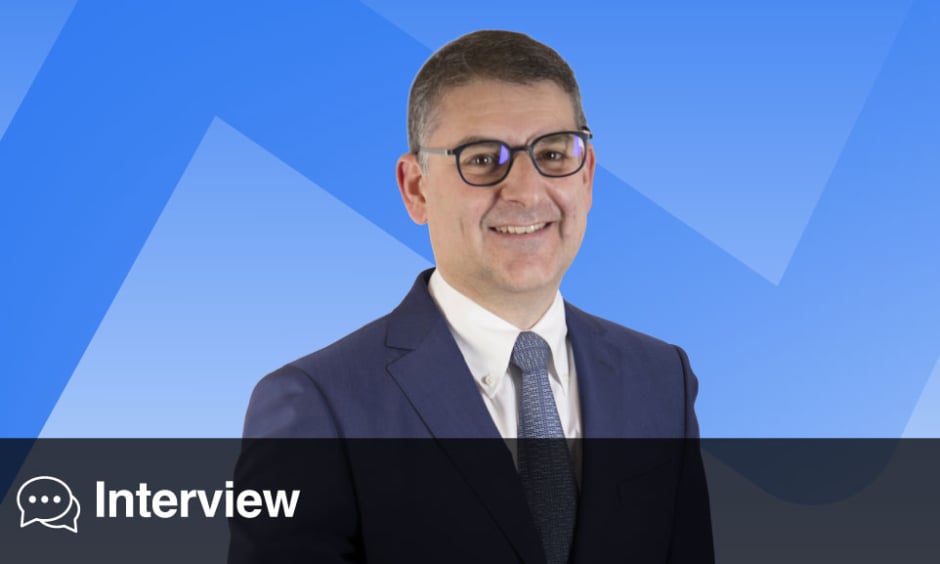
What are your priorities as the European Society for Medical Oncology (ESMO) President-Elect?
My priority, as ESMO President-Elect, is to improve access to care, to the best possible cancer care for patients all over the world. This means ensuring that treatments, guidelines, frameworks, and algorithms are updated as rapidly as possible whenever new drugs become available. That can pragmatically change the outcome of any single patient. It also means identifying exceptional drugs that can impact the overall survival of our patients.
What are the key highlights for you from this year’s ESMO Congress?
This was an outstanding meeting, not just because we observed clinical trials that changed the outcome of a specific disease, but for the treatment modalities. There was the clinical trial in melanoma, in which a personalised cancer vaccine, based on the next-generation sequencing of the primary tumour of patients with melanoma, was injected in combination with pembrolizumab, demonstrating an improvement in invasive disease-free survival. These are unprecedented data, not in terms of clinical outcome, but in terms of treatment modality, because this treatment modality can be expanded to any other disease.
The second breakthrough data I believe most important, in terms of impact, is the use of a bispecific antibody together with an immune checkpoint inhibitor as a maintenance treatment in small cell lung cancer. This is a disease where the outcome is very poor. Knowing that, after an induction treatment and achievement of a clinical benefit, the addition of the bispecific T-cell engager immunotherapy, tarlatamab, to maintenance durvalumab significantly improved the primary endpoint of overall survival (OS) compared with durvalumab alone in patients with extensive-stage SCLC (ES-SCLC).
Yesterday, we also saw some interesting data on modulating the mechanism of resistance in target addition for non-small cell lung cancer. The first one was an EGFR-mutant and MET-amplified, in which after progression to osimertinib, adding a MET inhibitor was shown to increase the median progression-free survival and also overall survival.
The final one is the comparison of two KRAS inhibitors, again, in non-small cell lung cancer. The message from this meeting is that the better we know the biology of the disease, the more we can target new pathways and the more we can improve outcomes.
More broadly, what recent advances in oncology excite you most?
In oncology, I believe the most important message is the multi-modality care. If you check all the clinical trials that we saw, it’s not one single treatment modality, it’s an integration. So, surgery, radiation therapy, chemotherapy, targeted agents, and antibody–drug conjugates (ADC) all together are better than one single treatment, and what is more important is that when you design a clinical trial you try to identify a strategy in the treatment rather than one single point.
How can ESMO improve access to cancer innovation worldwide?
Europe has outstanding clinical research centres and ranks first globally in patient enrolment. Our centres in the UK, Italy, France, Spain, and Germany are home to highly skilled investigators who make internationally recognised contributions to clinical research. The greater challenge is the time between a trial’s completion, a treatment’s approval, and its availability to patients. Access also varies considerably across Europe. We therefore need to accelerate access to innovation worldwide, including in Europe, and make clinical trials more feasible by streamlining regulatory and data requirements while maintaining appropriate safeguards. In this regard, ASCO and ESMO have worked together on an initiative to reduce the burden of data collection required for clinical trials, helping make them more feasible to conduct.
How can clinical guidelines keep pace with rapid advances in oncology?
Clinical guidelines must evolve as quickly as the evidence, while remaining rigorous, transparent, and useful in everyday practice. This requires timely review of high-quality data, regular updates as new evidence emerges, and clear recommendations that distinguish established standards of care from promising approaches still under investigation. Several developments illustrate the pace of change: cancer vaccines in melanoma, the expanding use of bispecific and biparatopic antibodies, and the next generation of antibody–drug conjugates, including agents designed to target more than one antigen. At the same time, treatment decisions increasingly need to reflect the biological course of each patient’s disease. Genomic profiling can help identify mechanisms of resistance and guide changes in therapy. At ESMO, we have a responsibility to bring these advances into clinical guidance promptly and responsibly. Guidelines should be developed by multidisciplinary experts, informed by patient perspectives, and accompanied by clear explanations of the strength of the evidence. They should also address differences in access, so that recommendations are relevant across healthcare systems and can support equitable care worldwide.
What advice would you give to the next generation of oncologists?
Oncologists under the age of 40 years make up 52% of ESMO’s membership. This makes ESMO a young and vibrant society, and we are truly excited about what that means for its future. The next generation will help shape a bright future for ESMO and for oncology. My advice to young oncologists is to bring passion to your work, stay curious and enthusiastic about clinical research, and have the courage to pursue the career path you believe in. Set your goals clearly, take stock of where you are, and consider what steps will help you get where you hope to be. Ultimately, a career is shaped by the commitment and passion we bring to our work each day. And remember that setbacks are part of the journey. They can teach us lessons that success alone cannot.