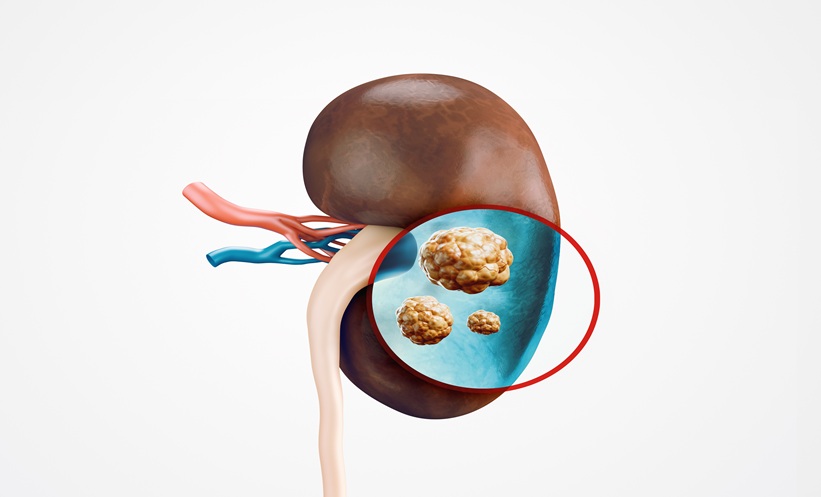
Renal stone surveillance often relies on ultrasound and radiography of the kidney, ureter, and bladder (KUB) because of concerns about CT radiation and cost, despite CT’s superior accuracy.
A study investigated the use of ultra-low dose (ULD) in renal stone surveillance to reduce ultrasound use.
Investigating Ultra-Low-Dose CT
A team including urologists, radiologists, radiology technologists, and quality improvement specialists was assembled where success was defined as a 30% reduction in ultrasound utilisation for renal stone surveillance without increasing Medicare-allowed amount or compromising diagnostic accuracy.
Researchers collected baseline monthly imaging volumes, and the ULD protocol was developed using tin filtration.
The ULD protocol achieved a radiation dose reduction from 5 mSv for the standard noncontract renal stone CT protocol to 1.7 mSv with the ULD protocol (a 66% reduction).
Patients with lateral body width ≤ 50 cm underwent ULD CT, whereas those with lateral body width > 50 cm underwent the standard low-dose renal stone CT protocol.
Imaging volumes were monitored using control charts for KUB or ultrasound and total noncontrast CT and ULD CT at baseline, implementation, and sustained adoption.
Reducing Ultrasound Use
The implementation phase showed higher median monthly ultrasound utilisation KUB utilisation ULD CT orders, and ULD CT examinations performed, whereas switching to standard low-dose CT did not differ significantly.
During sustained adoption, median monthly utilization was significantly lower than baseline for ultrasound and KUB, representing reductions of 71.4% and 73.3%, respectively.
ULD CT orders, ULD CT examinations performed, and conversions to standard low-dose CT increased to medians of 76.0, 43.5, and 27.0 per month, respectively.
Broader Adoption of ULD CT
Researchers concluded that implementing ULD CT with tin filtration reduced radiation dose by 66% compared with standard low-dose CT, addressing the main barrier to CT use while delivering superior diagnostic performance over ultrasound.
However, the researchers acknowledged limitations, including the study’s single-centre design and the lack of assessment of repeat imaging rates, which could help inform the broader application of ULD CT.
Reference
Ponce K et al. Implementation of ultra-low-dose CT for renal stone surveillance was associated with reduced ultrasound and radiography use: a multidisciplinary quality improvement initiative. J Am Coll Radiol. 2026;23(11):2162-69.