NEARLY 700,000 women will be enrolled in a trial that will test using artificial intelligence (AI) to support the diagnosis of breast cancer in the world’s largest study of its kind.
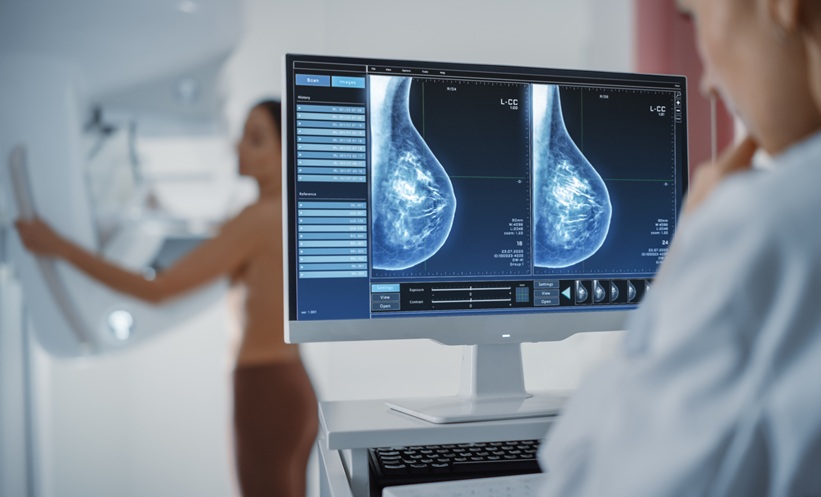
Known as EDITH, the new trial will assess an AI-assisted mammogram reading tool and whether it can help clinicians review breast cancer screening images more effectively, including its ability to detect cancers that are too small to see or feel.
Launching soon across 30 sites in the UK, the hope is that if successful, the model will free up time for radiologists and create more capacity for diagnosis and care for women with the disease.
Speeding Up the Screening Process for Better Care
All women in the UK between 50 and 71 are invited for a breast cancer screening once every three years on the NHS, with 2.1 million women undergoing the test each year.
It is estimated that currently, screening prevents around 1,300 deaths each year. However, the process is extremely time consuming – something this trial aims to address.
As of now, each mammogram must be reviewed by two specialist radiologists. As only 1% of mammograms show signs of cancer, significant time is spent reviewing negative images.
EDITH trial will assess whether it is feasible for AI to replace one of these clinicians, allowing each scan to be assessed by just one radiologist each and freeing up important time for care.
Leaders of the trial emphasis that the technique will be tested alongside the usual process, rather than replacing it, and that all clinical decisions will continue to be made by NHS staff.
The £10 million trial, funded by National Institute for Health and Care Research, will begin in Cambridgeshire, England, and expand to 30 breast cancer screening sites across the UK in the near future.
For patients, the process of having their scan will not change and they will continue to be able to get them at local clinics, GP practices and hospitals, as well as mobile screening vans located in community carparks.
Potential to ‘Transform’ Diagnosis and Detection
Lead by The University of Warwick, the University of Cambridge, and Cambridge University Hospitals NHS Foundation Trust, experts say the trial could “transform” cancer detection and diagnosis.
Professor Fiona Gilbert, Department of Radiology, University of Cambridge and Honorary Consultant at Cambridge University Hospitals NHS Foundation Trust, emphasised that women in the UK will not lose out on quality of care due to the trial.
She said: “EDITH will test whether an AI-assisted mammogram-reading tool can help experts review images more efficiently, while maintaining professional oversight and the standards women expect from NHS breast screening.”
Professor Lucy Chappell, CEO of the NIHR and Chief Scientific Adviser to the Department of Health and Social Care, said: “The NIHR is proud to be funding one of the world’s largest studies of AI-assisted breast screening.
“Bringing together researchers, NHS staff and hundreds of thousands of women from all walks of life, EDITH will generate vital evidence on whether this technology could transform how cancer is detected and diagnosed.”
Details of the trial will be provided to patients in the letter sent to invite eligible women for screening, and each will be given the option opt-out if they do not want to take part.