BACKGROUND AND AIMS
Sexually transmitted infections (STI) have a disproportionately high prevalence in individuals in custody and persons with HIV (PWH). However, limited data exist for the rates of infection in individuals who are in custody, particularly PWH, leading to a potential gap in timely and appropriate recognition and treatment of STIs. In the Illinois Department of Corrections (IDOC), persons in custody are screened at initial intake and those with HIV are seen by a multidisciplinary care team via telemedicine to manage HIV care and related STIs.1,2
MATERIALS AND METHODS
Electronic medical records of PWH receiving care via IDOC telemedicine in conjunction with the University of Illinois Hospital and Health Sciences System, Chicago, USA, were reviewed from January 1st, 2021–June 30th, 2024. The primary objective was to determine the frequency of screening and positivity for gonorrhea, chlamydia, and syphilis. HIV viral load and other known STI risk factors were also collected to assess predictors of STI positivity.
RESULTS
The majority of PWH in IDOC were Black, cisgender males. Of 241 patients with HIV in IDOC, a total of 226 (94%), 98 (41%), and 97 (40%) patients were screened for syphilis, gonorrhea, and chlamydia, respectively (Table 1). Of those screened at intake, 218/226 (96%), 26/98 (27%), and 26/97 (27%) were screened for syphilis, gonorrhea, and chlamydia, respectively. Following linkage to care with the multidisciplinary telemedicine team, more patients were screened for gonorrhea (70/98; 88%) and chlamydia (71/97; 73%) compared to intake. Sixty-five out of 226 (29%), 3/98 (3%), and 2/97 (2%) patients were positive for syphilis, gonorrhea, and chlamydia, respectively, with 41/65 (63%) representing new syphilis diagnoses. STI positivity was associated with women who were transgender (p=0.02), men who have sex with men (p<0.001), and a history of STI (within 12 months prior to intake; p<0.001). Linkage to care with the University of Illinois Health HIV telemedicine team had significantly more gonorrhea and chlamydia screenings than screening upon intake (p<0.001).
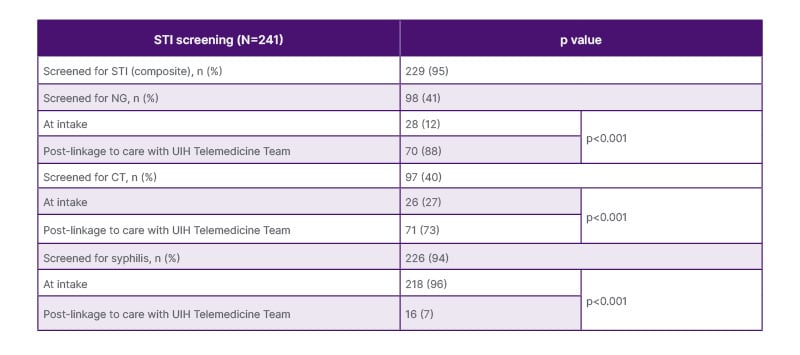
Table 1: Sexually transmitted infection screening.
CT: Chlamydia trachomatis; NG: Neisseria gonorrhoeae; STI: sexually transmitted infection; UIH: University of Illinois Hospital and Health Sciences System.
The majority of patients were screened for syphilis during their time in custody and approximately one in five were newly diagnosed. Gonorrhea and chlamydia were infrequently screened with low rates of positivity.3
CONCLUSION
Routine screening for STIs for PWH by multidisciplinary care teams has the potential to identify a high proportion of STIs, with key patient demographics and past medical history serving as potential predictors of STI positivity.