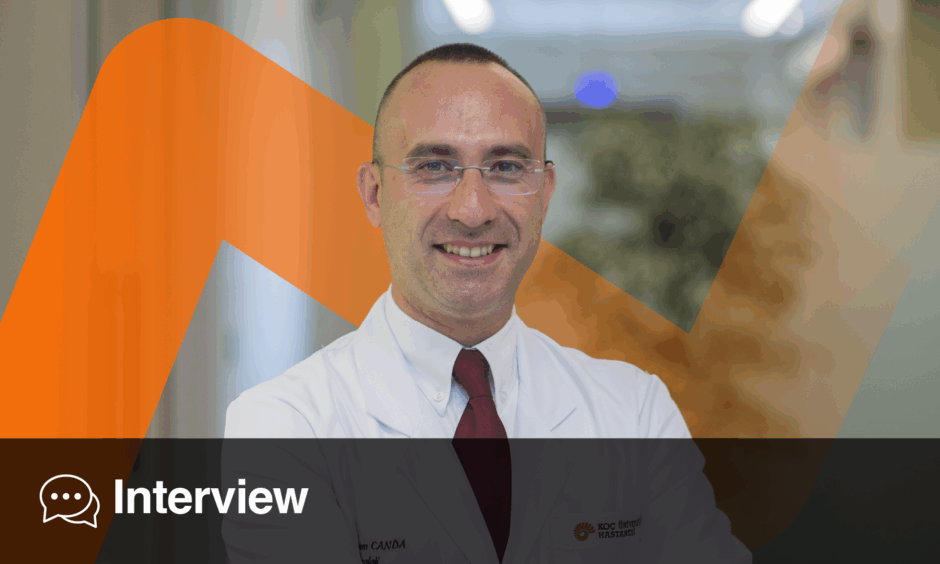
Erdem Canda: Department of Urology, School of Medicine, Koç University, Istanbul, Türkiye
Citation: EMJ Urol. 2025;13[Suppl 2]:28-31. https://doi.org/10.33590/emjurol/QCAS5168

As Co-President, what was your main goal for the International Urologic Research Society (IURES) Congress this year, and what part of the scientific programme are you most proud to have brought to the delegates?
When we were establishing IURES, our aim was to be not only a national society but an international one. Our main goal has been to organise events on a global scale.
This Congress is the first in our country where major international societies, including the American Urological Association (AUA), the European Association of Urology (EAU), and the third major society, the Société Internationale d’Urologie (SIU), have all had representatives. All three of the leading international societies supported this event. In addition, the European Robotic Urology Society, as well as the Balkan and Egyptian societies, also joined us.
This means that we succeeded in reaching a truly global setting. That is my proudest moment, being able to attract the attention and support of almost all the leading societies in the world.
Your expertise includes robotic and laparoscopic surgery. How did the IURES programme make sure that the newest surgical techniques were taught in a practical, useful way to all attendees?
The number of robotic systems is increasing in the world. We have the da Vinci Robotic Surgical System (Intuitive Surgical, Sunnyvale, California, USA), and we have new upcoming robotic systems like the Hugo™ Robotic-Assisted Surgery System (Medtronic, Dublin Ireland) and the Toumai® Laparoscopic Surgical Robot (Shanghai MicroPort MedBot (Group) Co.,Ltd, Shanghai, China). For the very first time, our Congress featured live surgeries performed using more than one robotic system.
I personally performed a live robotic prostate cancer surgery with the Medtronic Hugo™ system. I flew back to Istanbul, Türkiye, and did a live case at my hospital, which was broadcasted live at the meeting venue. We had a friend from Oklahoma, USA, who performed a single-port da Vinci robotic kidney cancer surgery; it was the second live broadcast. Another board member of our Society, Uğur Boylu, Liv Hospital Ulus, Istanbul, Türkiye, returned to Istanbul to perform a robotic prostate cancer surgery using the MicroPort Toumai® system at his hospital. This was the third live surgery with a robotic system. We also had a colleague sharing his experience with robotic renal transplantation.
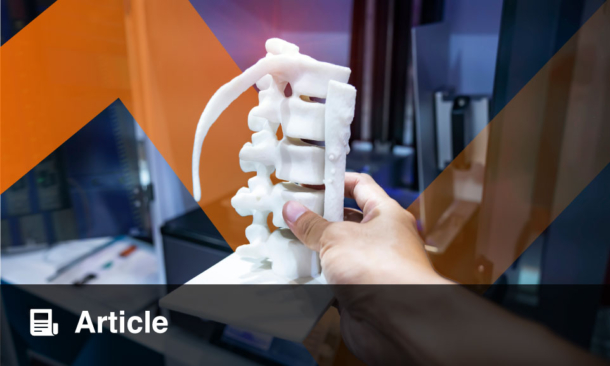
This Congress heavily included robotic surgeries. We also included many courses covering both laparoscopy and robotics. Trainees had the opportunity to work with 3D-printed materials, such as prostate models and kidneys with tumours, which we produced in our own 3D printing facilities. All trainees were residents, and these models allowed them to improve their skills in both laparoscopic and robotic procedures.
What is one new technology or surgical tool that you believe will change urology practice the most in the next 3–5 years, and how did IURES highlight this?
The answer is telesurgery, or more specifically, robotic telesurgery, because this can only be done using robotic systems. There have been several examples, particularly over the last 1 or 2 years. For instance, imagine a surgeon living in London, UK, and a patient in Istanbul, Türkiye. Both locations have robotic systems, but there is no surgeon in Türkiye who can perform that specific procedure. By connecting the robotic system to the patient in Istanbul, the surgeon in London can control the robotic arms remotely, performing the surgery as if they were physically there.
This is called robotic telesurgery, and over the past year, it has been done transcontinentally. For example, a surgeon in Florida, USA, operated on a patient in China; a surgeon in Barcelona, Spain also performed surgery on a patient in China; and a surgeon in Kuwait operated remotely on a patient elsewhere. Now it’s possible. We have witnesses. I have witnessed at least 10 examples in the last year by attending robotics meetings.
The question is, why was it possible in the last year? Why was it not possible before? The reason is the availability of fast 5G technology, especially in the last year, which allows high-volume, live data transmission with minimal delay (there is a slight delay of 0.035 milliseconds, which the human eye cannot identify). So, it has no negative impact on the surgeon or the patient. That’s why it’s possible. With the development of 5G technology, we can expect robotic telesurgery to become increasingly feasible and widespread in the near future.
The Congress covers many topics. How did you work with the committee to ensure a good balance between teaching the essential urology topics and showing new areas like genomics?
We have, for example, a Basic Research and Basic Science group that identify the most interesting subjects, like genomics, and invite the appropriate speakers. This is how we ensure that the basic science and research content of the Congress is comprehensive.
We call these groups ‘special interest’ groups. We have a special interest group in uro-oncology, of which I am a member, and this group decides which topics to include and who to invite, ensuring that there is a dedicated and appropriate focus on oncology.
Similarly, we have a special interest group in functional urology, where Emre Huri, Hacettepe University, Ankara, Türkiye, is a member. They work to create the most up-to-date programme in that field. We also have special interest groups for andrology, neuro-urology, paediatric urology, and renal transplantation. Each expert group works independently on their specific field to develop the most current and high-quality content.
Through the collaboration of all these groups, we can deliver the best possible programme for the Congress, ensuring that no important topic is missed.
What new session or teaching format did you create this year to help excite residents and young specialists at the Congress?
The answer is that we offered a lot of courses. Most of the time, other congresses also arrange many courses, but they are primarily video presentations and lectures. Here, though we did have lectures and video presentations, we also had a lot of hands-on sessions. These included laparoscopy, simulator training, robotic surgery, and even procedures such as neurostimulator implantation.
We also offered hands-on training in open and laparoscopic ureteroneocystostomy, where the ureter, the tube that carries urine to the bladder, must be surgically reconnected due to certain diseases. For this, we created special models specifically designed for training. In addition, we organised a prostate biopsy course and several other hands-on sessions. The ureteroneocystostomy course was organised by Ignacio T. Castillón Vela, Hospital Universitario Nuestra Señora del Rosario, Madrid, Spain, who is a well-known person in this field, in addition to laparoscopy and robotics
This was one of the strongest aspects of the Congress. Trainees appreciate videos and lectures, but they ultimately want and need to perform procedures themselves, because urology is a surgical specialty. To truly teach surgery, videos and lectures alone are not enough. Hands-on practice is essential, and we provided many such opportunities.
All the trainees and participants were residents, and they were very pleased. We believe this strategy will increase participation in the coming years, as it will encourage their colleagues to attend the IURES Congress because of the extensive hands-on training. We hope to attract an even larger number of young urologists to our future meetings.
What is the biggest technical problem or patient care need that urology faces globally right now, and how did the IURES Congress try to find a solution for it?
It’s the early detection of cancer and non-cancer diseases, including kidney failure, prostate cancer, kidney cancer, and bladder cancer. So, if we are able to identify these conditions at an early stage, we can prevent their progression. Once these diseases advance, it becomes difficult for the patient, difficult for the doctor, and difficult for the government.
If we diagnose them early, we can stop or slow progression, and we can treat effectively. But if we miss that opportunity and only detect these diseases at an advanced stage, then most of the time we cannot cure them. We can treat them, but treatment does not necessarily lead to a cure. This significantly increases the financial burden on governments and creates a wider negative impact on both the healthcare system and the nation.
So, in my view, this is the most important technical challenge that urology and our patients face. That is why we included talks on the early diagnosis of prostate cancer, kidney cancer, bladder cancer, benign prostatic hyperplasia, and kidney failure in our Congress.
When you look back at the Congress this year, how do you think it was different from last year, and what was your favourite moment?
It is definitely much more global. We managed to gain the support of all the major societies. We contacted the authorities of the AUA, and they approved their involvement. The AUA logo appears in our meeting, and John Davis, MD Anderson Cancer Center, Houston, Texas, USA, joined our Congress to give an AUA talk. We also had Derya Tilki, Martini-Klinik Prostate Cancer Center, University Hospital Hamburg-Eppendorf, Germany, giving the EAU lecture, and Jean de la Rosette, Medipol University Hospital, Istanbul, Türkiye, delivering the SIU talk. So, this year, we had all three major international societies represented.
This means that this year’s Congress is clearly superior to previous years in terms of being fully global; we have truly achieved that.
We also included many live surgeries, in addition to the robotic cases. For example, we had a live kidney stone laser surgery performed today by one of my colleagues at my hospital. We also performed a penile prosthesis implantation for erectile dysfunction, again from my hospital, broadcast live yesterday evening. Live surgery is always valuable because surgeons sometimes encounter difficulties, bleeding, or other challenges, and the audience is interested in how these problems are managed in real time. It is exciting and attractive, and including multiple live surgeries increases attention and engagement. We featured a live surgery every day, and this was a key strength of this year’s meeting.
We definitely offered more courses, especially hands-on courses, compared to previous years. We originally expected around 300 participants, but thanks to this very strong programme, we reached more than 500. This clearly shows how well supported the event has been.
In addition, Alan McNeill, Western General Hospital, Edinburgh, UK, gave a lecture as a representative of a medical journal. So, we now have excellent collaborations not only with major societies, but also with leading scientific journals, including EMJ. When you bring all these forces together, you create a truly outstanding meeting.