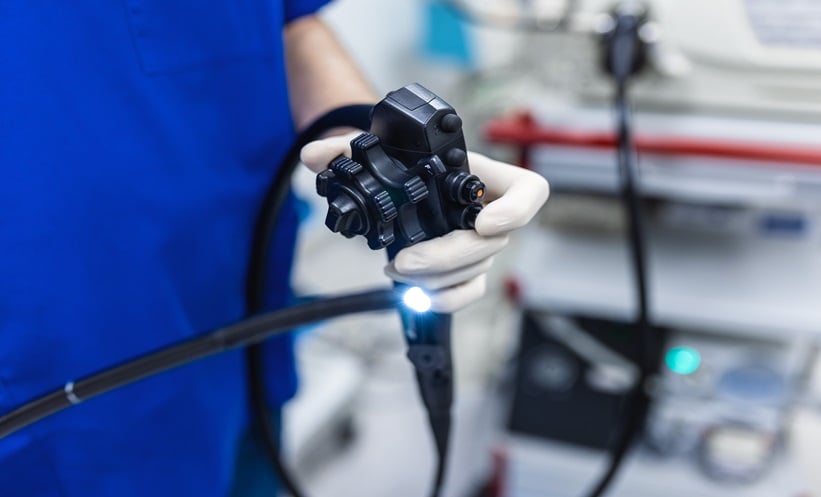
A NEW randomised controlled trial suggests that combining water exchange with cap-assisted colonoscopy can significantly shorten cecal intubation time and reduce patient discomfort during unsedated colonoscopy, without compromising procedural quality.
Unsedated colonoscopy is widely used in many regions but remains technically challenging due to patient discomfort and difficulties with scope advancement, particularly in the sigmoid colon. While cap-assisted colonoscopy is known to improve visualization and reduce insertion time, water exchange techniques have been shown to facilitate smoother, more linear scope progression. Investigators hypothesized that integrating both approaches could further optimize performance and tolerance.
Study Design and Outcomes
The prospective randomized trial enrolled 200 patients undergoing unsedated colonoscopy at a tertiary endoscopy center in Wuhan, China. Participants were randomized to receive either combined sigmoid water exchange and cap-assisted colonoscopy (SWC; n=100) or cap-assisted colonoscopy alone (CAC; n=100).
The primary outcome was cecal intubation time. Secondary outcomes included patient-reported pain scores, polyp detection rate, bowel preparation quality assessed by the Boston Bowel Preparation Scale, and willingness to repeat the procedure.
Faster Intubation and Less Discomfort
The combined SWC approach significantly reduced median cecal intubation time compared with CAC alone, achieving intubation in 5.0 minutes versus 7.0 minutes, respectively. Patients in the SWC group also reported significantly lower pain scores in the left colon and demonstrated greater willingness to undergo repeat colonoscopy.
Importantly, procedural quality was maintained. Polyp detection rates were similar between groups, as was bowel preparation quality, indicating that efficiency gains did not come at the expense of diagnostic performance.
Predictors of Shorter Cecal Intubation Time
Multivariate analysis identified several independent predictors of shorter intubation time, including use of the combined SWC technique, better bowel preparation, younger age, absence of prior abdominal surgery, and lack of constipation. These findings reinforce the technical advantages of water exchange when paired with cap assistance, particularly in patients without anatomical or functional risk factors for difficult insertion.
Implications for Practice
The authors conclude that combining water exchange with cap-assisted colonoscopy offers a practical and effective strategy to improve patient comfort and procedural efficiency in unsedated colonoscopy. By reducing discomfort and increasing patient acceptance without compromising detection rates, this approach may help support broader adoption of unsedated colonoscopy in routine clinical practice.
Further studies may help define which patient populations benefit most and assess feasibility across different endoscopy settings.
Reference
Wang D et al. Combined water exchange and cap-assisted colonoscopy reduces cecal intubation time and patient discomfort in patients with unsedated colonoscopy: a randomized controlled trial. BMC Gastroenterol. 2025;DOI: 10.1186/s12876-025-04557-9.