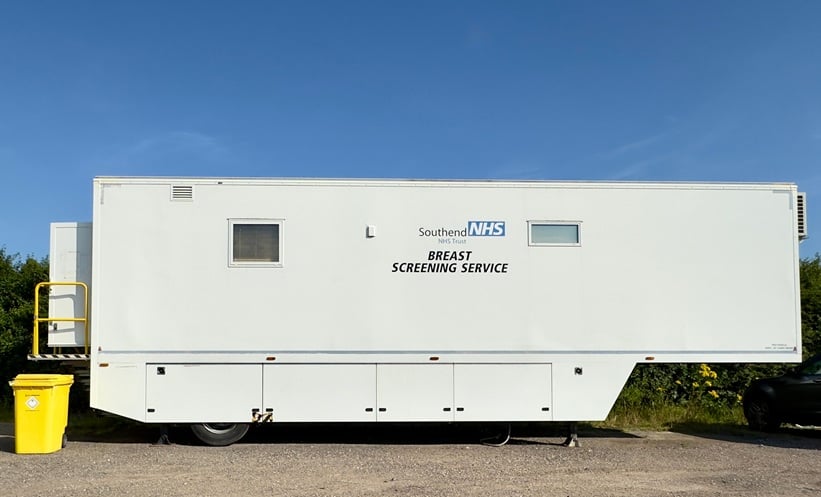
THE NUMBER of women attending their first NHS breast screening has hit a 10-year high, NHS data released today has revealed.
Attendance among women invited for screening for the first time reached 63.6% in 2024/25: the highest level in a decade.
NHS Breast Screening Attendance
Nearly 5 million eligible women are now up to date with screening under the NHS Breast Screening Programme’s 3-year standard, marking another 10-year high.
In 2024/25, almost 2 million women aged 50 to 70 attended screening within 6 months of invitation, which was an increase of nearly 200,000 on the previous year.
As a result, nearly 20,000 cancers were detected, establishing nine cases in every 1,000 women screened.
This was an increase in breast cancer detection of almost 16% on the previous year.
Supporting Access to Breast Screening
Amid more than 70% of eligible women being up to date with screening, three in 10 did not take up the offer of screening in 2024/25.
Dr Harrison Carter, director of screening at NHS England said: “Breast screening can save lives.
“With nearly 20,000 cancers detected early through screening last year, it’s encouraging to see more women attending, especially those invited for the first time.
“But we know there are a range of reasons why some women don’t come forwards and there is much more still to do to support more women to access breast screening.”
One year ago, the NHS launched its first-ever national breast screening campaign, which saw a surge in women accessing online screening information.
AgeX
The UK government is currently considering extending the routine breast screening age to 47 to 73.
The University of Oxford’s AgeX trials, funded by the Department of Health and Social Care and with support from Cancer Research UK, aim to balance the benefits and harms of offering additional screening to those aged 47 to 49 and those 71 to 73.
That is, pitting the chances of reducing breast cancer mortality against the chances of people being diagnosed and treated for a non-life-threatening cancer.
Between 2009 and 2020, more than four million women entered into AgeX, and approximately half were offered additional screening.
Follow-up by electronic linkage to routinely collected NHS health records will continue to December 2031.
References
NHS Digital. Breast screening programme, England, 2024-25. 2026. Available at: https://digital.nhs.uk/data-and-information/publications/statistical/breast-screening-programme/england-2024-2025. Last accessed: 19 February 2026.
Oxford Population Health. AgeX. Available at: https://www.ceu.ox.ac.uk/research/agex-trial. Last accessed 19 February 2026.