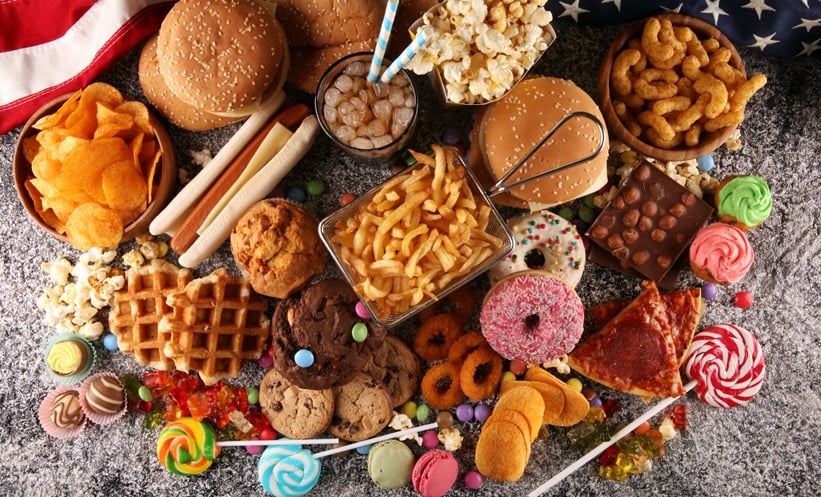
ULTRA-PROCESSED food (UPF) consumption in early childhood leads to adverse behavioural and emotional changes in young children, a 2026 Canadian cohort study has found.
Higher intake of UPFs at 3-years-old was tied to adverse behavioural and emotional symptoms at 5-years-old, with the replacement of UPFs with minimally processed foods (MPF) linked to better outcomes.
Ultra-Processed Foods and Behavioural Development
The widely accepted NOVA system classifies UPFs as: “formulations of ingredients, mostly of exclusive industrial use, typically created by series of industrial techniques and processes.”
Researchers analysed both internalising symptoms, such as anxiety, depression, and withdrawal, and externalising symptoms, including aggression and hyperactivity.
These adverse behaviour symptoms in childhood are widely accepted as early indicators of later mental health.
Diet is a modifiable risk factor that can influence behavioural development, the study reported.
As UPFs now dominate the modern food supply, researchers emphasised an imperative need to understand their influence on early behavioural development.
Child Behaviour Scores
The study analysed dietary and behavioural data from more than 2,000 Canadian children between September 2011 to April 2018, using the CHILD Cohort Study.
UPF intake at 3-years-old was assessed using a food survey of 112 items categorised using the NOVA system.
The children’s behaviour was classified using the Child Behaviour Checklist (CBCL), with higher scores (on a scale from zero to 100) indicative of more adverse symptoms.
Notably, even small shifts in behavioural scores (0.3-1 points) are associated with later behavioural trajectories.
Each 10% increase in energy uptake from UPFs at 3-years-old was associated with an average rise in CBCL scores across internalising, externalising, and total behaviour scores at 5-years-old: by 0.81 points, 0.47 points, and 0.64 points, respectively.
Conversely, substitution of that 10% energy from UPFs with calories from MPFs was tied to a decrease in scores by 0.91 points, 0.49 points, and 0.70 points across the respective behavioural categories.
Ultra-Processed Food Subgroups
When examined by subgroup, higher intakes of artificially and sugar-sweetened beverages were associated with higher internalising and total behaviour scores.
Greater consumption of breads, cereals, and ready-to-eat or ready-to-heat mixed dishes were linked to with higher internalising behaviour scores.
Ultra-Processed Food and Public Health Policy
Public strategies promoting MPFs rather than UPFs could help support the healthy behavioural and emotional development of young children, researchers reported.
For example, guidance from healthcare professionals, public health campaigns, and childcare nutritional standards promoting the consumption of MPFs over UPFs could encourage healthy behavioural and emotional development.
Researchers added that strengthening early-life nutritional strategies might offer several benefits for childhood development.
References
Kavanagh ME et al. Ultraprocessed food consumption and behavioral outcomes in Canadian children. JAMA Netw Open. 2026;DOI:10.1001/jamanetworkopen.2026.0434.
Food and Agriculture Organization of the United Nations. Ultra-processed foods, diet quality, and health using the NOVA classification system. 2019. Available at: https://openknowledge.fao.org/server/api/core/bitstreams/5277b379-0acb-4d97-a6a3-602774104629/content. Last accessed: 9 March 2026.
Featured image: puhimec on Adobe Stock