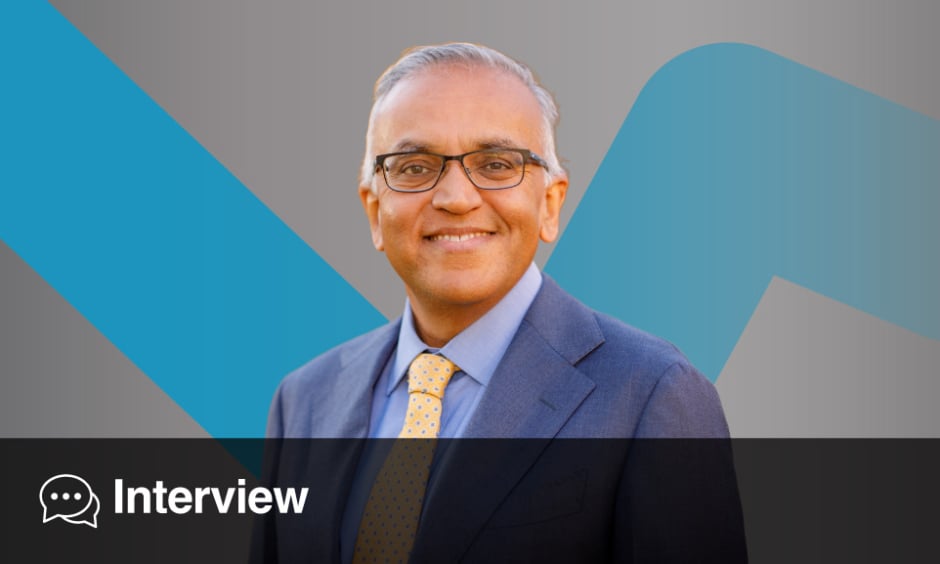
Ashish K. Jha | Dean, Brown University School of Public Health, Providence, Rhode Island, USA
Citation: EMJ Innov. 2026;10[1]:41-44. https://doi.org/10.33590/emjinnov/OOMY8765

As the former White House COVID-19 Response Coordinator, what do you see as the key lessons from that experience, particularly in how federal and state health policies can better align to improve coordination and trust in future emergencies?
In that role, one of the big things I learned was that while those of us in medicine and public health think about the medical and public health implications of health emergencies, society is complicated. It has a lot of different stakeholders with a variety of different interests: there are people who care a lot about the economy, people who care about schools, people who care about work, and there are people who care about seeing family and friends. One of the things that I was constantly reminded of as I was leading the USA government response is that we have to take all of those factors into account when we come up with federal or state policies around managing a crisis. We have to remember that, while health may be front and centre, it’s not the only consideration, and we really have to bring people along.
One other key point here is that, for governments, because they represent so many different aspects of society, much of policy work is not just figuring out what the ‘technical’ right answer is, but also how to build a coalition behind it. How do you build support for an issue? If you get the policy right, but you don’t have a coalition behind you, the policy will not get implemented effectively. So, there are a lot of lessons that I think those of us in medicine and public health sometimes don’t think about because we’re very narrowly focused on what the clinically right answer is or what the right answer from a public health perspective is, but that broader purview is important.
Since the COVID-19 pandemic, how have public attitudes towards vaccines evolved, do you think vaccine confidence has improved or declined overall, and what role can digital health platforms and communication strategies play in shaping these attitudes positively?
It’s not a USA-only phenomenon, but we have definitely seen an erosion of trust in vaccines in the USA. I think there are a couple of reasons for this. One thing is certain: there’s a group of what I think of as ‘bad faith actors’ who have been spreading bad information about vaccines. They started during the pandemic, using it as a platform, and continued spreading bad information throughout the pandemic. I think that has become a real problem. In the USA, we are starting to see something that I find very distressing, which is a political divide based on attitudes towards vaccines. Historically, we’ve always had a small group of people who were vaccine sceptics, but they weren’t aligned with one political party or another. Now we’re starting to see more of that, and I actually think that’s very destructive in the long run. However, it is important to understand that, despite this erosion, a vast majority of people continue to be very, very supportive of using vaccines to protect children and the elderly.
To answer your question about how we use digital platforms and communication, it does seem to me that so much about rebuilding that trust is about communicating more frequently, more often, and with more authenticity. Not necessarily to persuade, but to understand people’s concerns and to address them. If we can use digital platforms in that way, I think we could make real progress here.
AI-driven tools are increasingly being used for disease surveillance, predictive modelling, and diagnostics. What frameworks should guide the integration of AI into public health to ensure both equity and accountability?
I think it is inevitable that AI models will permeate pretty much everything we do in public health, from disease surveillance to predictive modelling. So, there are a couple of things that we want to do. First and foremost, we have pretty good evidence that, if those AI models are built on and trained on data sets that have biases built into them, then the AI models will replicate those biases. Thus, having a way to test the AI models and making sure that they’re not reproducing and furthering biases that have been previously built into our data sets is really important. There are ways of doing that, and I think that checking authentication and correction where necessary is really important.
Secondly, I have talked to a lot of my friends in public health who are sceptical about the use of AI, but I think that people need to embrace it. AI tools are so powerful, and they’re so pervasive that we will not be able to hold them off. So, what we want is to try to figure out how to make use of them in a way that makes us more efficient and more effective. The general strategy here should be to embrace AI, but do the verification and the testing. Make sure that these models are generating the kind of value that we want and not reinforcing biases in existing data sets that might already exist.
Is there a way to tell early on if there is bias in a data set, or is that only something you can tell after the data has been built into the model?
I think there are ways to tell, and people are working on developing tools for this. In fact, there are organisations that are sprouting up that will essentially do those kinds of verifications. It also depends on what kind of biases you’re looking at. You can pre-emptively look for certain types of biases, and you can also predict that there’ll be certain types of biases. We know human beings have biases, so if you look at, for instance, how physicians treat patients, we know from lots of data that we don’t always treat men and women equally, even when it’s clinically important to do so. That may also be true for socio-economic status. So, to the extent that we can predict that there are going to be biases, we can proactively look for those in the data sets, and even train data sets to see if those biases exist and to correct them before the full training happens. But ultimately, there may be biases we’re not aware of or can’t predict, and my view is that anytime you come up with a new training model, or any model that’s been trained, you should then go and verify that you’re not replicating biases, including ones that you may not be aware of.
In global conflict zones, rebuilding medical and public health infrastructure is a critical challenge. What three priority steps should be taken to reconstruct these systems effectively, and how might these differ when responding to natural disasters rather than war?
We have lots of natural disasters and, unfortunately, we still have too many conflicts and wars. The one important difference between the two is that natural disasters tend to be very short-lived. They can be very destructive, but their time is limited. However, wars and conflicts can last a long time, and even when they come to an end, there can be simmering conflict. So, the first thing to do in either situation is to make sure that you have a very good governance framework for how you’re going to rebuild the health system, i.e., who’s going to rebuild it, what are the rules of the road in conflict zones, etc. I think it’s really important to make sure that you actually have a two-pronged strategy in the short-to-medium run, as you’re going to need emergency care.
I did a podcast recently about how we could rebuild the healthcare system and the public health system in Gaza. Again, the first priority is governance, but you also need to bring in people to provide emergency care, and those people need to be safe. You need to make sure that you have a clear safety plan for the healthcare providers that are coming in. There’s a lot of ammunition or even explosives that have not yet exploded. You’ve got to clear out the area and make sure that you create a safe zone for civilians to come back to, and for healthcare workers to work. That’s priority number two: creating safety.
The third priority is beginning to build back the infrastructure of healthcare providers for the long run. This is a multi-step process that can take years. I think I worry a little bit that people’s attention span is short, and that they’re going to pay a lot of attention for a few weeks or months and then decide that they’re done. Whereas, for natural disasters, you’re not worried about ongoing conflict, and the safety issues are often very different: for instance, you don’t have unexploded ammunition, but you might have debris and other things left over, let’s say from a hurricane or a tornado, that you need to manage. So, there are some similarities, but important differences as well.
In your paper ‘Religious partnerships can strengthen health delivery’,1 you highlight the potential of faith-based collaboration. How can public health agencies build these partnerships without reinforcing stigma and discrimination, as seen during the HIV/AIDS crisis?
I think first and foremost, it’s really important for our public health leaders to understand that, whilst people may have good relationships with doctors and nurses, they often have very strong and deeply meaningful relationships with religious leaders and people who share their faith. One of the things that we have to be very careful about is not trying to instrumentalise that. What I mean by that is, as a physician or as a public health person, my goal is not ‘how do I use faith-based leaders to achieve my goal’. I think that anytime people go in with that kind of attitude, it generally doesn’t work. What you need to do is work on finding common ground. Where do we agree? I have interacted with a lot of faith-based leaders, and they care about their community’s health and well-being. We can often find common ground on those issues. We don’t have to agree on everything, but we can find these areas of common ground and work together in a way that furthers both of our goals. I actually think that these kinds of partnerships are critical, not only for achieving better health goals, but also for rebuilding trust in public health. And where we disagree, we can continue to disagree, right? Religious groups differ from each other in a variety of ways, and my general take on this is that we should be partnering with anybody willing to partner with us on common interests and goals, knowing that we’re going to have areas of disagreement.
With recent debates around medications in pregnancy and developmental outcomes, how can healthcare professionals and researchers work together to ensure accurate dissemination of scientific information to both clinicians and the public?
There’s been a lot on this recently, certainly in the USA. In my opinion, at the end of the day, the most important advice we can give patients, such as pregnant women or mums/dads of small kids, is that they should be talking to their doctors about medical advice instead of getting it from politicians. Just as you shouldn’t get political advice from your doctor, you shouldn’t get medical advice from your politician.
Ultimately, what we should be doing is guiding people based on evidence, data, and science. When I see patients in the hospital, I give them the best recommendation based on the evidence I have at that moment. If the next day, a large, randomised trial came out showing something else, I would change my practice, and that’s normal. That’s the strategy we should be using here in terms of how to give guidance to people. We should also remind them that the way we’re doing this is not for political purposes, but it’s really how we practise medicine. One of the things that I do a lot when I talk to patients or the general public about these things is I personalise it, so I tell them what I recommend to my family and friends. Ultimately, people should be talking to their doctor.
Your podcast, ‘Moment in Health’, addresses key public health issues. From your current perspective, which emerging issue in public health do you believe demands the most immediate attention from healthcare leaders?
There are a few things that I have focused on in my podcast that I think are recurring, urgent issues that need a lot more attention. One is certainly about the fragmented information landscape we live in and the amount of bad information that spreads in those landscapes.
How do we begin to bridge that? How do we begin to rebuild trust? How do we begin to get better information to more people around the country and around the world? I think that is one of the most urgent issues, because we can come up with the best scientific advances and cure diseases, but if people don’t trust them and people don’t engage with them, they’re not going to be effective.
The second topic I’ve talked a lot about is the fact that, in the USA, for the first time, we’re seeing a decline in coverage. We don’t have a universal healthcare system. We made a lot of progress under the Affordable Care Act, but now we’re starting to see a reversal of that. I think that needs to be urgently addressed.
These are a series of things that are very USA-focused, but I actually think that they apply universally. There are serious conversations about financing and coverage in the UK too. Many of us believe that the NHS has been underfunded, and so that’s a really important issue. A lot of people end up going to the private system. That’s fine, and I don’t have an objection to that, but we’ve got to think through those issues. So, there are very urgent challenges that countries around the world face. My podcast has been a little USA-focused as I live there, but the underlying principles are very universal.