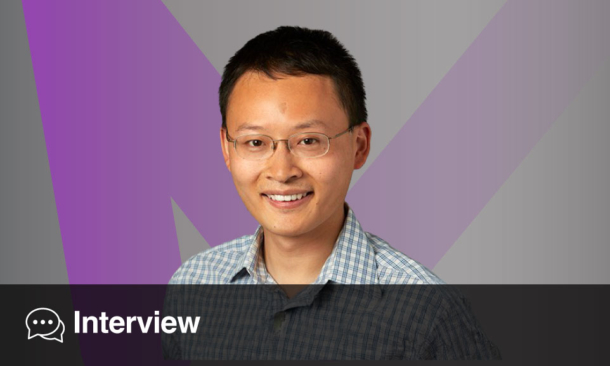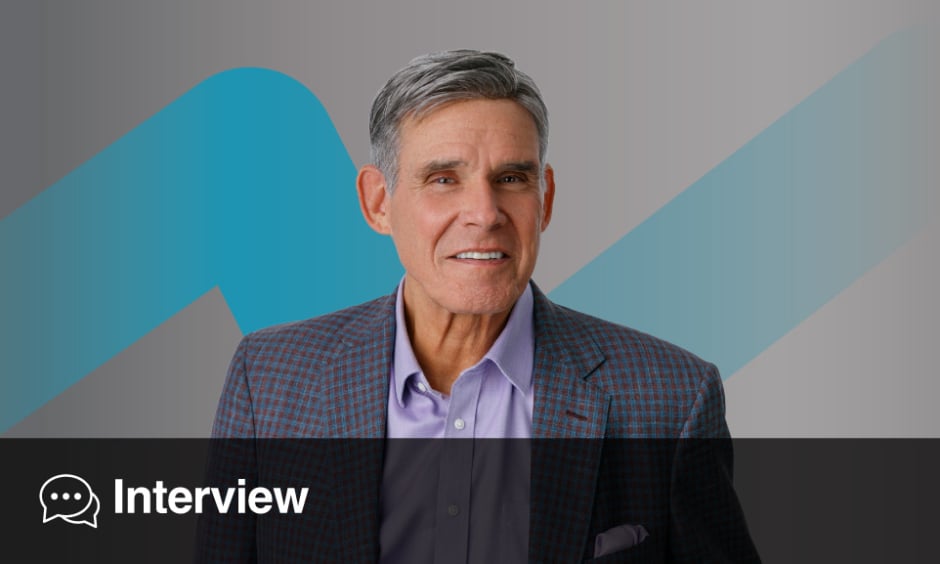
Eric Topol | Founder and Director, Scripps Research Translational Institute, San Diego; Professor of Molecular Medicine and Executive Vice-President, Scripps Research Institute, San Diego; Senior Consultant, Division of Cardiovascular Diseases, Scripps Clinic, San Diego, California, USA
Citation: EMJ Innov. 2026; 10[1]:36-40. https://doi.org/10.33590/emjinnov/PBOG2132

With over 300,000 citations and recognition as one of the top 10 most cited researchers in medicine, you are often referred to as the “Dean of Digital Medicine.” How do you think today’s emerging technologies, such as AI-driven diagnostics and real-time biosensors, compare to the innovations you saw at the start of your career?
We’ve made extraordinary progress. When I started my career, we were in analogue mode. We didn’t have any ability to sequence a human genome or make anything of it, let alone sensors and other technologies. Now we have AI and all these layers of biologic data, like DNA and RNA, and methylation and the microbiome, and that’s why it’s so exciting that we can use these data with AI to prevent the major diseases that we have never really done well at, or at all, before. It’s so exciting to see the progression over 4 decades. It makes me feel very old, but there’s been remarkable progress, and it’s accelerating in recent times.
You lead a major part of the National Institutes of Health (NIH)’s All of Us Research Program, one of the largest precision medicine studies in history. What have been the most transformative insights to emerge from this initiative so far?
The UK Biobank is still the reference standard for large biological repositories and phenomenal data resources, but we started the All of Us Research Program back in 2017 with the mission of having a much broader cross-section of participants. That has been achieved, as almost half of the participants are underrepresented minorities. So far, about 850,000 participants have been enrolled, and almost half have undergone whole genome sequencing. We have mainly been working on the digital side of it. In terms of getting sensors like Fitbit (Google, Mountain View, California, USA) and others into play, I think the contributions are still going to be felt over the years ahead. We don’t have the remarkable follow-up data that the UK Biobank has, which has been going on for almost 20 years. We only have about 4 or 5 years. The longer the follow-up, the more you can infer from the baseline data, and the more you can make predictions of various conditions, but I think it’s going to make some really important contributions. It already has genomics data, which can help when finding new rare disease variants, but there are many more contributions ahead. We’re also looking forward to the Our Future Health research programme in the UK, which is going to be even larger, with five million participants rapidly enrolling. Collectively, these remarkable biomedical banks of participants are helping us really understand health and disease at a remarkably improved level.
In your 2019 book ‘Deep Medicine’, you argued that AI could make healthcare more human again. What are your thoughts on the argument that AI cannot replace doctors due to the role of empathy in the doctor–patient relationship?
When I wrote ‘Deep Medicine’, which came out in 2019 and was written at least a year before that, the idea that we could use technology to make healthcare more humane was, frankly, either dismissed outright or met with scepticism. But we have now seen evidence that it has been accomplished; for example, we can use AI to generate ambient notes derived from the conversation between a patient and a doctor. With this, the patient can use the link to the audio and go back and listen to things that have been forgotten or that need clarification. But also, for the physician and other clinicians, this is remarkably time-saving, as it reduces the data clerk function. As we hypothesised, both in the NHS Topol Review and in Deep Medicine, we’re going to move more and more towards keyboard liberation, which will allow us to get back to increased eye contact and presence with patients. This will help to improve the patient-doctor relationship, which desperately needs help at this moment in time.
The thing that I didn’t predict, and it’s really interesting, is that one of my book chapters was called “Deep Empathy,” and I never thought that we would have machines as a conduit of empathy, but now we have seen that chatbots and these generative AI tools are channelling empathy better than physicians right now. What it looks like is that, as we go forward with these synthetic notes from ambient AI, we’re going to have to use AI to coach clinicians to be better listeners, to be more empathetic, and to be better communicators. I think it is ultimately going to be a requirement of clinicians to be AI-coached. Because of the way these models are trained, they can say to a doctor, ‘Why did you interrupt Mrs Jones after only 8 seconds?’ and ‘Why didn’t you listen to her expressing deep concern about this or that?’.
I think that AI is eventually going to take this mission of improving the patient–doctor relationship to a much higher level, and who would have guessed that? I didn’t anticipate that. To really reaffirm this point, there have now been 15 studies comparing empathy between AI and doctors, and all but one found that AI is superior to doctors at transmitting empathy. Obviously, there’s a lot of pushback around AI because of concerns about various issues such as privacy, security, inequities, and bias, but this is one area where we’re learning that it can be a big help.
Critics often warn that AI might exacerbate health inequities, yet you’ve highlighted examples where it has done the opposite. What principles are essential to ensure AI promotes health equity rather than undermines it?
It takes deliberate work; it doesn’t happen by accident. There are various demonstrations of using AI in remote parts of the world, like Africa, India, or South America, to enable remarkable things. For instance, there are scans that have algorithms for interpreting images, such as echocardiograms or retinal images for screening diabetic retinopathy. In the UK, one of the best examples of this was a mental health chatbot that was deliberately trying to help people who are underrepresented, the people who need this help from AI. Most of these people are typically the ones who can’t access it. It is not just in low- and middle-income countries, but in all countries. The projects that have succeeded are the ones built with that purpose from the outset. It simply won’t happen by accident.
Regarding the emergence of digital twins (virtual representations of individual patients), what challenges do you foresee in integrating digital twins into clinical practice, such as data quality and clinician trust, and how might these be overcome?
We talk a lot about digital twins, and when I talk about that, I’m referring to the concept of having an enormous resource of people’s data, ideally across the planet, where we would learn from each other. For example, someone has a new diagnosis of cancer. What would be the best treatment? If we have the data of all the people who’ve had treatment for that cancer, along with their outcomes, their genomes, their electronic records, and all the other layers of data, instead of just relying on clinical trials, we could run a nearest-neighbour analysis. We could identify the people most similar to this individual and see how they responded to different treatments, and what their outcomes were.
If we were smart and we really cared about each other, we would develop this resource. In fact, a number of years ago, Kai-Fu Lee, Sinovation Ventures, Beijing, China, and I wrote a piece on this topic entitled ‘It takes a planet’.1 We still don’t have any good digital twin resources yet, not even theoretically, but we could do this, and it would be phenomenal and useful. There’s currently no inter-country or even intra-country effort to build this yet. I do think it’s inevitable, but it will require cooperation because the larger the resource and the deeper the data on each individual, the more informative and useful it becomes. I hope that we get there someday, but for now it remains an exciting possibility, just out of reach, dangling in front of us.
Could you see yourself getting involved in a project like that?
I would love to. It’s just a matter of assembling a massive resource so that it benefits everyone. There is worry about privacy and data security, but we have ways to circumvent that with federated learning and other privacy AI tools. And it wouldn’t just be for treatment, but also be for prevention. You could identify your digital twins early in life, and because those twins have already moved ahead of you in the world, you’d get a sense of what might lie in store. It would help with prediction and prevention just as much as with choosing the right therapy. I hope someday we’ll get there, but out of the various big ideas we have, it is one of the things that has been the hardest to get moving. The barriers are largely the cost of building such a resource and the insular mindset of individual countries. Yet, I do think it’s entirely feasible. The EU could certainly do it, and the UK would be a strong candidate as well. I hope we eventually pull ourselves together, because at the moment we’re missing a real opportunity to learn from one another. People often talk about learning health systems; well, this would be the ultimate example.
Your book, Super Agers: An Evidence-Based Approach to Longevity, explores the science of healthy ageing. What have you found to be the most evidence-backed determinants of long life?
I think it’s pretty exciting that we’re going to be able to extend the health span. I’m not saying that we are going to reverse ageing. Maybe someday we’ll get to that. But what we can do now is work on the age-related major diseases: cardiovascular, neurodegenerative, and common cancers. All these conditions take about 20 years to incubate in our bodies, which gives us a big lead time to work with. All these diseases involve dysregulation of the immune system or loss of protection. With ageing, we see immunosenescence, but also inflammaging, which is the inflammation that’s engendered by this weakening of our immune system or loss of protection. So, we have ways beyond just lifestyle, which is really important to prevent these diseases or defer them by many, many years. In fact, in the new year we’re going to start a big prevention of Alzheimer’s trial using new data from organ clocks and new markers like p-tau217, a protein marker. With multimodal AI integration of all these layers of data, what we can do is find the highest-risk people and then first test the lifestyle factors, which looks very promising. But we’re never going to eradicate Alzheimer’s just with lifestyle, because we have many people who take care of themselves perfectly, and they still develop Alzheimer’s. So, we need more than that.
After we do the lifestyle randomised trial, we’ll move on to various drugs that show great potential to prevent Alzheimer’s. We intend to go into cancer and cardiovascular treatment as well. Who would have ever thought that this was going to be possible? This, I would say, is what I am most excited about in AI. When I wrote Deep Medicine, 5 or 6 years ago, it was about restoring the patient–doctor relationship. And that’s still a work in progress. But the biggest thing that AI will contribute to will be preventing these major diseases, because you need AI to pull the data together. You need AI to analyse the scans and see things that human eyes can’t pick up. It’s very dependent on AI, and also on new data layers we didn’t have before, like organ clocks and biomarkers. It is an extraordinary time because we can extend our health span, we just have to prove it. An anti-inflammatory diet, lots of exercise, both aerobic and strength training, and sleep health are important to promote health span. And I go through all the evidence in Super Agers, where the goal is for people to reach at least 85 years without these major diseases. Right now, we have people at 65 years old living with several conditions already. We can flip this, but it will take work and time to prove it.
Fascinatingly, you’ve cited species like the naked mole rat and bowhead whale as models for longevity. What can we learn from these animals about DNA repair and biological resilience, and how might advances in genomics help translate these findings into human therapies or preventive strategies?
The naked mole rat is really fascinating, because they can live for up to 40 years, compared to other rodents that live only for a few months, and we never really knew why. Then a paper was published describing the pathway that’s altered, whereby cyclic GMP-AMP synthase activation leads to increased production of Type-1 interferons, which greatly enhances their immune response. And this, of course, aligns with everything we’ve learned about healthy ageing: that a very healthy immune system that doesn’t become senescent and doesn’t trigger inflammation is key. So, the naked mole rat teaches us something very important that fits with everything else that we’ve learned in recent years about people. Now, what’s interesting is that the naked mole rat hardly ever comes out from underground, and they could live for even longer than 40 years if they didn’t kill each other first, as they usually beat each other to death. But aside from that, their organs remain remarkably youthful. It’s amazing. They are a legendary model that we’ve learned a lot from over the years. But this, to me, was the most interesting outgrowth of all that work. Although, we still don’t know why they get so aggressive when they get old.
Among humans, we have super centenarians. For example, there is a 117-year-old woman who had a systematic assessment of all her biology, and again, her immune system shined as the critical difference compared to people who would be considered controls for a super centenarian. That’s what we’ve got to focus on. And the real problem we have right now is that we don’t have an immune system assay in the clinic. We have no idea about a person’s immune system and there’s no test, so we need that. The first thing we’re going to see is this proteomic immune system clock that tells us the pace of ageing, which would be helpful, but we need much more. And of course, in Super Ages, I really get into this need for an immune system assay. It’s almost 2026, and we’ve learned that this system is so incredibly important for our ageing and diseases, and we don’t even have a way to measure it. We can do better than this. This is a major gap in medicine today.
You played a pivotal role in the Topol Review for the NHS, integrating genomics, digital medicine, and AI into the NHS workforce. Nearly a decade later, what progress has been made and what challenges still remain?
I had an extraordinary experience working with the NHS for 2 years on the NHS review, which outlines how we can use technologies such as AI and digital genomics to improve medicine and change the workforce. In a way, I think we’re finally seeing the effects of that. It was published back in 2018–2019, so it has been a good few years now. I’m really gratified that they set up a digital fellowship and have trained dozens of clinicians through it as an outgrowth of the review. But the core issue, I think, is that we cannot simply keep hiring more and more people. In every country, the healthcare workforce is growing far beyond what any system can financially sustain. So, how do we use new tools, like the AI we’ve been discussing, to enable fewer clinicians to deliver better care, and at a lower cost? I genuinely think we’ll get there. Right now, we hear a lot of clinicians saying, “Oh gosh, I won’t have a job.” That is the very last thing they should worry about. We should be focused on boosting morale, getting rid of the data-clerk burden, directing our efforts towards the people who most need care, and helping everyone become more autonomous, giving clinicians and patients intelligent tools so that they don’t have to rely as heavily on the workforce model of today. We are moving in that direction; it never happens as quickly as it could, but there has already been strong validation in recent real-world studies showing it’s possible. We do have to keep pursuing high-quality, rigorous research before fully deploying these technologies, as we absolutely do not want to compromise care. But it’s important to remember that accuracy in medicine today is not good enough. Serious diagnostic errors are common, and AI has already demonstrated that it can help reduce them. When people say AI will make mistakes, of course it will. But human errors occur at a much higher rate. We cannot expect perfection; we certainly don’t have it now.
Looking ahead, which innovations do you foresee driving the next major breakthroughs in digital and precision medicine over the coming decade?
I think that with the depth of data we can now obtain, with longitudinal data, plus information from wearable sensors to capture physical activity, sleep health, and even stress via heart rate, we are going to be able to pull this data together and know a person’s health arc 20 or 30 years in advance.
When we do that, it isn’t going to be us accepting these bad things that might happen, but we will be able to say, you’re likely to have a heart attack at this age, so this is what we’re going to do now to prevent that from happening. This to me will be the biggest change in medicine in my lifetime. I hope that we’ll get to see it actualised. It’s inevitable that we’re going to get there, but we’re still in the earliest stages. I am really excited about it, and it all relies on bringing together all these data sources and the ability to analyse it. But once we get there, watch out, we’re going to make a big impact on the major diseases of humankind.