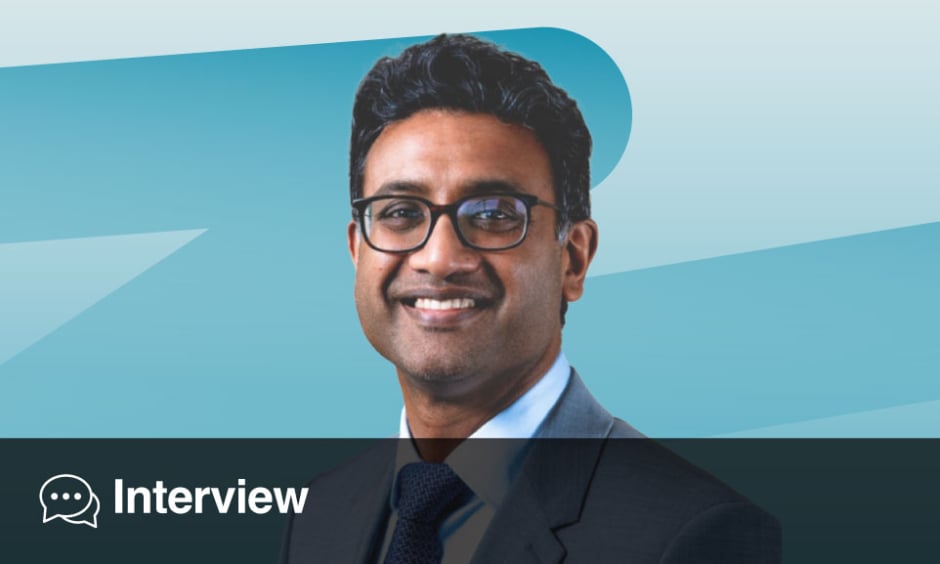
Ragu Rajan | GP Partner and Trainer, Wealden Ridge Medical Partnership; Clinical Director, Greater Wealden PCN, UK
Citation: EMJ Innov. 2026;10[1]:27-30. https://doi.org/10.33590/emjinnov/KTRO8706

As a general practice partner and trainer, what do you see as the biggest day-to-day challenges facing general practice today?
I think the demand for appointments has increased exponentially, especially in the last 10 years, and there has also been a change in what patients are willing to wait for. I think there is possibly an unrealistic expectation of how quickly patients feel that they need to be seen, because they feel it’s urgent. Maybe traditionally, they would have waited for the next available appointment; I think people have gotten used to everything else being instant, whether it’s streaming online or online deliveries, and I think that they believe healthcare should be the same. But I’m not sure that the capacity exists within the medical workforce to supply that at the moment. And so, one of the things we are looking at is how we can utilise our capacity as best we can.
The other big challenge we have is the lack of interoperability between our systems, which has a knock-on effect on our workload. So, for example, because acute trusts and other providers are under pressure to discharge patients, they often send patients back to primary care, when traditionally they would have done the follow-up work themselves, which means that primary care then takes up those patients and carries on investigating. So, advice and guidance, although a good thing, does often pass work back to primary care, because the follow-up investigations are then done in primary care. That constrains our capacity as much as everything else.
Additionally, the increased ask of primary care to shift towards a preventative health and proactive care model means that there are a lot more schemes from the integrated care board in terms of doing frailty reviews, for example, and multidisciplinary team meetings for patients that may potentially deteriorate during the winter season. While this is all good in terms of a shift from reactive to proactive care, there’s still only a limited workforce that’s available.
In your role as Clinical Director of the Greater Wealden PCN, UK, what innovations or changes have you introduced that have made the most impact on patient care?
It happened accidentally when we went through a merger a few years ago. We were a 10,000-patient population practice, and we merged with a practice that was 12,000, and it was also a practice undergoing difficulty; therefore, we decided to merge to help them out, and also for our own future resilience going forward. But, in that process, we had two different ways that the practice was run. They were broadly similar, and both included the receptionist doing the triaging, with a bit of a triage toolkit being used in the other practice. That was a bit confusing for patients; now as a part of a unified practice, we wanted to simplify our front end in terms of how patients act in the practice. At the time, I was part of the Academic Health Science Network (AHSN), and they were introducing pilots with AI triage tools, which we actually hadn’t heard of before. But I thought it would be interesting to have it. They did a presentation, and I did some research into it. We were sceptical at first of what AI could do, but we thought we had to do something, and we wanted to go digital. We also felt that for patients, the multiple routes of access were confusing. So, we thought, within hours, we could probably handle most of it as triage. But how do we do that? We weren’t confident in the tool to start with, so we did a staggered approach: we carried on with the reception booking appointments if a patient wanted to be seen, and when our appointments ran out, then we used the triage tool for the overflow patients.
In effect, what used to happen was that the reception would book appointments for patients who were shouting the loudest, rather than based on any objective measure of clinical urgency. We thought we needed a better approach. Therefore, we started to use an AI triage tool for people who wanted to be seen the same day. We did that over a 6-to-8-month period, and anyone who subjectively felt that they wanted to be seen urgently, and not just that day, but that week, we put through triage. However, because we are a semi-rural population, we kind of left it open for routine appointments. We didn’t want to triage a person that felt that they wanted to see a general practitioner (GP) but were prepared to wait, because there are some things a patient can’t necessarily describe very well, and we thought that would allow that patient to book in and discuss whatever they wanted to without having to go through a triage process. But anyone who subjectively felt that they needed to be seen urgently would be triaged. That had the knock-on effect of helping us to understand our demand, our capacity, when our urgent capacity was, and how many patients actually needed to be seen in a day, versus what could be pushed to other days that week. Monday was always a day of urgent demand, but not everyone needed to be seen on Monday, and therefore we could move it across the week. So, it allowed us to modify capacity.
Moreover, and I think I alluded to this in the panel session at Global Innovation And New Technology (GIANT) Health, it allowed us to utilise other members of staff. Often, the patient sees a GP and then they are sent to the first contact physiotherapist. But now, we are able to send patients directly to the first contact because we triage them. Or we can see if they are suitable for one of the seven conditions of pharmacy first, and we can put them into pharmacy straight away. That was probably one of the most useful things.
The third thing we discovered after using it, which we did some analysis over, was the consistency of triage. When you’ve got a triage without any sort of suggestions, every GP will be slightly different. Some will say patients need to be seen on the day. Some will tell them to come back in a week. This often depends on experience, as younger GPs and newer GPs will be more risk averse. But when AI does some data processing and comes up with a differential diagnosis and a suggested patient priority, everyone actually takes a second look and says, ‘is it acceptable? Is it not?’. That creates some consistency. I’m not saying we always agree with the AI, because the only things that we have that the AI doesn’t have, apart from knowing the patients in real-life, are the clinical notes. By looking through the clinical notes, we know how frail a person is, or how vulnerable a person is, and we might change the priority score based on that. Some of the next steps of the work that we’re doing is actually incorporating risk stratification. With risk stratification, if a patient is identified as high risk, they probably need to be continuously seen by the same GP. Whereas, if they are low-risk and low complexity, they can be seen by any GP, and their case can probably be closed remotely.
You spoke today in the session ‘Routing Smarter, Not Harder: AI Triage in the NHS App and the Future of Access to Care’. From a clinical perspective, what are the risks of directing patients via AI triage straight into bookable appointments?
I think we were doing it through the website initially. So, you either send an SMS link, or you go directly to the website and use the AI tool. Now it’s all done via the NHS app, and when people had to start using it for authentication, we saw a really big uptake of people starting to use the NHS app for other things, such as repeat prescribing, to look at their own test results, and to use the other admin tools available. The app is pretty much the same, but now people can access the triage tool through it.
Obviously, not everyone can use digital tools. So, how do you get complete population coverage, including people who can’t use it? At the moment, you’ve got the option to do it by proxy, as a friend or relative can do it on your behalf. People who can’t use a computer can also ring reception, who will fill out the information on their behalf, and then submit the form as a proxy. That’s how we’ve actually managed to cover the whole population with it.
During your panel discussion, you revealed how you introduced the concept of AI triage to your community by hosting a talk in the village hall. How was this received by the community, and what was most surprising about their reactions?
Well, it’s quite an educated community, but mainly of an older demographic. The talk was about AI in healthcare, and how we’re using AI in our practice. I think they were quite apprehensive about AI, and they thought it was a means to create more barriers to their access, rather than make it easier and more productive. It was interesting to hear the misconceptions. Some of them just thought AI was me being an avatar or a hologram, and they wouldn’t actually see me. Some of them thought that it was just a computer making decisions by itself. And some of them just didn’t know what it was. They thought it was just a gimmick or some sort of branding thing. There were varied thought processes, but we went through it all, and I explained the process of what it was and that we’re trying to work out who may feel that they have to be seen urgently. If you submit a request, we will get back to you within the same day, but we will read through it, and then we’ll be able to make an objective assessment. It gives us enough information to say if your condition can wait, and we’re reasonably confident about that. We’ll give you some safety netting if anything changes, and in the meantime, here’s what to do to get back in touch. We told them that we have a problem, which is the same as all general practices: there are insufficient appointments on a given day for everybody to be seen who wants to be seen, so who really needs to be seen? Then they understood what we’re trying to do: we’re trying to match crafting demand. I explained to them that I can see double the number of people requested to be seen on Monday than on Friday, but it’s not like we always have double the number of appointments. And we have more appointments on Monday, but not that many appointments. So, sometimes it will be pushed to Tuesday or Wednesday if it’s safe to do so. But if you really need to be seen that day, and we think you need to be seen that day, we will see you that day. And what we found was that the 8 am rush pretty much disappeared. The phone lines got so much better by switching to these means. Once they started to use it, people were actually surprisingly happy, because they realized that if they submitted a request, they get an instant response. They don’t have to wait on the phone for 30 or 40 minutes. Sometimes we do say, ‘go to the pharmacy first’, and how well that works depends on the pharmacist. If the pharmacist is on holiday, the locum might just send the patient back to the practice. Then the patient might get frustrated. It is variable when you use other parts of the service because you don’t know how responsive they will be. On the whole, however, patients have been happy. They feel that they’re seen.
What key insights have you taken away from GIANT Health this year?
I think that the key focus has been on looking at what level something should be done at. For example, should triage be done at the practice level, the neighbourhood level, the Integrated Care Board level, the regional level, or the national level? Scalability is very important in terms of 1) what makes the system more resilient, and 2) consistency across the board. When you’re talking about NHS 111, that is definitely important. I think the trick is how to get the nuance of local knowledge when you’re scaling it, because not everything’s exactly the same in the local population. A practice might be small, and we’re lucky because we’re at 23,000 patients, but some practices are very small, and they probably don’t have the infrastructure and resources to do triage or have enough to take a GP out to do triage. However, the neighbourhood health service is an option.
The neighbourhood health service is where you’ve got practices all working together at a scale of 30,000–50,000 patients, and they will understand that local area and community quite well, and will also know what community assets and surrounding teams there are. But I think the infrastructure is not quite there yet: interoperability team records, the whole risk stratification piece, and also a directory of services so everyone knows what exactly is available.
What is the single most important insight you hope attendees leave your session with?
I think there’s been lots of controversy about triage and online access from primary care in the news, so I hope they took away that there’s no easy answer for how to do it, and it’s going to be different for different practices, but it is possible to do it in a way that works. Of course, change is never easy, and it probably needs a bit of thinking through. That’s always the bit that’s hard, when you’re forced to implement a change, and you haven’t had the time or space to think about how you would do it in a way that’s going to be acceptable. But triage can make a difference, and you will find that lots of appointments are unnecessary and could be dealt with by other allied professionals. I think the tricky part is, when you’re not doing triage, you only see what you know, and there’s no way for you to know what you haven’t actually managed to capture. When you do this kind of triage, and the patients get used to the system, they will all come through this route, and then you’ll know what is needed for your given population. And that, I’m sure, is variable from area to area. There’ll be different types of populations that require different access, or places with higher deprivation that require a bit more work. But that’s probably a good thing, because that data will be useful in terms of healthcare planning going forward and finding out if we need the same model for the whole country, or if some practices need more GPs and some need less, because it depends on what’s going on in that given population. So, I think the key takeaway is not to be scared, but to experiment and try it out in a safe way.