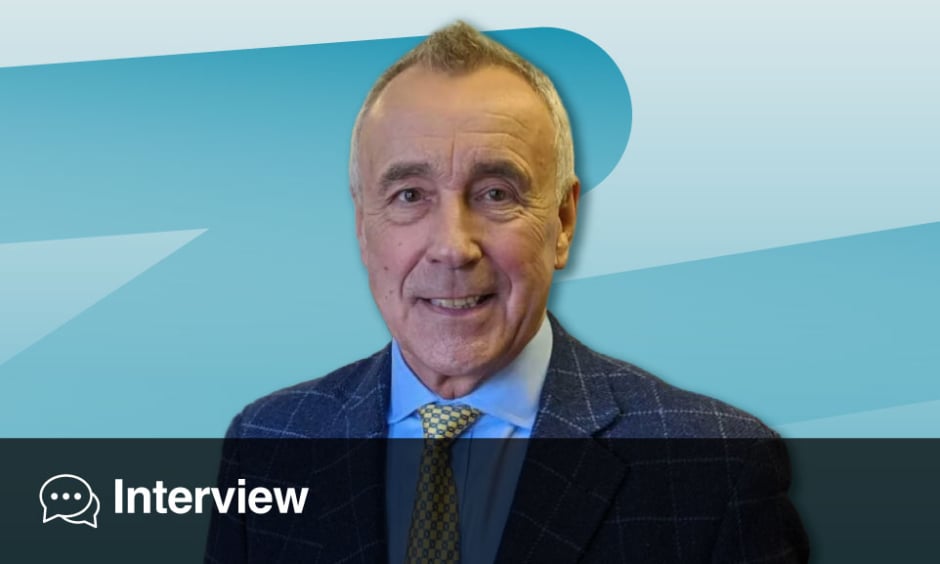
Roy Lilley | Founder and Editor-in-Chief, nhsManagers.net; Founder, The Academy of Fabulous NHS Stuff, London, UK
Citation: EMJ Innov. 2026; 10[1]:25-27. https://doi.org/10.33590/emjinnov/QQUA7033

Your eLetter aims to bridge the gap between ‘top floor’ policy and ‘shop floor’ reality. What recurring themes or concerns are frontline staff bringing to you these days, and how do they differ from those you heard a decade ago?
I think the key issue that’s on everybody’s mind at the moment is redundancy, and whether they are going to have a job, particularly amongst middle management. People are very worried about that. They had this announcement that they were suddenly going to make half of the staff at NHS England redundant. The integrated care boards effectively had their budgets cut in half. Trusts are under financial pressure, and people have been asked if they want to be voluntarily redundant, but how can that continue after a decade? They don’t know. There might be a job for them in the future, something they really want to do, but there has been no analysis, no workplace redesign. It’s a very unsettling and very damaging time. I feel for the people who are trying to manage the NHS in one of the most desperately difficult times I can remember. With the difficulties they’re having. They are having very worrying conversations over the breakfast table with wives, husbands, families, and partners. It must be a very stressful time. So, that’s a new theme that’s emerged. I’ve never experienced that before.
The rest, I think, is the same as it’s always been. People want to know what’s going on, and for some reason, we just don’t tell them. If you tell people what’s happening and make them a part of what’s happening, then you make much more progress. But if you keep them in the dark, they don’t know what’s happening, and they’ll expect the worst.
All these years ago, I started my eLetter, NhsManagers.net, because I wanted people at the bedside and in the boiler room to be as well informed as the people in the boardroom.
Many people point to staffing shortages, low morale, and burnout. What is your sense currently about morale in the NHS?
I think morale is on a precipice. It’s on the edge. It’s very precarious. I don’t think people have quite made up their mind yet what their morale is. They’re worried, but they don’t quite know what they’re worried about, or how worried they need to be. It’s a time of huge change that’s being ‘done to them’, rather than ‘with them’. Change always brings a bit of an updrift in morale, because then people think, ‘oh, this thing might get a bit better’, and there’s a bit of hope. However, after that, there’s the classic chasm that you fall into, and you end up with a so-called J-curve, where morale dips and is supposed to go up again. But the difficulty is, nothing is happening to make it go up again. There’s a lot of change, with reorganisation and pressures on places to save money. We’ve also got a lot of pressure with influenza this season.
Later today, alongside Sir James Mackey, CEO, NHS England, UK, you will be speaking about change management and reorganisation. From your perspective, what are the most common reasons that NHS transformations fail?
It’s the same old story. People love change if they think they’re in charge. How difficult is it to make them feel like they’re in charge? How difficult is it to say ‘we’ instead of ‘you’? How difficult is it to say, ‘us’ instead of ‘I’? These are very simple things that management can do to make people feel optimistic and make people feel that things are going to get better. Make people feel part of what’s going on. I think that’s the whole trick for change in the NHS, in fact, in any organisation, and they’re just not very good at it.
The NHS 10-year plan is often framed as ambitious but necessary. What parts of it do you believe are genuinely achievable?
I don’t think any of it is. I don’t think it’s a 10-year plan; I think it’s a 3-year plan. People will cherry-pick bits and pieces they think they can do now, but how can you possibly plan for 10 years? Ten years ago, we didn’t even have the word ‘AI’ in our lexicon. We didn’t have it 5 years ago. We only had machine learning 3 years ago. A 10-year plan is nonsense. I don’t believe in strategy at all. It’s too rigid. I believe in tactics and techniques. You’ve got to have the tactics and the techniques to manage a very changing environment. That isn’t to say that you don’t want to plan, to get an idea of where you’re going, what the direction is, and what you want to do, but a 10-year plan isn’t realistic.
Global Innovation and New Technology (GIANT) Health brings together clinicians, technologists, policymakers, and industry. What stands out to you the most about the tone of the conversation here in 2025?
The way it has grown stands out to me. I’ve known Barry Shrier, Founder, GIANT Health, since before the first annual event over 10 years ago. I was at the first one ever, when it was very small. Then COVID-19 came along, and we helped him run an online event. He kept it going through COVID-19, and now look at it. GIANT Health is full of young people with great ideas, vision, and things I’ve never thought of. I’ve been speaking to people about some new software, which is totally brilliant. I just love the energy that comes from this event. It’s effectively now, nailed into the calendar of healthcare. A permanent feature. I think it’s terrific.
We hear a lot about AI, automation, and virtual care. What technologies do you think are genuinely ready to change frontline NHS delivery right now, and which are still overhyped?
None of them are ready, and they’re all overhyped. That’s the nature of the IT industry. You have to take everything they say with a pinch of salt! But if you think about what AI could do to support clinicians’ decisions, it’s really important. Imagine being a young registrar at a hospital bedside with a difficult patient at three o’clock in the morning, and being able to whip out your phone to get some decision support. I mean, it’s terrific. We haven’t yet learned how to connect it to the frontline of healthcare, and not a lot will change until we do. But it will happen.
What are the biggest non-technical barriers to successful digital transformation in the NHS?
Trust is one of the issues with digital health, certainly regarding the use of data. For example, we are unique in that we’ve got access to data going back to 1948. We have the best health data in the world. I’m an old man now, and my data on its own is worthless. My data, alongside another older person’s, is probably worth looking at. But all of our data together will be good for all the younger people, to avoid all the health issues that we didn’t avoid. I’m hugely optimistic about what we can do, but a lot of it involves trust. The NHS has faced difficulties in its handling of data, which has raised questions about trust. Hopefully, now that we are all more used to the use of technologies in our daily lives, people will be more understanding and, more importantly, expect more. Data is the new oil. It’s hugely valuable, and we could do so much more if we really looked at people’s data. We could forecast health problems in the making. Genomic, DNA, we are on the brink of a very different healthcare system, for instance. We could really stop people from getting sick in the first place, and that would be the best health service in the world. All these things are possible, and as Bill Gates (co-Founder, Microsoft, Redmond, Washington, USA) said, ‘if you can imagine it, it can happen’, and that’s worth remembering.
And finally, if you were starting your career in NHS management today, what would you do differently?
I’d get some more experience in different hospitals and health settings. I’d look at what other people are doing here and overseas. There are always lessons to be avoided or lessons to be learned, in other countries and other places. You can’t be ‘too present’. Go and make yourself present in other places.