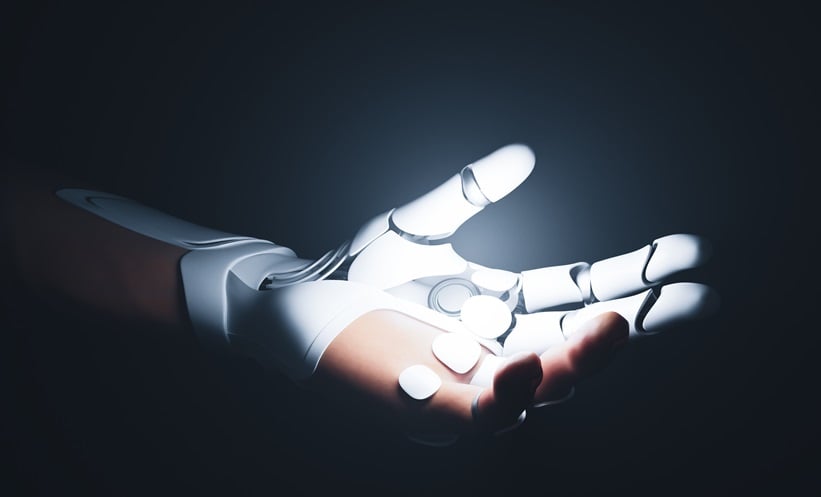
A BREAKTHROUGH in prosthetic technology shows that integrating artificial intelligence into a commercial bionic hand enables remarkably natural grasping and significantly reduces user effort. The system allows amputees to complete everyday tasks with enhanced precision and far less cognitive strain.
Sensory Driven Autonomy Enhancing the Bionic Hand
Researchers investigating how to improve intuitive prosthetic control found that adding multimodal sensors to a bionic hand could restore more natural interaction with the environment. While conventional devices often require substantial training, this updated approach demonstrates that combining proximity and pressure sensing with AI fundamentally improves how users operate a bionic hand.
Neural Network Methods Produce Intuitive Results
The study used an artificial neural network trained on grasping postures so that each finger of the bionic hand could identify nearby objects and adjust position automatically. Participants included both intact and amputee users who executed daily tasks such as lifting cups or picking up small items. Artificial intelligence moved each digit to its contact point, while human users controlled the overall grasp through surface electromyography. A dynamically weighted sum merged user intent with machine assistance. Outcomes showed greater grip security, greater grip precision and reduced cognitive burden, with no increase in physical effort. This system was validated on four amputees, a substantial cohort for transradial studies, and represents the first physical demonstration of shared control among multiple amputee participants using a commercial prosthesis. Unlike camera based systems, the distributed sensors required less power and provided more robust multiangle perception, allowing each finger to operate independently.
Implications for Clinical Practice
These findings point to a new generation of prosthetic devices that rely on shared autonomy to support more natural control. Clinical teams may consider integrating sensor rich, AI assisted designs to enhance dexterity, minimise training demands, and improve long term user satisfaction. Future research should focus on translating these enhancements into widely accessible prosthetic solutions and exploring how adaptive algorithms can further personalise bionic hand performance.
Reference
Trout MA et al. Shared human-machine control of an intelligent bionic hand improves grasping and decreases cognitive burden for transradial amputees. Nat Commun. 2025;16:10418.