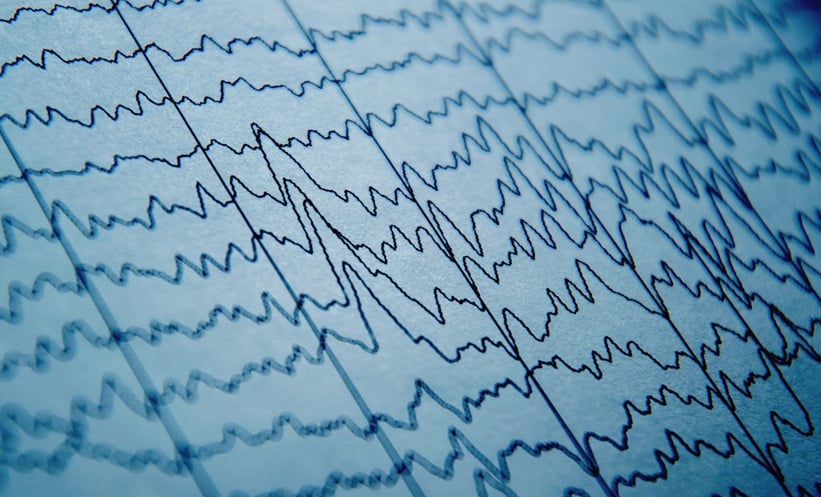
DEPRESSION treatment response was predicted with high accuracy using short segments of resting-state electroencephalography (EEG), according to new research that modelled selective serotonin reuptake inhibitor (SSRI) efficacy from multidimensional brain signals.
The study reported that a machine learning approach combining EEG features achieved nearly 97% accuracy in distinguishing patients who responded to SSRIs from those who did not, highlighting a potential step towards personalised antidepressant treatment.
EEG and AI to Analyse Antidepressant Treatment Response
Depression is a highly heterogeneous condition, with up to one-third of patients failing to respond adequately to first-line SSRI therapy. This variability has driven interest in objective biomarkers that could predict treatment outcomes before medication is prescribed.
Researchers analysed resting-state EEG data from 27 patients with depression, with an additional independent validation cohort of five patients recruited from the same hospital. Treatment response was defined by reduction rates on the Hamilton Depression Rating Scale-17. Patients were classified as drug-effective or drug-ineffective following SSRI treatment.
Three categories of EEG features were extracted across multiple time windows: relative power, fuzzy entropy, and phase lag index, capturing spectral, signal complexity, and functional connectivity information. These data were entered into a machine learning framework integrating recursive feature elimination with four classifiers, including support vector machines.
The best-performing EEG SSRI treatment response model was an SVM-based approach using 12-second EEG windows, which achieved 96.83% accuracy. Importantly, the optimised feature set maintained strong performance when tested in the independent validation dataset, supporting generalisability despite the small sample size.
Neurophysiological Signatures of Antidepressant Response
Beyond prediction, the analysis revealed distinct neurophysiological patterns associated with SSRI response. Patients who responded to treatment showed increased Beta2 power, enhanced high-frequency functional connectivity, and dominant engagement of frontal brain networks. Notably, 81% of functional connections identified in responders were long-range, suggesting more integrated neural communication.
These findings align with growing evidence that altered network-level brain dynamics underpin antidepressant efficacy.
Implications and Limitations
The authors concluded that Beta2 oscillations and long-range connectivity may serve as reliable biomarkers for SSRI treatment response. These EEG features may also provide valuable insight into the underlying neurophysiological mechanisms through which SSRIs exert their antidepressant effects.
If validated in larger cohorts, EEG-based prediction tools could help clinicians avoid trial-and-error prescribing and shorten time to effective therapy.
Reference
Li G et al. Neurophysiological mechanisms and predictive modeling of SSRI treatment response in depression disorder based on multidimensional EEG features. J Affect Disord. 2026; DOI:10.1016/j.jad.2025.120424.