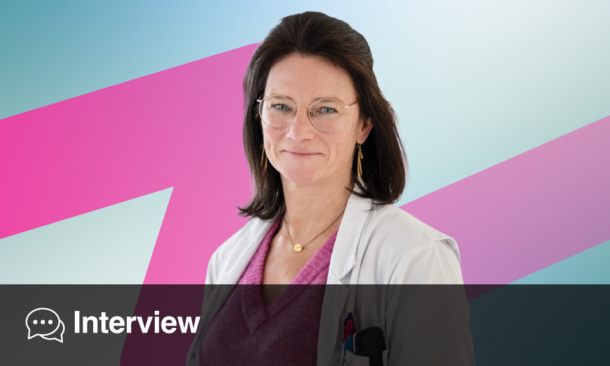
Senjuti Saha: Deputy Executive Director, Child Health Research Foundation (CHRF), Dhaka, Bangladesh
Citation: EMJ Microbiol Infect Dis. 2026; https://doi.org/10.33590/emjmicrobiolinfectdis/0O4WF3Y7

Firstly, what motivated you to return to Bangladesh after your PhD and postdoctoral training, and how did that decision shape your approach to research in low-resource settings?
I grew up in a family of public health practitioners; both my parents were microbiologists, and I am extremely close to them. While I was living in Canada, where I did my undergraduate and PhD training, I spoke to them about microbiology every day: what they were doing in my father’s hospital lab and in my mother’s public health lab, where she did pre-clinical vaccine trials, etc.
Although my PhD was going very well and I worked in a comfortable, well-resourced lab, I felt I was not as happy as my parents. They did not have access to all the resources I did, and we were never very solvent financially, but they had a clear sense of joy, satisfaction, and contribution. I wanted to do something similar.
After my PhD, I decided to come to Bangladesh for a year ‘to try things out’ and started working with my father in his hospital lab. I quickly realised there was so much to learn. Despite having a PhD, I understood it would take me years just to learn how to work effectively in such resource-limited environments, because it requires a completely different mindset and skillset.
As I started working and learning, I realised this was my opportunity to give back to the community that raised me and shaped who I am. It felt much more rewarding, and I began to experience the kind of joy I had seen in my parents. The work involves constant problem solving; everything is harder and takes longer, but solving even a small problem (that would not be a problem in a high-resource lab) feels much more rewarding.
Professionally, I also like working with microbes, and Bangladesh, unfortunately, has a high burden of infections. For a microbiologist, this provides an important opportunity to learn about microbes, how they evolve, how they cause infections, and how we can prevent infections in the most disadvantaged children.
Establishing a state-of-the-art genomics centre at the Child Health Research Foundation (CHRF) in Dhaka, Bangladesh was a major milestone. What were the biggest scientific and logistical challenges in creating this infrastructure, and how did you overcome them?
CHRF has worked on pathogens for a long time using basic microbiology and biochemistry, but we realised genomics was becoming increasingly important. As in many low-resource settings, our first entry into genomics was through large international collaborations, in which we shipped samples to high-resource settings that did the sequencing and analysis. Papers would be published, and we would often be middle authors.
We wanted to build local capacity. I had previously done my PhD in molecular genetics and was the first in my Canadian lab to do bacterial whole genome sequencing and data analysis. At CHRF, we began discussing how to set this up locally in Bangladesh.
The first logistical challenge was convincing donors of why it was important to invest in infrastructure in Bangladesh. It is cheaper in the short term to ship DNA to a lab that already has all the infrastructure and can sequence at scale. Donors, however, would have to fund the machine, the training, and the running costs for a smaller-scale facility, which would remain more expensive per sample for some time. So, I found myself constantly advocating for why local capacity matters and how it would pay off in the long term.
I was fortunate that, within 2 years, I had built relationships with decision-makers in donor and grant agencies who believed in this vision and agreed to support purchasing a machine and building capacity. Our first experiments went very well.
I think what really proved the value of local capacity was COVID-19. When the pandemic hit, we could not ship samples out; flights stopped and laboratories abroad were occupied with their own samples. Because we had invested in sequencing capacity just a year or two earlier, we became the first non-governmental lab in Bangladesh to start testing for COVID-19 and began sequencing immediately. We were able to sequence the first SARS-CoV-2 genome in the country very quickly. That success allowed us to move forward and overcome some early scepticism and logistical barriers.
However, many challenges remain. It is still more expensive to buy reagents in Bangladesh than in places like London or San Francisco. There are no direct suppliers; multiple intermediaries increase costs, and we lack tax exemptions. As a result, sequencing remains more expensive in Bangladesh, and, for every project, I must again explain and advocate why we should not ship samples abroad.
Scientifically, we also face isolation. In Canada, I could attend seminars, meet scientists informally, and stay close to cutting-edge work. Here, we are a small group trying to do science with few principal investigators and limited opportunities to interact with other research groups. That isolation makes it hard to generate new ideas, stay current with the field, and maintain motivation, especially when access to publications is often restricted by paywalls and reagents ordered from abroad can take weeks or months to arrive.
We also struggle with brain drain. We train talented people, but many leave the country, because there are limited opportunities for higher education and research, as well as broader socio-economic challenges. So, we are constantly dealing with loss of human capital and the need to rebuild teams. These are some of the major logistical and scientific challenges.
Your work on typhoid, paratyphoid, and Klebsiella antimicrobial resistance has informed both local and global health discussions. How do you see genomic data transforming infectious disease surveillance and policymaking in low- and middle-income countries (LMIC) over the next decade?
I see two major areas where genomic data can have impact: surveillance and activities beyond surveillance.
First, many countries, partly because of COVID-19, now know how to generate sequencing data. More affordable machines and kits are entering the market, and there is a growing recognition that sequencing is not ‘rocket science’. If you can run a polymerase chain reaction, you can run a sequencing experiment. Simple analytical pipelines are increasingly automated, and more students, even in countries like Bangladesh, are learning basic bioinformatics during their studies.
Second, and crucially, we need to ensure that genomic data feed into pharmaceutical innovation and core research and development in our own settings. At present, we are generating and analysing data, but often they are used elsewhere to design interventions, and we may or may not benefit from these. If we want our communities to benefit, science must be practised locally at the level of core research and development, whether for antibody development, vaccine development, or other interventions. At CHRF, we focus on preventing infections, and I hope that the genomics data we and others generate can increasingly inform innovations that are directly relevant to our environments.
Antimicrobial resistance (AMR) is another major area where genomics can help. AMR is a growing, persistent threat and is closely linked to the functioning of the healthcare system: overcrowded hospitals, limited resources, insufficient healthcare facilities, and workforce shortages all favour resistant bacteria. These structural problems cannot be fixed overnight, so resistant bacteria will continue to thrive.
Genomics can help by revealing the biology and pathways of transmission of resistant bacteria and resistance plasmids. For example, is transmission linked to specific hospitals, supply chains, ambulances transporting patients, or delivery settings for newborns? If we can use genomics to accurately trace where resistance is coming from, we can design much more targeted interventions to prevent infections and slow the spread of resistance.
You led the sequencing of Bangladesh’s first SARS-CoV-2 genome early in the pandemic. What lessons did that experience offer about the importance of rapid-response local capacity for global pathogen surveillance?
Our main lesson from COVID-19 is that the traditional ‘hub-and-spoke’ model is unlikely to work in the long term. In many genomic and surveillance systems, a central ‘hub’ dictates how multiple ‘spoke’ laboratories or countries function.
As technology advances rapidly, it is unrealistic to expect one hub to keep up and then enable all the spokes to keep up as well. We have seen the consequences when large funders withdraw from hub-centred projects. Institutions and livelihoods built around that model can be severely disrupted. Similarly, some international surveillance programmes have struggled when central funding or coordination ended. These systems assumed there would always be a strong hub.
We need to move towards an ‘empowered spoke’ model, in which local laboratories and institutions are capable and connected, and, instead of a single hub, there is an overarching monitoring and quality-control system. The alternative, completely decentralised ‘network-to-network’ model, where everyone does whatever they want, also carries risks, so some form of oversight is essential.
Ideally, we would have empowered local centres that collaborate with each other, supported by mechanisms that ensure ethical, equitable work; high-quality data; and proper evaluation. This applies both across countries and within institutions. Even within CHRF, our headquarters should not be the only decision-maker; all our labs need to be empowered to respond rapidly.
You’ve described your vision as “science by and for the many.” How can global collaborations become more equitable, so that researchers and communities in LMICs are full partners in discovery and policy?
It is a difficult question, because existing models have produced important work but have also perpetuated inequities. One issue is the incentive structure in high-resource institutions. Promotion, tenure, and grants often depend on being first or last author. Scientists in those institutions may genuinely want to invest time in capacity building, training others, building labs, and strengthening systems, but they are not rewarded for that work.
I believe we need to rethink how scientists are evaluated and incentivised, so that training, mentorship, and capacity building are recognised and rewarded. This is true not only in the Global North, but also in countries like Bangladesh. If one lab or institute is doing well, we should incentivise those scientists to help strengthen other labs and train others.
We in the Global South also have responsibilities. There should be much more South–South collaboration. Some institutes in the South have already figured out how to solve particular logistical or administrative challenges, including applying for international grants. There is a lot of knowledge that could be shared, and we do not do enough of that.
Finally, better education at the grassroots level is critical, with syllabi that are regularly updated, so that students learn current techniques and ways of thinking about problems. One of the biggest challenges in Bangladesh is that curricula do not keep pace with advances in life sciences. Students may learn about, say, metagenomics, but the field quickly moves on. Without ongoing updates, knowledge becomes outdated very fast.
Through your ‘Building Scientists for Bangladesh’ initiative, you’ve worked to expand access to scientific education and mentorship. What systemic barriers do you see young scientists facing in LMICs, and what approaches can help dismantle them?
I founded Building Scientists for Bangladesh in 2022, with the aim to build scientists who will work for Bangladesh in some capacity, whether from within the country or abroad. It has three streams.
Stream 1, ‘bringing science to people’, focuses on school students. We go to villages, set up science camps, bring microscopes and other tools, and allow students to engage with science and meet scientists.
Stream 2, ‘bringing people to science’, is also for school students, who come to our labs and experience how science is done in real research settings.
Stream 3, ‘developing skills and continuing education’, is for university students and professionals. Through these streams, more than a thousand trainees have already graduated from the programme.
The key challenge we are trying to address is the pace of scientific advancement. It is very hard for under-resourced laboratories and universities to keep up, both in terms of technology and training. Students may receive theoretical knowledge but often lack opportunities to develop practical analytical and research skills.
Our approach has been to use the infrastructure we already have, for example, our Genomic Centre, to complement university training. Our machines are not in use every day. When students who have learned about sequencing want hands-on experience, they can come and use our machines when they are free. Our colleagues show them how to operate the instruments, process samples, understand the resulting data, and then work with bioinformaticians to see how analysis is done.
This model shares existing infrastructure with universities to support broader development of students in Bangladesh so they can contribute to life sciences in the country. It is only one institution and one programme, but we hope it can grow and inspire similar efforts.
As technologies like single-cell genomics and metagenomics advance rapidly, how can we ensure that cutting-edge science remains both sustainable and accessible in LMICs?
One of the main barriers is cost. We have figured out many logistical aspects of importing reagents and equipment, but we pay very high prices because of multiple intermediaries, profit margins, and a lack of pricing regulation. For many research inputs, we effectively have no choice but to pay whatever is asked, because they are essential for our work.
Analyses of pricing show that costs for consumer electronics, like smartphones and televisions, have stabilised, because there is competition and these are not essential goods. In contrast, prices for healthcare services and certain medicines have continued to rise, because they are essential and demand is inelastic. Where there has been control, it is usually because governments or global actors intervened and set rules that you cannot charge beyond a certain level for essential goods.
I think similar interventions are needed for key research inputs, particularly in areas like genomics and pandemic preparedness that have global implications. It should not be the case that a large, well-connected institution in a high-resource setting pays far less for the same sequencing kit than a small organisation, like CHRF in Bangladesh. National governments and global players should treat certain research tools as essential public goods and set fair pricing guidelines so that suppliers cannot charge dramatically different prices for the same product.
We have seen similar measures for some essential medicines and, during COVID-19, for items like masks when prices became unreasonable. It is a question of political will and collective action, but it is certainly possible.
Looking towards the future, which infectious threats or scientific innovations most excite you, and how do you envision aligning CHRF’s research priorities with the evolving challenges of global health?
At CHRF, we see three main threats to children’s health in Bangladesh. The first is respiratory viruses with pandemic potential. The second is AMR. The third is climate change, particularly in the context of Bangladesh as a low-lying delta with rising sea levels and salinity, and the impact this has on pregnant women, mothers, and children. Climate change will affect both pathogens and human hosts.
We are aligning our work with all three, but I will focus on respiratory pathogens with pandemic potential. Pneumonia and other respiratory diseases remain the leading cause of death among children in Bangladesh and in many other low-resource settings across South Asia and sub-Saharan Africa. Historically, we have focused largely on the pathogen, such as pneumococcus or Haemophilus influenzae, and paid much less attention to the host and the environment.
Now, as we build infrastructure and expertise to study pathogens, we also want to understand the host response. For many respiratory viruses, such as respiratory syncytial virus (RSV), there is little or no difference between the viruses circulating in Bangladesh and those in high-income settings. Yet, while nearly all children worldwide are exposed to RSV by the age of 4 years, about 97% of RSV-related deaths occur in countries like ours.
If the virus is the same, we need to understand why outcomes differ so dramatically. Beyond access to healthcare, we suspect roles of host genetics, environmental exposures, pollution, and nutrition. We want to investigate the mechanistic pathways that lead to worse outcomes.
This is challenging, because we have many microbiologists and clinicians but relatively few immunologists in Bangladesh. We have to train ourselves and our teams in immunology and adopt methods that allow us to study host responses in depth. Over the next few years, we hope to focus increasingly on this area, including using techniques like single-cell RNA sequencing and mammalian cell culture models to study the host alongside the pathogen. But I hope that through this work, we can demonstrate that the future of global health depends not only on where the data is generated, but also on where the discovery is led.