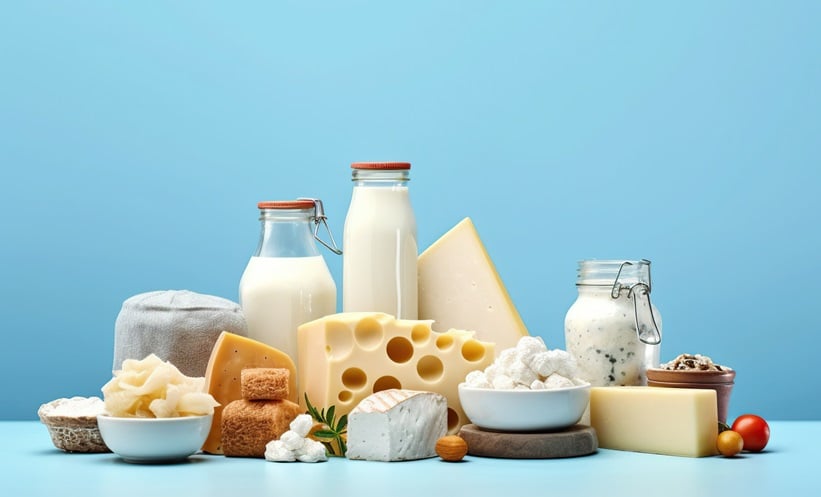
A LARGE Swedish study finds that certain full fat dairy foods are linked to a lower dementia risk over 25 years, while low fat options show no clear cognitive benefit.
Dietary Fat and Dementia Risk in Midlife
Understanding how everyday foods influence dementia risk has become a priority as populations age and prevalence continues to rise. Dairy products are widely consumed, yet their impact on brain health remains debated, particularly as nutritional advice has long favoured low-fat alternatives. Previous research has produced inconsistent results, often grouping all dairy together without accounting for fat content. This new analysis addresses that gap by examining how high fat and low-fat dairy products relate differently to dementia risk over decades of follow up.
High Fat Cheese and Dementia Risk Outcomes
The prospective cohort study drew on data from 27,670 participants in the Malmö Diet and Cancer cohort, with a mean baseline age of 58.1 years and 61% female. Dietary intake was assessed between 1991 and 1996 using food diaries, questionnaires, and interviews. Over a median follow up of 25 years, 3,208 incident dementia cases were identified through national registers. Participants consuming at least 50 g per day of high fat cheese, defined as more than 20% fat, had a lower risk of all cause dementia compared with those consuming less than 15 g per day, with a hazard ratio of 0.87 and 95% CI 0.78–0.97. The association was stronger for vascular dementia, with a hazard ratio of 0.71 and 95% CI 0.52–0.96. Among APOE ε4 noncarriers, high-fat cheese intake was also linked to lower Alzheimer disease risk, with a hazard ratio of 0.87 and p interaction = 0.014. High-fat cream intake of at least 20 g per day was associated with a 16% lower dementia risk, with a hazard ratio of 0.84 and 95% CI 0.72–0.98. No associations were observed for milk, fermented milk, butter, or low-fat dairy products.
Implications For Clinical Advice and Prevention
While observational, these findings suggest that blanket avoidance of dairy fat may not support dementia risk reduction. For clinicians, the results highlight the importance of nuanced dietary guidance that considers food type, fat content, and individual genetic background. Further research is needed to explore biological mechanisms and confirm causality, but the study supports more personalised nutrition discussions in midlife as part of broader dementia prevention strategies.
Reference
Du Y et al. High- and Low-fat dairy consumption and long-term risk of dementia. Neurology. 2025;DOI:10.1212/WNL.0000000000214343.