This content was funded by AstraZeneca, and is intended for US Healthcare Professionals. Expert opinions are shared in this program and may differ from the approved capivasertib (TRUQAP®) labeling. Please see full Prescribing Information, including Patient Information when making treatment decisions.
Indication and Usage
Capivasertib (TRUQAP®) in combination with fulvestrant is indicated for the treatment of adult patients with hormone receptor (HR)-positive, human epidermal growth factor receptor 2 (HER2)-negative locally advanced or metastatic breast cancer with one or more PIK3CA/AKT1/PTEN alteration as detected by an FDA-approved test following progression on at least one endocrine-based regimen in the metastatic setting or recurrence on or within 12 months of completing adjuvant therapy.
Description
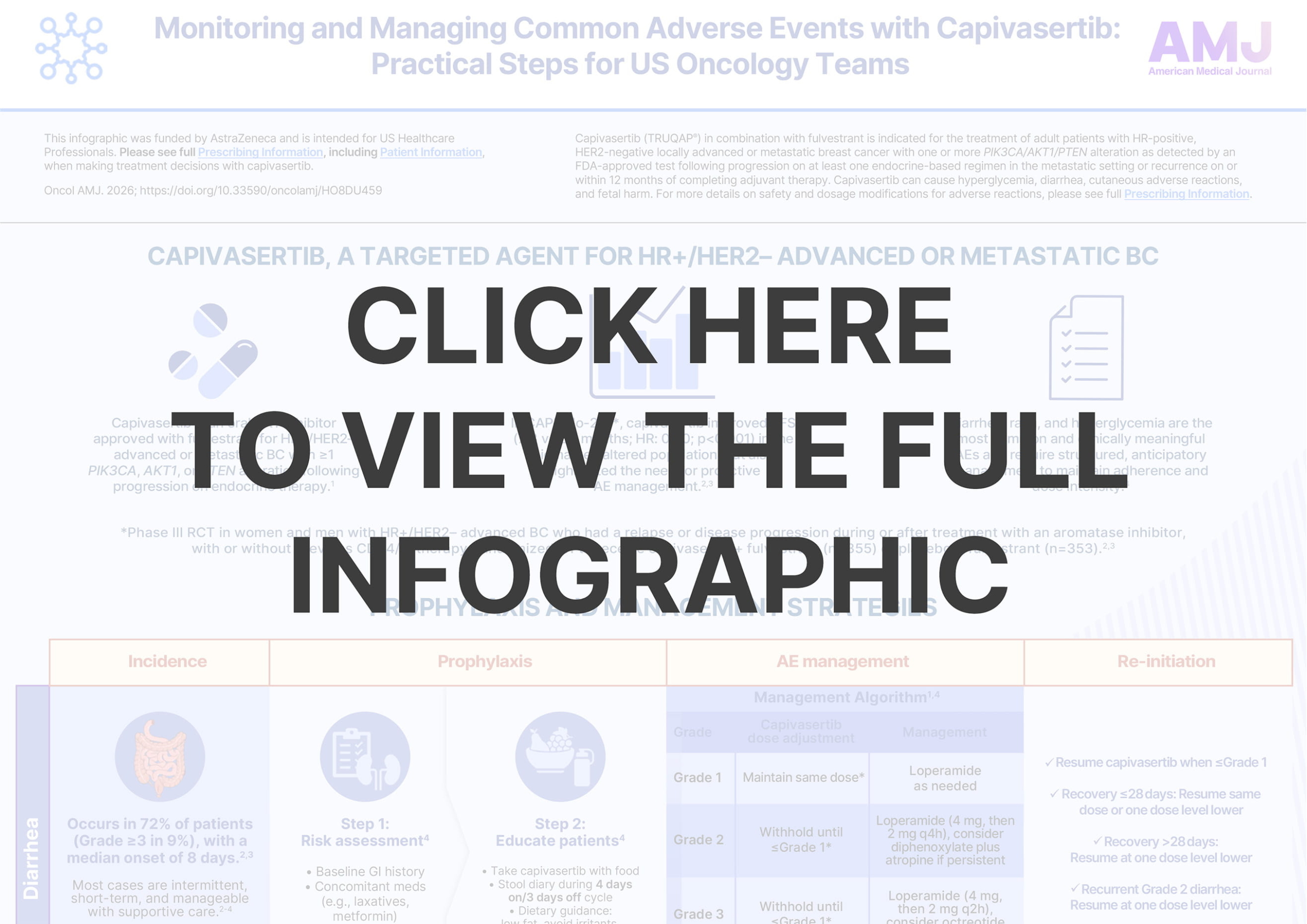
Diarrhea, rash, and hyperglycemia are the most common and clinically meaningful adverse events (AE) with capivasertib and require structured, anticipatory management to maintain adherence and dose intensity. This infographic outlines practical steps for US oncology teams, including prophylaxis and management strategies, AE management, and re-initiation considerations.
Learn
- What should be assessed before starting treatment?
- What monitoring and patient education are recommended during treatment?
- How should diarrhea, rash, and hyperglycemia be proactively managed?
- When should symptoms be escalated, and when should capivasertib be withheld, resumed, or permanently discontinued?
Additional Resources
- Video Podcast: Capivasertib in the Clinic: Strategies to Manage Adverse Events
- Educational Video: A Visual Journey into AKT Inhibition
Select Safety Information About capivasertib (TRUQAP®) tablets
TRUQAP is contraindicated in patients with severe hypersensitivity to TRUQAP or any of its components.
Serious adverse reactions include hyperglycemia, including diabetic ketoacidosis and fatal outcomes; diarrhea; and cutaneous adverse reactions. Monitor fasting glucose and hemoglobin A1C levels regularly. May cause fetal harm when administered to a pregnant woman. Among the 355 patients who received TRUQAP in CAPItello-291, the most common (≥20%) adverse reactions, including laboratory abnormalities, were diarrhea (72%), cutaneous adverse reactions (58%), increased random glucose (57%), decreased lymphocytes (47%), decreased hemoglobin (45%), increased fasting glucose (37%), nausea and fatigue (35% each), decreased leukocytes (32%), increased triglycerides (27%), decreased neutrophils (23%), increased creatinine (22%), vomiting (21%), and stomatitis (20%).
Please see full Prescribing Information, including Patient Information for TRUQAP.