Charcoal Grilling Smoke Shows Extreme Polycyclic Aromatic Hydrocarbons
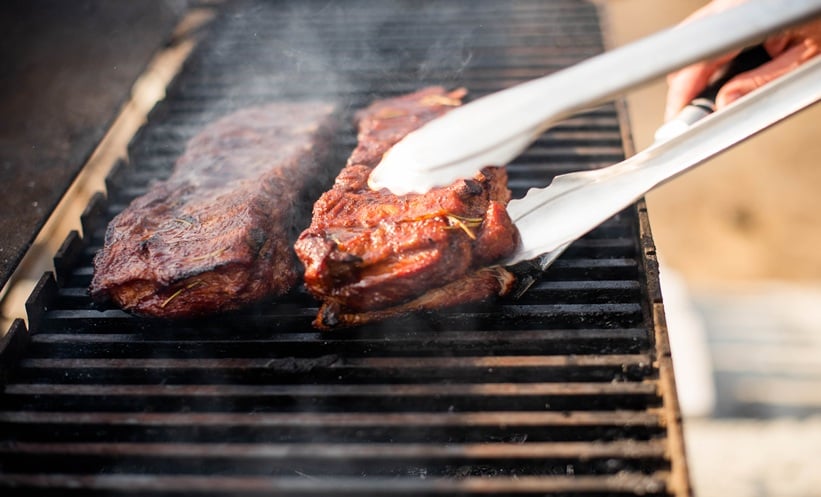
POLYCYCLIC aromatic hydrocarbons in charcoal grill smoke reached extreme levels during pork belly cooking, researchers report.
Polycyclic aromatic hydrocarbons (PAHs) are hazardous combustion byproducts, but real-world exposure assessment during cooking can be difficult because grilling generates intense smoke for short periods. In this study, investigators focused on quantifying airborne PAH mass concentrations produced during charcoal grilling, using an approach designed to capture brief, high intensity emission events.
Polycyclic Aromatic Hydrocarbons Measured with Short Duration Sampling
The team quantified PAHs using thermal desorption gas chromatography mass spectrometry (TD GC MS). With a 360 L air sample, the reported detection limit for benzo[a]pyrene (BaP) was 5 pg Sm−3, supporting measurement even when sampling time is limited.
Pork Belly Grilling Over Charcoal Drives Very High BaP
During pork belly grilling over charcoal, the total concentration of 16 EPA regulated PAHs in smoke was 98.4 μg Sm−3. BaP alone reached 1431 ng Sm−3, compared with 0.26 μg Sm−3 for total EPA PAHs in ambient air reported in the study context. The authors also benchmarked BaP against a WHO/EU guideline of 1 ng Sm−3, concluding that the grilling smoke concentrations exceeded this level by more than 1,400-fold, indicating extreme potential inhalation exposure during charcoal grilling.
Fuel Type Strongly Influenced Benzo[a]pyrene Levels
To separate the effect of the grilling process from fuel combustion, the researchers assessed combustion without meat. Under these conditions, BaP concentrations varied widely by fuel, ranging from 0.67 ng Sm−3 with hardwood charcoal to 953 ng Sm−3 with chaff, underscoring fuel type as a decisive driver of emissions.
Taken together, the findings suggest that charcoal grilling, particularly during pork belly cooking, can generate very high airborne PAH concentrations over short time windows. The authors highlight the need for emission control and safer grilling standards to reduce potential exposure.
Reference: Kim YH et al. Evaluation of polycyclic aromatic hydrocarbon (PAH) mass concentrations in smoke generated during pork belly grilling over charcoal. Food Chem X. 2026;34:103558. doi: 10.1016/j.fochx.2026.103558.