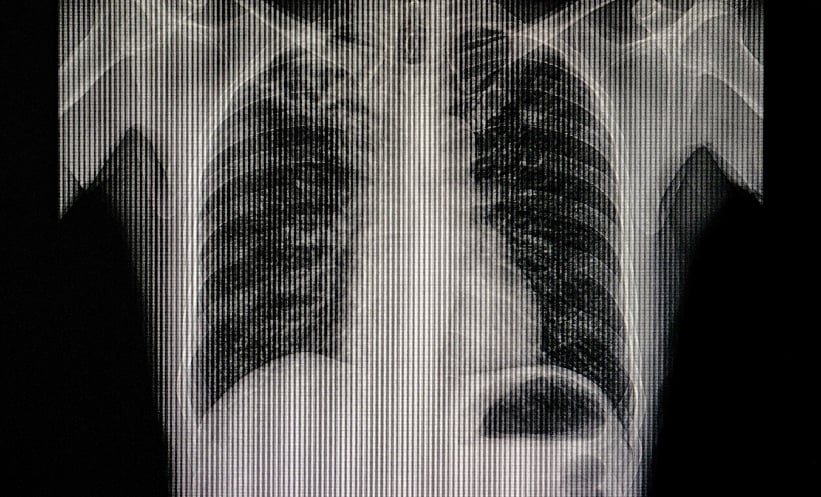
A new study suggests that dynamic chest radiography could offer a practical alternative to traditional lung function tests for identifying chronic obstructive pulmonary disease, potentially widening access to earlier diagnosis.
Pulmonary function tests are the clinical standard for diagnosing COPD but they can be difficult to perform, require specialised equipment and are not always readily available. Researchers set out to assess whether dynamic chest radiography, a low-dose imaging technique that captures lung movement during breathing, could provide comparable diagnostic information.
Imaging lung function in motion
The prospective study, carried out at a single centre between November 2022 and July 2024, enrolled 553 participants with and without COPD. The median age was 60 and around two thirds of participants were men. Of the total group, 191 had a confirmed diagnosis of COPD while 362 served as controls.
Participants underwent both pulmonary function tests and dynamic chest radiography. Researchers focused on how changes in projected lung area during deep breathing related to established lung function measures. In people with COPD, the combined rate of change in lung area across both lungs showed a strong positive correlation with key pulmonary function indexes, including forced expiratory volume in one second and the ratio of forced expiratory volume to forced vital capacity.
These findings indicate that dynamic chest radiography can capture meaningful information about airflow limitation and lung mechanics, despite being simpler to perform than conventional tests.
Strong diagnostic performance
The team also assessed how well dynamic chest radiography could distinguish between patients with and without COPD. In an internal test set, the rate of change in lung area during deep breathing demonstrated good diagnostic accuracy. A model built using three imaging features performed even better.
When researchers combined one radiography parameter with smoking status, diagnostic performance improved further. This combined model achieved a high level of accuracy, suggesting that imaging data alongside basic clinical information could be effective for screening. To support clinical use, the researchers developed a nomogram to estimate an individual’s probability of having COPD. The model showed good calibration, meaning predicted risks closely matched observed outcomes.
The authors conclude that dynamic chest radiography represents an efficacious alternative approach to pulmonary function tests for COPD screening. While they emphasise the need for further validation in other settings, the technique could be particularly valuable in clinics where access to standard lung function testing is limited or where patients struggle to complete complex breathing manoeuvres.
Reference
Yu D et al. Dynamic chest radiography as an alternative to pulmonary function tests for chronic obstructive pulmonary disease. Radiology. 2025;317(3):e251296.