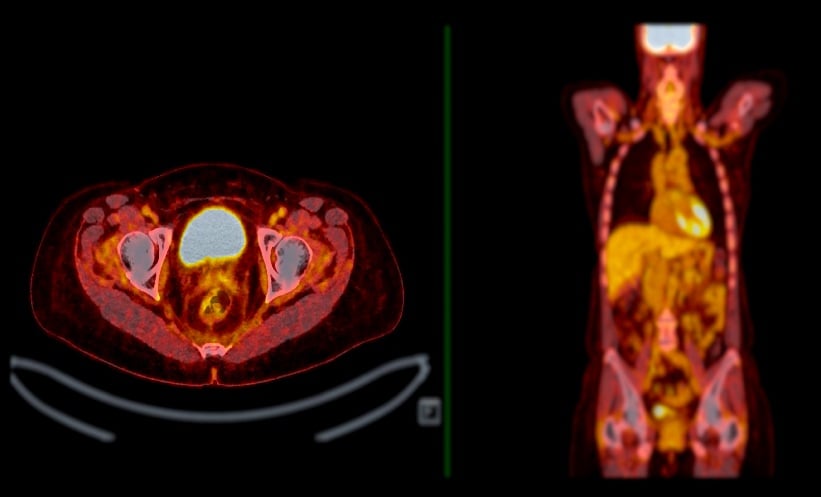
AXILLARY IMAGING plays a pivotal role in guiding sentinel lymph node biopsy (SLNB) decisions for patients with early-stage, clinically node-negative (cN0) breast cancer (BC), according to a recent retrospective analysis of 661 patients. The study assessed whether invasive lobular carcinoma (ILC) independently predicts SLNB positivity and evaluated the diagnostic performance of preoperative axillary ultrasound and magnetic resonance imaging (MRI).
Histology and SLNB Positivity
The analysis revealed that ILC, present in 16.9% of cases, did not independently predict SLNB positivity, with 16.1% of ILC and 20% of non-special type tumors (NST) demonstrating positive nodes (P=0.3). Rates of axillary lymph node dissection (ALND) and nodal upstaging were similar between histologies. Instead, tumour size greater than 20 mm and vascular invasion emerged as independent predictors of SLNB positivity. These findings underscore that histology alone may not justify deviation from standard SLNB protocols in clinically node-negative patients.
Role of Axillary Imaging
Preoperative axillary imaging demonstrated high specificity and negative predictive value in identifying node-negative patients. Ultrasound had a specificity of 95% and negative predictive value of 80%, while MRI showed a specificity of 79% and negative predictive value of 98%. No axillary recurrences were observed over a median follow-up of 49.3 months. The data suggest that combining clinical assessment with imaging enables safe SLNB de-escalation in selected patients, including those with ILC, reducing unnecessary surgical morbidity.
Clinical Implications and Patient Selection
The findings highlight the importance of integrating radiological evaluation into surgical planning for early-stage BC. By focusing on tumour size, vascular invasion, and high-quality axillary imaging, clinicians can identify patients who may safely omit SLNB without compromising oncological outcomes. This approach aligns with personalised care, optimising surgical decision-making while minimising intervention in well-selected, node-negative patients.
Reference
Accomasso F et al. Is lobular histology a predictor of sentinel node positivity in early breast cancer? An integrated analysis of histological subtype and preoperative imaging. Clinical Breast Cancer. 2026; https://doi.org/10.1016/j.clbc.2026.01.002.