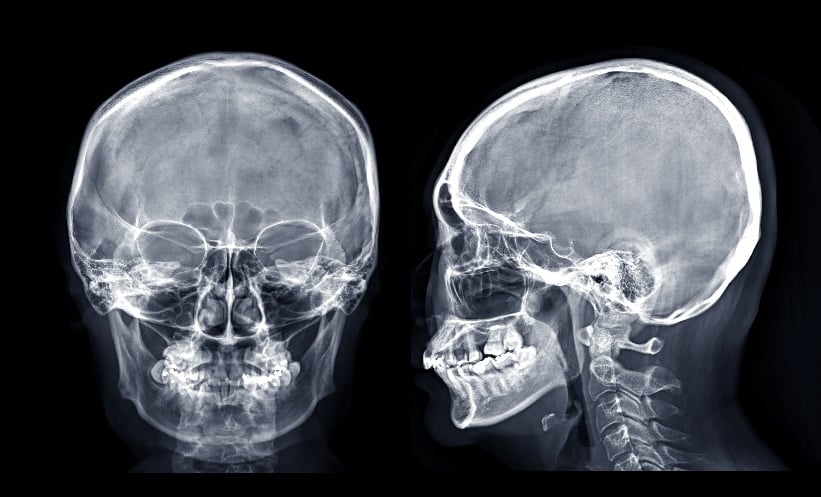
SYNTHETIC radiographs, or AI-generated X-ray images, are becoming increasingly realistic, raising questions about their detectability in clinical practice. A recent international study assessed how accurately radiologists and advanced AI models could distinguish these deepfakes from authentic clinical images.
Medical Deepfakes Mimic Real X-Rays
Synthetic radiographs can be created by large language models like ChatGPT and are designed to closely resemble real scans of bones, soft tissue, and organs. While they can be valuable for training or research, their high realism can occasionally blur the line between genuine and artificial images, potentially affecting diagnostic accuracy if unnoticed.
In the study, 17 radiologists from six countries reviewed 154 radiographs, half generated by GPT-4o and the other half authentic images. When unaware of the study’s true purpose, 41% of radiologists spontaneously suspected some images to be AI-generated. After being informed, overall detection accuracy was 75% for GPT-4o radiographs and 70% for those produced by RoentGen.
AI models were also tested on the same images. GPT-4o and GPT-5 were the most accurate, correctly identifying up to 85% of synthetic radiographs, which was higher than both the other AI systems and the radiologists’ overall accuracy. These models performed particularly well when detecting images generated in their own style. Even so, no AI system identified all synthetic radiographs perfectly.
Understanding and Using Synthetic Radiographs Safely
Although synthetic radiographs sometimes show small inconsistencies – for example, unusually smooth bones, near-perfect symmetry, or uniform noise, but these differences are subtle. As a result, some images still fooled both radiologists and AI models, highlighting the challenge of detection even with training.
The findings underline the importance of training both physicians and AI systems to recognise synthetic radiographs. While detection is often successful, improving familiarity with subtle visual patterns and developing robust AI detection tools will be critical as medical deepfakes become more common.
Importantly, AI-generated radiographs have valuable applications in education and research, such as providing large datasets for medical training without using patient data or helping develop and test AI diagnostic tools. By combining careful detection training with responsible use, synthetic radiographs can support both learning and innovation while minimising risks to diagnostic accuracy and patient safety.
Reference
Tordjman M et al. The Rise of Deepfake Medical Imaging: Radiologists’ Diagnostic Accuracy in Detecting ChatGPT-generated Radiographs. Radiology. 2026;DOI: 10.1148/radiol.252094.
Featured image: samunella on Adobe stock