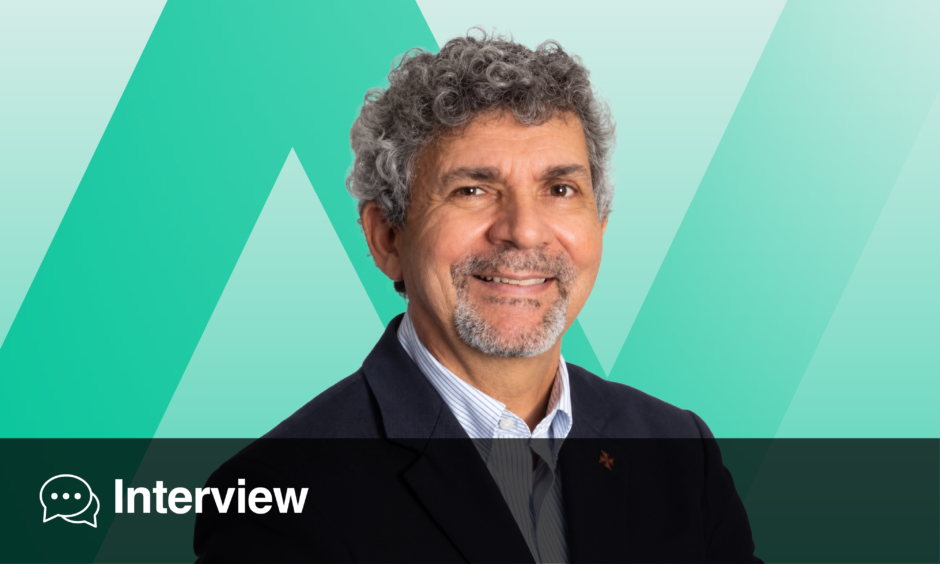
David Mannino | Professor, University of Kentucky College of Medicine, Lexington, USA; Chief Medical Officer, COPD Foundation
Citation: EMJ Respir. 2026;14[1]:83-86. https://doi.org/10.33590/emjrespir/3H4GXZK2

Could you tell us what first drew you to respiratory medicine and COPD, and how this interest has developed throughout your career?
Interestingly, when I started medical school almost 50 years ago, the first patient I saw in a hospital setting as a second-year student, in 1978, had COPD and lung cancer. That made an impression on me.
As I progressed through medical school and considered which field to enter, I chose internal medicine. During my rotations, my favourites were in pulmonary medicine, including both critical care and outpatient care. I have, therefore, been interested for nearly 50 years in how the lungs work and how we can keep them functioning.
To me, the lungs are incredible organs. They withstand so much and are our main interface with the environment. Everyone breathes at least 12 times a minute, 24 hours a day, mostly involuntarily. People are exposed to all sorts of things, sometimes voluntarily, like tobacco smoke, but also through occupational exposures and air pollution. For most people, the lungs keep working and demonstrate incredible resilience. However, when things go wrong, they can deteriorate quickly and severely. That has always interested me.
After completing my residency, I followed a career path that ultimately led me to work at the CDC, the main prevention agency in the USA. There, I helped develop the National Asthma Control Program and began examining COPD epidemiology and outcomes, as well as how we could think about the disease differently.
When I was a resident around 45 years ago, there was a very nihilistic view of COPD: people would say that patients smoked, had brought the disease upon themselves, and that nothing could be done because it was a terrible, progressive condition. That is not true. There are now many things we can do.
Twenty-two years ago, I became one of the co-founders of the COPD Foundation. Several of us with an interest in COPD came together, because we believed there had to be a better way forward: improving patients’ lives, developing better therapies, and achieving better outcomes.
How have patients’ experiences shaped the priorities of the COPD Foundation, and what role can patient-led organisations, such as the Foundation, play in improving research?
The COPD Foundation has its mission statement and goals, but patients are represented on our Board and we speak with them constantly. We listen to their frustrations and use those insights to help determine the direction in which we should be going.
A couple of years ago, patients spoke loudly and clearly when we reconsidered the Foundation’s core values. These are: first, to pursue a cure for this terrible disease; second, to optimise patients’ lives, not only adding more years to their lives, but more life to their years; third, to create a movement that increases awareness among decision-makers, policymakers, funders, and the general public; and, finally, to find the financial, political, and other resources needed to make this happen.
Despite being the fourth- or fifth-leading cause of death in the USA, COPD ranks at around 160th for federal research funding. It receives far less funding per person affected than many other diseases. We have been working to change that, because without investment in a disease, we will not reach better solutions or outcomes.
Patients’ involvement is also important when considering patient-reported outcomes. At present, therapies for COPD in both the USA and Europe have generally been approved on the basis of improvements in lung function or reductions in exacerbations. Yet, patients do not come into the clinic complaining that they have a low forced expiratory volume in 1 second; they complain about respiratory symptoms, such as breathlessness, cough, and sputum production. Those outcomes have not been used as pathways for approving therapies. There are reasons for this, because they are somewhat subjective, but subjective outcomes are used in other therapy approval processes. The patient voice is therefore essential.
A few years ago, we removed the pursuit of a cure from our core tenets, because we were uncertain how we would achieve it. Patients told us very clearly that they wanted it restored. There are caveats, as we also talk about disease modification as a type of cure. How we define a cure or disease modification depends on the point in the disease process at which we intervene and how advanced the disease is.
In certain subtypes, however, we may be getting tantalisingly close. For example, gene-editing therapies are now being explored for α-1 antitrypsin deficiency. Within the next 10 years or so, I think we may see something that could be considered a cure for that genetic condition.
Despite greater awareness of COPD, many people remain undiagnosed until the disease is relatively advanced. What continues to prevent earlier recognition, and where could we improve?
COPD is largely a disease of ageing, and people often attribute symptoms such as breathlessness or needing to stop while climbing stairs to getting older rather than to a disease process.
People understand that chest pain is concerning and should be investigated quickly. Breathlessness is different because everyone becomes short of breath under sufficient exertion. If either of us ran up six flights of stairs, we would be gasping at the top, and that would be normal. What is abnormal is needing to stop after five steps or even two. However, most respiratory diseases have such an insidious onset that people may not recognise what is happening.
People naturally reduce their activity as symptoms develop. Modern life also makes this easy: if someone becomes breathless when walking upstairs, they can take the elevator. When I ask patients whether they become short of breath, they may say no. When I ask what they actually do, I may learn that they sit in a chair and their greatest exertion is changing the television channel. This gradual reduction in activity is a significant part of the problem.
Another issue is that agencies responsible for prevention strategies have not endorsed measuring lung function across the population. They may state that spirometry is not a good way to detect COPD in an asymptomatic population, but determining whether someone is truly asymptomatic can itself be challenging.
There are therefore two main barriers. First, people attribute increasing symptoms to age rather than disease. Second, at least in the USA, there is no systematic approach to lung-function testing. This is changing elsewhere; France, for example, is considering spirometry at different points in adult life.
There may be a rationale for this. We are trying to make the case that spirometry should not be performed solely to find COPD, but used as a measure of lung health. Although it will identify COPD, it can also detect other lung problems, many of which are amenable to treatment.
COPD has historically been associated primarily with smoking. How has our understanding of other risk factors changed the way we should approach disease prevention?
We now know that, in the USA, more than 25–30% of people with evidence of COPD have never smoked. A history of asthma is an important factor among these patients. Other risks include early-life respiratory infections, second-hand smoke, and occupational exposure to dusts, gases, vapours, and fumes.
COPD is also a disease of poverty. Socioeconomic factors include overcrowding, mould exposure, and infections associated with crowded living conditions. In low- and middle-income countries, tuberculosis and other early-life respiratory infections are associated with evidence of COPD in adult populations. The causes therefore extend well beyond smoking, although smoking remains the predominant risk factor in high-income countries.
We are still waiting for long-term data on vaping. It took approximately 30 years of studying cigarette smoking before it could be linked to the development of COPD, whereas vaping has existed for only around 15–20 years. There is certainly no evidence that it is safe. We do not yet know whether it will ultimately lead to obstructive, restrictive, or other forms of impaired lung physiology. I always say that the only thing truly safe to breathe is air; anything else inhaled has the potential to cause damage.
Your research has identified substantial geographical and socioeconomic variation in the burden of COPD. What factors drive these inequalities, and how could they be reduced?
Many of the factors we have discussed contribute to these inequalities. In the USA, smoking prevalence varies considerably by state because of historical factors, population composition, and policies such as cigarette taxation.
I spent my summers in Kentucky, USA, which historically taxed cigarettes at a very low rate and had a high prevalence of smoking. Kentucky has consistently ranked among the five states with the highest COPD prevalence. It is also a relatively poor and largely rural state, with a history of mining and associated occupational exposures. People in rural areas may face additional exposures.
Globally, we see a similar constellation of factors. Healthcare systems also play a role. In countries with more universal healthcare, such as the Scandinavian countries, a social gradient remains, but it is narrower than in countries without uniform access to healthcare. Wealthier populations tend to have better access to care, are more likely to be diagnosed earlier in the disease course,and have greater access to different therapies.
Exacerbations can significantly alter the course of COPD. Are we doing enough to identify patients at risk and intervene before an exacerbation leads to hospitalisation?
Our goal for patients with COPD is zero exacerbations and, certainly, zero hospitalised exacerbations. People are often shocked to learn that the risk of death following hospitalisation for a COPD exacerbation is approximately 50% at 3–4 years. This is higher than the mortality among people discharged alive after an acute myocardial infarction.
Many COPD therapies are intended to reduce exacerbations. Current international guidance comes from the Global Initiative for Chronic Obstructive Lung Disease (GOLD). This is why GOLD lowered the threshold for advancing therapy from two moderate exacerbations to one. Moderate exacerbations are generally managed in an outpatient setting with antibiotics and/or steroids.
For several years, the threshold had been two, but the evidence suggests that one exacerbation is sufficient to prompt a reassessment of treatment. This may include adding inhaled corticosteroids, advancing bronchodilator therapy, or considering newer treatments such as biologics.
Pulmonary rehabilitation is one of the most effective interventions for COPD, but participation remains low. How could this be changed?
One challenge is that there are not enough programmes to meet patients’ needs. Reimbursement may contribute to this, as pulmonary rehabilitation is reimbursed at a lower level than cardiac rehabilitation, for example.
Traditional pulmonary rehabilitation also requires people to attend 2 or 3 days a week. There has been some movement towards virtual programmes, although these present challenges. In my view, patients generally do better in a physical, brick-and-mortar pulmonary rehabilitation programme. A virtual programme is better than no programme, but much of the benefit comes from being in a room with people who share similar experiences. This builds camaraderie and helps patients realise that they are not alone.
COPD can be very isolating. When people struggle to catch their breath, restrict their activities, or depend on oxygen outside the home, they tend to do less. This can begin a cycle of depression and anxiety that puts them into a downward spiral. One of the things pulmonary rehabilitation does effectively is help change that narrative.
Looking ahead, which developments have the greatest potential to change COPD care in the near future?
Several developments are taking place. One relates to earlier detection. In the USA, I do not think we will achieve widespread spirometry across large sections of the population. Even when spirometers have been provided to general practice offices, they have often not been used.
However, we are seeing other potential methods of identifying people with abnormal lung function. An interesting paper published earlier this year examined how AI-enhanced electrocardiograms could identify people at risk of COPD. Electrocardiograms can show evidence of right heart strain, which may indicate that the heart is struggling to push blood through the lungs. This is typically associated with lung disease, including COPD or interstitial lung disease.
AI-enhanced interpretation of radiographs and CT scans may also help. If these technologies become more widely applied, people who have not undergone spirometry but show evidence of lung disease through other measures could be directed towards a more thorough respiratory assessment. Electrocardiograms and X-rays are already performed commonly, so there is hope that AI-enhanced interpretation could support progress.
For established COPD, more biologic therapies are being approved. These are aimed at more advanced disease, but some are very effective in reducing or eliminating exacerbations in selected groups of patients.
We are also seeing more interventional pulmonary therapies for advanced disease, including stents or scaffolds placed in the airways to help reduce air trapping, which is part of the process that leads to emphysema. At 6 months and 1 year, some patients have experienced very dramatic improvements in quality-of-life measures, greater than those seen with any medication, at least in the short term. Therefore, there are reasons to be hopeful for patients with COPD.
Another area in which I have become very interested is how we treat the other diseases that accompany COPD. COPD does not exist in isolation. Patients commonly have other conditions, including heart disease and hypertension. We treat people with steroids and bronchodilators and are then somehow surprised when they develop heart failure, tachyarrhythmias, or atrial fibrillation.
We may need to rethink how we treat these patients, explore better options, and develop strategies that protect the cardiovascular system when a person is experiencing an exacerbation. These are approaches to which we need to devote more attention.