PM2.5 POLLUTION, made up of fine airborne particles small enough to penetrate deep into the lungs and bloodstream, is a well-established risk factor for heart disease, stroke, respiratory illness, and premature death. New modelling research shows that residential wood combustion, used for heating in only a small fraction of USA homes, is a surprisingly large contributor to wintertime PM2.5 pollution and its associated health harms.
PM2.5 Pollution and Residential Wood Burning
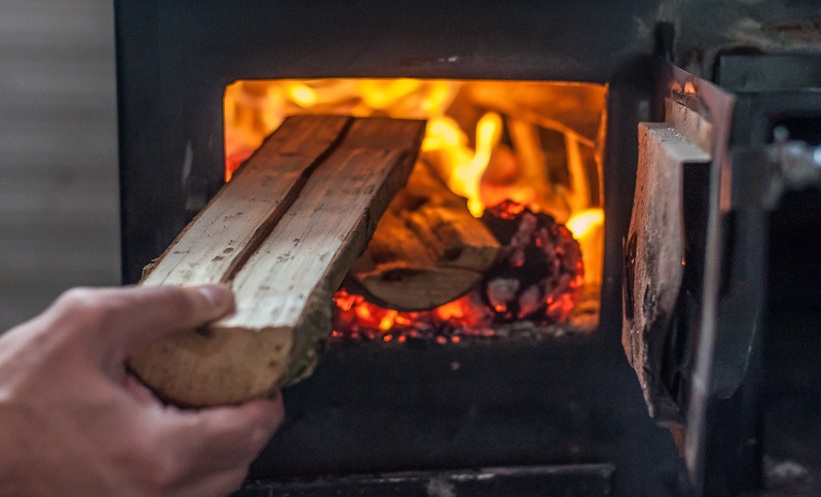
Residential wood combustion refers to burning wood in stoves or fireplaces for home heating. Although just 2% of US households rely on wood as their primary heating fuel, updated data from the US Environmental Protection Agency’s National Emissions Inventory indicate that this source accounts for a disproportionate share of winter air pollution.
Using a high-resolution air quality model, researchers estimated that residential wood burning contributes nearly 22% of the population-weighted average PM2.5 pollution during winter months across the contiguous USA. In practical terms, this equates to an additional 2.43 mg/m3 of fine particulate matter in the air people breathe.
Health Impacts Linked to PM2.5 Pollution
The study estimates that PM2.5 pollution attributable to residential wood combustion is associated with around 8,600 premature deaths each year, with uncertainty ranges between 6,500 and 9,600 deaths. These deaths reflect long-term exposure to fine particles rather than acute poisoning, and include cardiovascular and respiratory causes commonly linked to PM2.5. The findings reinforce that even modest increases in population-level PM2.5 pollution can translate into substantial health burdens, particularly during winter when exposure is sustained and ventilation is reduced.
Unequal Exposure and Health Disparities
A key finding was the uneven distribution of PM2.5 pollution from wood burning. Non-White communities were disproportionately exposed to higher concentrations and higher estimated mortality, especially in urban areas. This suggests that residential wood combustion may exacerbate existing environmental and health inequities, even when it is not the dominant local heating source. Importantly, these disparities are driven by where emissions occur and how pollution accumulates, rather than individual household behaviour alone.
Implications for Policy and Public Health
The authors suggest that policies aimed at reducing residential wood combustion, such as incentives for cleaner heating alternatives, tighter emissions standards, or targeted urban interventions, could substantially lower PM2.5 pollution levels. Such measures may not only improve overall air quality but also reduce premature deaths and narrow exposure gaps between communities.
While the modelling does not prove causality at the individual level, it provides strong population-level evidence that addressing residential wood burning could deliver meaningful public health gains during winter months.
Reference
Shlipak KK et al. Ambient air quality and health impacts of PM2.5 from US residential wood combustion. Sci Adv. 2026;12(4):eadz0189.