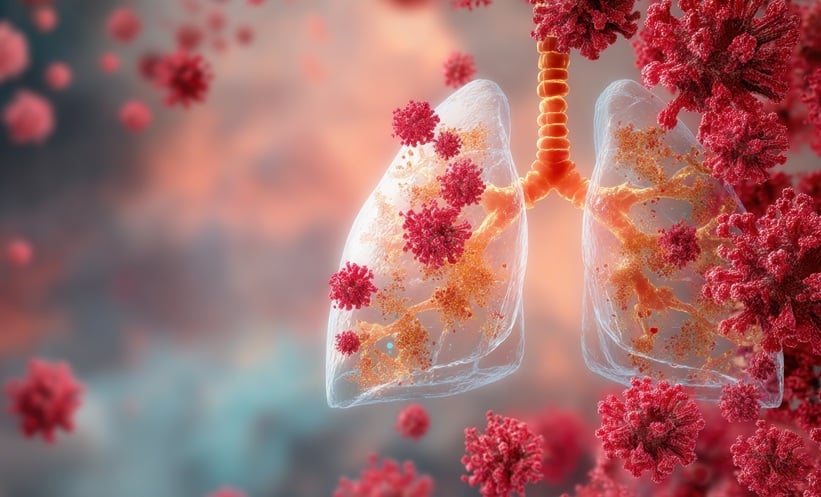
SEVERE COVID-19 may increase the risk of developing lung cancer later, according to new research suggesting that viral pneumonia can leave lasting biological changes in the lungs that promote tumour growth.
Lung cancer is the leading cause of cancer-related deaths worldwide and often develops after years of damage to lung tissue. While smoking remains the primary risk factor, scientists are increasingly exploring how infections and inflammation may influence cancer risk. The new study suggests that severe COVID-19, particularly cases requiring hospitalisation, may create conditions that support tumour development.
Severe COVID-19 and Lung Cancer Risk
Researchers analysed clinical data alongside laboratory experiments to investigate whether severe respiratory viral infections influence cancer development. Their findings indicate that patients previously hospitalised with severe COVID-19 showed a higher risk of subsequently developing lung cancer.
To explore the biological mechanisms behind this association, the team used several mouse models of lung cancer. Across these models, animals that had experienced viral pneumonia showed faster tumour growth compared with those without prior infection.
However, the researchers also observed that vaccination reduced the infection-driven acceleration of tumour growth, suggesting that preventing severe infection could limit these longer-term risks.
Viral Pneumonia Alters the Lung Environment
Further investigation revealed that viral pneumonia may leave a lasting imprint on lung tissue. After infection, the lungs developed a tumour-promoting environment characterised by persistent immune changes.
One key feature was the accumulation of tumour-associated neutrophils, a type of immune cell that can influence inflammation and tumour progression. The study also found increased immune suppression within the lung environment, potentially weakening the body’s ability to detect and eliminate cancer cells.
These changes were linked to epigenetic alterations, long-lasting modifications in gene regulation, within both immune and structural lung cells. Such changes appeared to sustain inflammatory signals that can support tumour development.
Potential Targets for Future Treatment
The research also explored possible strategies to counter these effects. In experimental models, combining treatments that blocked neutrophil recruitment with therapies targeting the programmed death-ligand 1 (PD-L1) immune checkpoint restored CD8+ T cell activity and slowed tumour growth.
These findings suggest that targeting post-infection immune changes could help reduce cancer progression after severe respiratory viral disease.
Implications for Long-Term Respiratory Health
The study highlights how severe viral infections may have lasting consequences beyond immediate illness. As the global community continues to assess the long-term impacts of COVID-19, the results point to the potential value of monitoring individuals who experienced severe infection.
Reference
Qian W et al. Respiratory viral infections prime accelerated lung cancer growth. Cell. 2026; DOI:10.1016/j.cell.2026.02.013.
Featured image: backup_studio on Adobe Stock