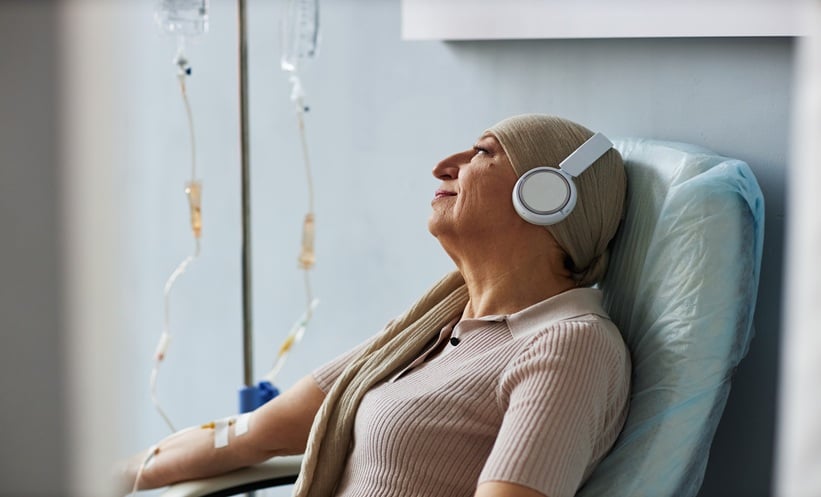
Early Time-of-Day Immunochemotherapy Improved Outcomes
Retrospective signals have suggested that treatment timing may influence immunochemotherapy efficacy, but prospective evidence has been limited. In the randomized Phase 3 LungTIME-C01 trial, investigators tested whether administering the first four cycles of an anti-PD-1 based immunochemotherapy regimen earlier in the day improved clinical outcomes for patients with treatment naive stage IIIC–IV non-small cell lung cancer (NSCLC) without driver mutations.
A total of 210 patients were randomized 1:1 to an early time-of-day group or a late time-of-day group, defined by whether the first four treatment cycles were delivered before or after 15:00. The primary endpoint was progression-free survival (PFS), with overall survival (OS) and objective response rate (ORR) assessed as secondary outcomes.
Survival Signals Favored Earlier Infusions
After a median follow-up of 28.7 months, median PFS was 11.3 months in the early time-of-day group versus 5.7 months in the late group, corresponding to a hazard ratio of 0.40 for disease progression. Median OS was 28.0 months with early dosing versus 16.8 months with late dosing, with a hazard ratio of 0.42 for death. These results indicate a substantial survival separation associated with earlier time-of-day immunochemotherapy delivery during the initial treatment cycles.
Safety findings were consistent with established expectations for the regimen. Treatment related adverse events did not reveal new safety signals, and immune-related adverse events were not significantly different between timing groups, supporting feasibility of time-based scheduling without an apparent tradeoff in tolerability.
Immune Correlates Suggested Enhanced CD8+ Activity
To explore biologic plausibility, the investigators examined circulating immune profiles over the first four cycles. Morning circulating CD8+ T cells increased in the early time-of-day group and declined in the late group. The early group also showed a higher ratio of activated CD8+ T cells versus exhausted phenotypes, aligning with the observed clinical benefit and suggesting that time-of-day immunochemotherapy may interact with antitumor immune dynamics.
Reference: Huang Z et al. Time-of-day immunochemotherapy in non-small cell lung cancer: a randomized phase 3 trial. Nat Med. 2026;doi:10.1038/s41591-025-04181-w.