INTRODUCTION
The use of antiplatelet and/or anticoagulant medications has increased due to irregular diets, limited physical activity, and an ageing population. Robot-assisted radical prostatectomy (RARP) has become increasingly common in the treatment of prostate cancer. This study presents a case of post-operative bleeding on the first day following RARP in a patient taking 100 mg of acetylsalicylic acid.1
CASE PRESENTATION
A 69-year-old male with a history of cerebrovascular accident was referred to the authors’ clinic due to a prostate-specific antigen level of 7 ng/mL. Transrectal ultrasound-guided biopsy was performed, and pathology confirmed prostate adenocarcinoma. The patient had been using 100 mg of acetylsalicylic acid regularly. Pre-operative biochemical values were within normal limits.
On post-operative Day 1, approximately 750 cc of haemorrhagic fluid was drained, and the haemoglobin level was 10.6 g/dL. A contrast-enhanced CT scan revealed a bleeding focus near the anterior abdominal wall adjacent to the bladder (Figure 1). The patient underwent a second robot-assisted laparoscopic procedure. Active bleeding was detected in the right pedicle of the prostate. Haemostasis was achieved by cauterising the bleeding sites, and the surgery was completed successfully.
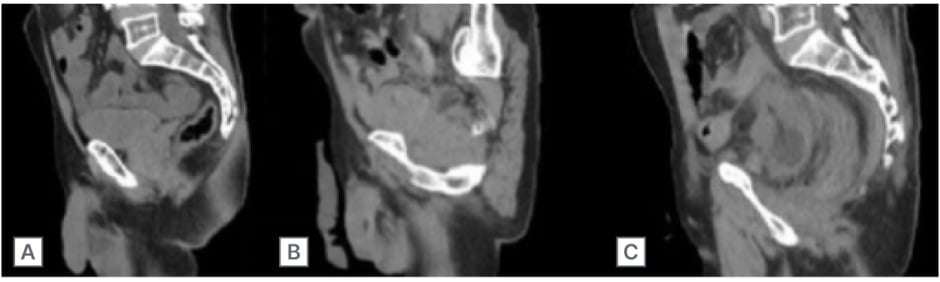
Figure 1: Pre-operative (A) and post-operative (B and C) CT scans.
A) Pre-operative non-contrast CT image. B and C) Post-operative contrast-enhanced CT images.
CONCLUSION
In patients on anticoagulant therapy, post-operative complications such as bleeding may occur more frequently after RARP. Robot-assisted laparoscopy allows for easier surgical access in such cases, and can be an effective option for managing these complications.