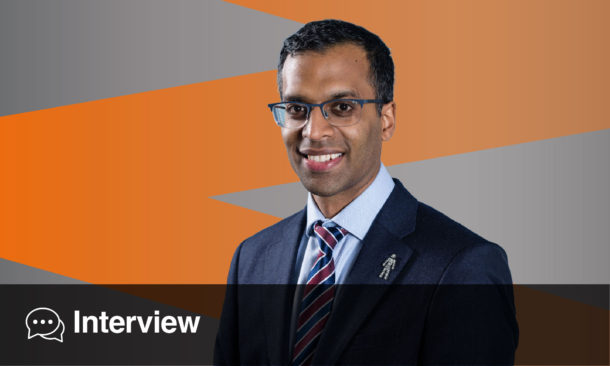
Hashim Ahmed: Chair and Professor of Urology, Imperial College London, UK
Citation: EMJ Urol. 2026;14[1]:https://doi.org/10.33590/emjurol/PZKU9925

What key experiences or clinical gaps motivated your focus on advancing prostate cancer diagnostics, particularly MRI-led pathways?
As an early trainee in urology, I used to learn about transrectal systematic biopsy. Even at that time, before I was exposed to MRI scans of the prostate, I remember thinking that the strategy made no sense: no one could actually see any potential cancers using brightness mode ultrasound, and in those days, even the prostate was a grey mass just visible from the rest of the tissue.
Once I started my PhD at UCL with Mark Emberton, Professor of Interventional Oncology, University College London, UK, seeing MRI scans of the prostate and realising the downstream problems that a systematic (aka random) transrectal biopsy created in terms of managing the disease was quite an epiphany. At that time, our motivation was to find areas of cancer accurately so that we could focally ablate them with high-intensity focused ultrasound (HIFU). We then realised that the bigger prize was changing the diagnostic pathway with MRI before a biopsy. We are now taking on the whole screening paradigm: can we screen with a 10-minute Prostagram MRI scan in the community instead of prostate-specific antigen (PSA)?
As an educator, which areas of prostate cancer diagnostics or focal therapy training do you plan to prioritise for the next generation of clinicians?
Urologists wanting to look after patients with prostate cancer need to be able to look at MRI scans and work out which areas are suspicious or not. This is not to say that we are doing work that is in the radiologists’ domain; however, it is complementary because we have to understand disease anatomy given its close intimacy with how we decide and then deliver treatment, whether that is focal therapy or radical prostatectomy. We are used to doing that for renal lesions with CT and for kidney and ureteric stones with CT-urograms.
There has been a tendency in the last 2 decades for young urologists to focus on one operation in the prostate cancer pathway: robotic prostatectomy. This has often led to closed thinking; learning to do robotic surgery well takes hundreds of cases, and so the race for numbers became the mark of a good or great surgeon. This has been to the detriment of our profession and patients. The next generation of prostate cancer urologists need to embrace the art of doing active surveillance and the finer skills of tissue-preserving focal therapy using a number of different ablative technologies. They also need to learn how to disentangle the management of lower urinary tract symptoms and benign prostatic hyperplasia from cancer, and reserve radical surgery for the higher-risk cases, probably as a multi-modal approach while working alongside our radiotherapy colleagues. To do all of this well, will need the creation of fellowships that cover this breadth and are not single-operation sojourns to an institution for a year.
What do you see as the most significant limitations of current prostate cancer screening approaches, particularly PSA-based strategies?
PSA, as a starting point for a screening strategy, is accepted to have many flaws. It is not specific to cancer, and therefore leads to concerns of over-testing with biopsies, as well as over-diagnosis and its concomitant over-treatment by radical therapy, and the latter’s treatment-related harms. Many of my colleagues say that treatment-related harms are low with technological improvements in radiotherapy and robotic surgery, but we know that is not quite true. Functional impact on urinary and sexual function, as well as rectal side-effects from treatment, remain stubbornly similar, although the immediate short-term burden of and recovery from radiotherapy or surgery may have seen improvements. Focal therapy needs to be a standard option in the management of newly diagnosed men who need treatment. In the UK, this amounts to 10–12,000 every year, many of whom are not even told about it.
Whilst MRI within the secondary care pathway after a man has been referred in by their general practitioner has mitigated some of those concerns, we cannot be sure that such mitigation will hold for a population-based screening programme; further primary evidence is required.
We also don’t often talk about underdiagnosis. PSA using a threshold of 3 can miss important cancers that are potentially life-threatening. This limited sensitivity issue might be one of the reasons why the impact of PSA-based screening on cancer-specific mortality may not be as high as we would want.
Addressing all of these issues is the reason why the Prostate Cancer UK and UK National Institute for Health and Care Research-funded TRANSFORM trial was conceived.
What are the key barriers preventing the implementation of a national prostate cancer screening programme in the UK, and how do you believe these challenges should be addressed?
It is vital that we do more to stay the hand of the urologist doing biopsies. There are still too many men with marginally suspicious MRI scans scored as equivocal being biopsied. There are still too many men with a small Grade Group 2 cancer who are being radically treated. There is still too much harm caused by treatments in intermediate and high-risk cancers that we know to only have small survival benefits over a 10–15 year period. Many colleagues seem to take a paternalistic approach to screening in advocating for it, but men entering the pathway need to be fully and transparently told of these harms.
Indeed, many are already voting with their feet. Studies in the UK show that 22–36% of White men accept an invitation for screening, whilst 10–22% of Black men accept an invitation. We need to understand why there is so much reticence about this. Reassuring men and their families that the pathway is better, but also having research such as TRANSFORM to reassure us all that screening the entire eligible population of men will not do more net harm than net good, is vital.
What role do you foresee AI playing in prostate cancer diagnostics and treatment planning, and how might these tools realistically accelerate clinical research and workflow efficiency?
There are two schools of thought with respect to AI, specifically in the prostate cancer pathway. One is that AI will be an aid for all cases, so that radiologists and pathologists, for instance, don’t miss areas of cancer. This approach will likely lead to additional time and resources, and we will need to determine whether there is a net gain for the healthcare system.
The other school of thought, which is the camp that I am in, is that AI should be used to triage cases to identify those we are highly confident are negative. These cases would not need to be evaluated by a clinician other than a random 5–10% for quality control. For this pathway to gain favour, many have said that sensitivity and negative predictive value will need to be close to 100% (i.e., better than an expert) for acceptance. The nice thing about AI algorithms is that they can be tuned to have such high sensitivity, but then specificity will be low with lots of false positives. That might not matter if one in five, one in four, or one in three cases do not need clinician evaluation because they are negative.
Which emerging biomarkers, beyond PSA, do you believe hold the greatest potential to refine risk stratification and reduce unnecessary biopsies?
There are numerous fluid biomarkers coming to the market. Polygenic risk might also prove to be useful as a baseline risk stratification system to determine the intensity of screening. The fluid biomarker Stockholm3 (A3P Biomedical, Stockholm, Sweden) certainly has the largest body of evidence behind it, but it needs validation in healthcare systems outside of Sweden. Most of these biomarker companies are quick to come to market on the basis of small studies, so their claims of diagnostic performance need to be looked at carefully and validated in larger studies before being used in clinical practice.
Previously, when biomarkers have been tested against MRI, they have struggled to stand up, so biomarkers need to find a complementary role in a pathway that is increasingly imaging-driven, concentrating on equivocal cases or treatment decision-making as stratification tools. For this, larger, longer-term studies will be required before the expense of using new biomarkers can be justified. It took 15 years to get MRI into the diagnostic pathway, and many in North America still don’t use it, so there can be no shortcuts for fluidic biomarkers.
Which misconceptions about focal therapy do you most frequently encounter among clinicians?
First, we treat men with low-risk cancer who don’t need treatment. In the UK, under 5% of all our cases are low risk. Furthermore, we are much more careful to select intermediate-risk cases that we think should be treated rather than monitored or men who cannot contemplate active surveillance for their Grade Group 2 cancer. In fact, a significant minority of focal therapy cases in the UK are low-volume, high-risk cancers.
Second, the concern over multifocality still occasionally rears its head. There seems to be a cognitive dissonance that a third of the male population above the age of 50 years has multifocal low-risk cancers, but we are not suggesting that all of these men have their prostates removed. Our own UK registry data of thousands of cases have shown that new cancers emerge in about 5–10% of cases over a 5–10 year period, so the concern that the untreated prostate would be ‘unstable’ and develop lots of tumours is not correct.
Third, we do not have a safe follow-up strategy. Whilst we do not have definitions of biochemical failure, we do have MRI and biopsy that can be used robustly to guide follow-up.
Fourth, we do not have RCTs. Two attempts at RCTs have failed to accrue because patients don’t want to participate, and in those few that do accept randomisation, one in five to one in three of the men allocated to the radical arm refuse their allocation (little to no men allocated to focal refuse their allocation). The revitalised PART RCT is continuing to recruit, albeit with a significantly curtailed target figure compared to its original target. The FARP RCT in Oslo, Norway, has completed recruitment, and we await the peer-reviewed publication following its results being presented at the American Urological Association (AUA) 2 years ago.
Finally, that radical therapy cannot be carried out. A number of published case series show that both radical prostatectomy and radiotherapy can be safely and effectively carried out after focal therapy.
How aligned are UK and international guidelines with current evidence on MRI-first pathways and focal therapy?
The UK and European Association of Urology (EAU) guidelines advocate for MRI pre-biopsy, and most centres comply with this. In the USA, the guidelines are still vague enough that urologists can do a transrectal ultrasound-guided prostate biopsy without an MRI beforehand. Rightly or wrongly, the concern in the USA seems to be about implementation and quality control.
The UK National Institute for Health and Care Excellence (NICE) Interventional Procedures Guidance permits the use of HIFU, cryotherapy, and irreversible electroporation for the focal treatment of prostate cancer, provided that all data is collated in registries. The EAU guideline in 2023 allowed for a similar approach for HIFU and cryotherapy. The USA FDA allows clinicians to use these ablative tools to ablate prostate tissue, but the companies cannot market the technologies for a cancer indication. Therefore, a number of urologists are offering focal therapy for prostate cancer as part of an informed consent, shared decision-making approach.
How can multidisciplinary teams optimise coordination in prostate cancer diagnostic and treatment pathways?
Decisions on active surveillance and focal therapy are now more nuanced than simply treating the whole prostate. Therefore, the input of our radiology and histopathology colleagues on surgery, radiotherapy, and focal therapy expertise is vital. Multidisciplinary teams should ensure they have focal therapy expertise so that men can gain advice in-house and not have to travel or seek second opinions. Refinements in radiotherapy approaches and surgical precision also mean that planning meetings are often required to have radiological input to ensure the optimal therapeutic ratio for each individual patient.
What are your top recommendations for reducing overtreatment while maintaining patient safety and preserving quality of life?
First, try your very best to avoid a biopsy after an MRI.
Second, reassure a man with low-risk disease that active surveillance is the default option and is very safe. Spend time with them, get other colleagues, such as specialist nurses involved, so that they are happy with monitoring. Give them advice on lifestyle with aerobic exercise and diet so it is more active on their part. Do not offer focal or radical therapy to those with low-risk cancer unless there is a strong psychological issue.
Third, reassure a man with favourable intermediate-risk disease that prognosis is excellent. Reassure them that active surveillance is safe, and that treatment afterwards still means cancer-specific survival close to 100% at 10 years.
Finally, offer focal therapy to those men who cannot contemplate active surveillance for favourable intermediate-risk cancer, and to unfavourable disease that meets other criteria for focal therapy.