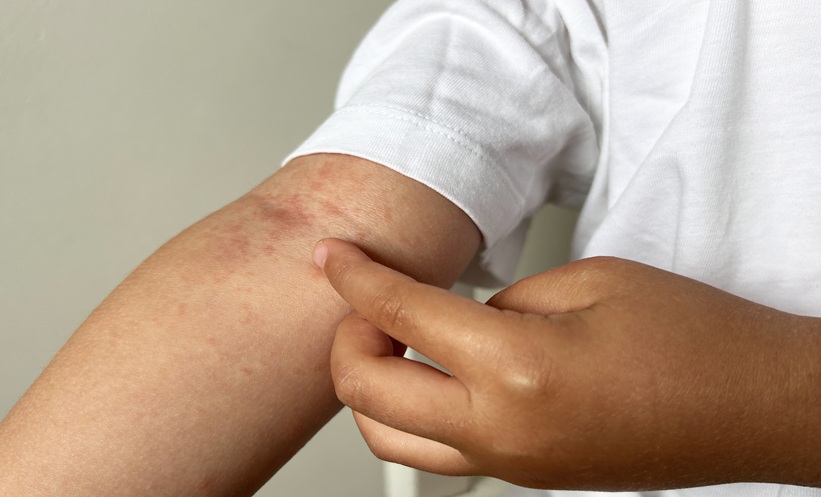
REAL-WORLD evidence suggests that lebrikizumab may offer meaningful and sustained clinical benefits for patients with moderate-to-severe atopic dermatitis (AD), according to a retrospective analysis recently published. The study provides valuable insight into the performance of this interleukin-13 (IL-13)–targeting monoclonal antibody outside the controlled setting of clinical trials.
Lebrikizumab Addresses Unmet Needs in Atopic Dermatitis
Atopic dermatitis is a chronic, relapsing inflammatory skin condition that can have a profound impact on patients’ quality of life. Despite advances in systemic therapies, a significant proportion of patients continue to experience inadequate disease control. Lebrikizumab has demonstrated promising efficacy in Phase III trials; however, real-world data, particularly from non-Asian populations, have remained limited.
To address this gap, researchers evaluated the effectiveness and safety of lebrikizumab in routine clinical practice. The retrospective study included 35 patients with moderate-to-severe AD treated at the Dermatology Department of St. Josef-Hospital in Bochum, Germany, between December 2023 and April 2025. This largely homogenous Central European cohort provides important regional data to complement existing trial evidence.
Patient-Reported Outcomes Improve with Lebrikizumab
Clinical outcomes were assessed using multiple validated measures, including the Eczema Area and Severity Index (EASI), SCORing Atopic Dermatitis (SCORAD), peak-pruritus numerical rating scale (PP-NRS), and the Dermatology Life Quality Index (DLQI). Improvements across all indices were observed as early as Week 4 of treatment and were sustained through Week 16.
By Week 24, treatment responses were substantial. All patients achieved at least a 50% reduction in EASI scores (EASI-50), while 75% reached EASI-75 and EASI-90 response thresholds. A SCORAD-50 response was observed in 64.2% of patients. Improvements in patient-reported outcomes were also notable: 55.8% of patients experienced a clinically meaningful reduction in pruritus, defined as a ≥4-point improvement on the PP-NRS, while 91.6% achieved a similar improvement in DLQI, indicating a marked enhancement in quality of life.
Importantly, lebrikizumab was well tolerated throughout the 24-week observation period, with no new safety signals identified.
The authors conclude that lebrikizumab demonstrates favourable effectiveness and safety in a real-world setting, supporting its use in routine clinical practice for patients with moderate-to-severe AD. While the study is limited by its small sample size and retrospective design, the findings add to the growing body of evidence supporting IL-13 inhibition as a key therapeutic strategy in atopic dermatitis.
Reference
Stavropoulos N et al. Retrospective Analysis of Lebrikizumab in the Management of Atopic Dermatitis: Insights from Real-World Practice. Dermatol Ther (Heidelb). 2026; DOI:10.1007/s13555-025-01630-9
- Author: