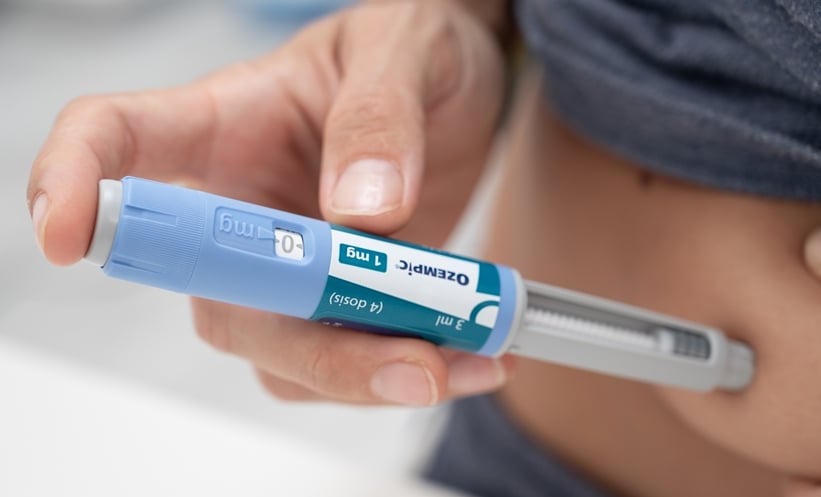
THE WIDELY used diabetes drug, semaglutide, may increase the risk of a rare but serious optic nerve condition, according to new research in US veterans, highlighting the need for careful counselling despite its proven cardiometabolic benefits.
Rising Concern About Semaglutide and Eye Safety
Semaglutide, a glucagon-like peptide-1 receptor agonist (GLP-1RA), has become a cornerstone therapy for type 2 diabetes and weight management, with millions of patients benefiting from improved glycaemic control and cardiovascular outcomes. However, emerging evidence has raised concerns about potential ocular complications.
Nonarteritic anterior ischemic optic neuropathy is a rare condition caused by reduced blood flow to the optic nerve, leading to sudden and sometimes permanent vision loss. As semaglutide use expands globally, understanding its safety profile, including rare adverse effects, has become increasingly important for clinicians and patients.
Study Reveals Increased Risk Following Semaglutide Initiation
The nationwide study included 102,361 US veterans with type 2 diabetes, including 11,478 initiators of semaglutide and 90 883 initiators of a sodium-glucose cotransporter-2 inhibitor. Over a maximum follow-up of 7.5 years, 173 total incident NAION events occurred.
The incidence rate of NAION was 123 per 100,000 person-years among semaglutide initiators and 67 per 100,000 person-years among comparator patients. In 2.1 years of median follow-up, semaglutide initiators had a 2.33-fold higher risk than comparator patients (hazard ratio, 2.33; 95% CI, 1.54-3.54; P < .001).
The overlap weighted incidence rate of NAION was 0.29% for semaglutide initiators and 0.13% for comparator patients, representing a difference of 0.16 percentage points. Overall, baseline characteristics were well balanced, with a mean age of 60.1 years and 85.5% male participants.
Clinical Implications and Future Monitoring Needs
Although the absolute risk remains low, the findings highlight an important safety consideration for semaglutide prescribing. Clinicians should inform patients about the rare possibility of vision loss and advise prompt evaluation if visual symptoms develop. Further research is needed to confirm causality, identify high risk groups, and guide monitoring strategies. Improved awareness among prescribers and ophthalmologists may support earlier detection and better patient outcomes.
Reference
Heberer K et al. New-onset nonarteritic anterior ischemic optic neuropathy and initiators of semaglutide in US veterans with type 2 diabetes. JAMA Ophthalmol. 2026;doi:10.1001/jamaophthalmol.2025.6262.
- Author: