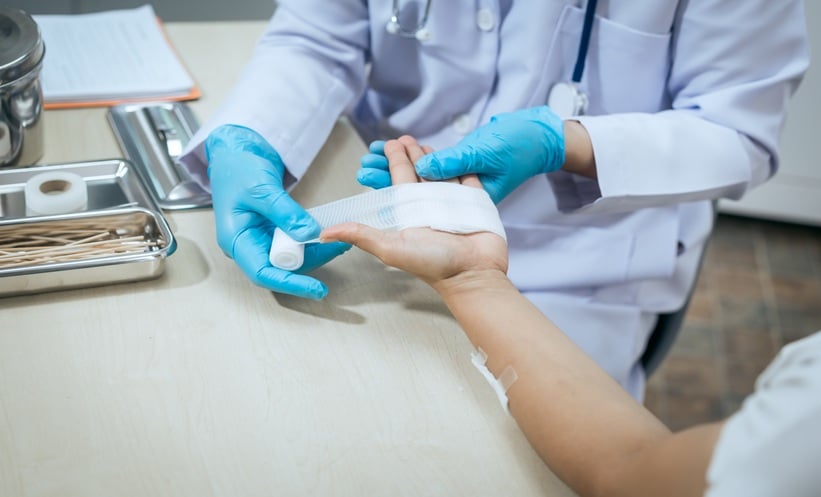
A NEW study highlights the potential of pirfenidone-loaded exosomes (PFD-exosomes) as an innovative strategy to promote scarless wound healing by modulating fibroblast activity and reducing fibrosis.
Exosome Technology Offers Cell-Free Approach to Scar Prevention
Excessive scarring remains a major clinical challenge in wound repair, largely driven by dysregulated dermal fibroblast activity and overproduction of collagen. Pirfenidone (PFD), an antifibrotic agent, has shown promise in targeting intracellular pathways involved in collagen deposition. However, optimising its delivery has remained a key hurdle.
In this study, researchers explored the use of exosomes derived from human dermal fibroblasts as a drug delivery platform for PFD. Exosomes, small extracellular vesicles involved in intercellular communication, offer a novel, cell-free therapeutic approach with the ability to enhance drug targeting and efficacy.
The team compared two exosome isolation methods, PEG precipitation and affinity-based techniques, finding that the affinity-based approach yielded higher purity and more homogenous exosome populations. Successful isolation was confirmed using multiple characterisation techniques, including transmission electron microscopy and ELISA.
To improve drug loading, investigators employed a sonication-based active loading method, carefully optimised to preserve exosome integrity. The resulting formulation achieved encapsulation and loading efficiencies of approximately 11% and 10%, respectively, with a recovery rate exceeding 60%.
Findings Highlight Potential for Next-Generation Regenerative Therapies
Functional analyses demonstrated that exosomes alone enhanced fibroblast migration and proliferation, supporting their potential as a stand-alone therapy. More notably, PFD-exosomes amplified the antifibrotic effects of pirfenidone in both in vitro and in vivo models. In animal studies, treatment accelerated wound closure while promoting organised extracellular matrix remodelling and reducing excessive collagen deposition, key hallmarks of scar formation.
These findings suggest that PFD-exosomes may represent a promising pre-scarring intervention, combining the intrinsic regenerative properties of exosomes with the antifibrotic action of pirfenidone.
The authors conclude that this approach offers a novel and potentially translatable strategy to improve wound healing outcomes while minimising scarring. Further research will be required to validate these findings in clinical settings and determine long-term safety and efficacy.
Reference
Wang J et al. Pirfenidone-exosomes as innovative strategies for scarless tissue repair in wound healing. Drug Deliv and Transl Res. 2026; DOI: 10.1007/s13346-026-02108-7.
Featured image: M+Isolation+Photo on Adobe Stock
- Author: