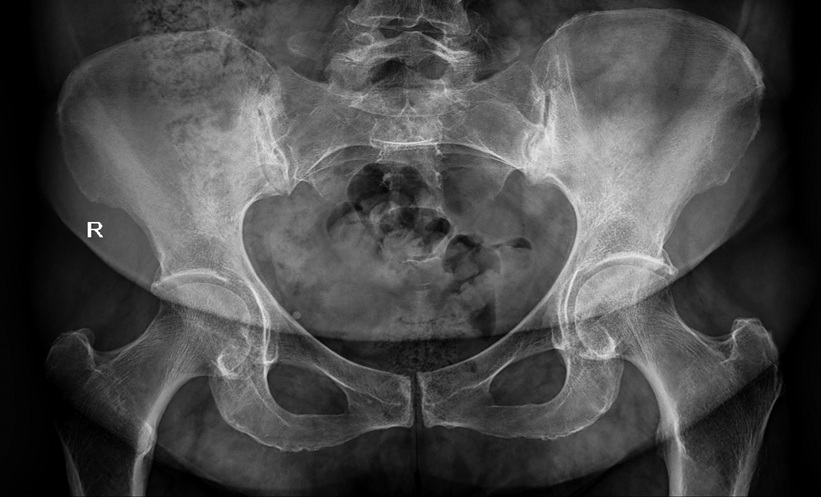
DETAILED pelvic anatomy, captured using three-dimensional (3D) CT reconstruction, can help predict the technical difficulty of robot-assisted radical prostatectomy (RARP), according to a new study.
Pelvic Anatomy Assessed Using 3D CT Reconstruction
Researchers analysed 324 patients with localised or locally advanced prostate cancer who underwent RARP. Using preoperative CT scans, they generated precise 3D anatomical models with specialised software, enabling measurement of both bony pelvic structures and surrounding soft tissue. To better understand anatomical variation, the team applied K-means clustering to classify patients into subgroups, and used LASSO regression alongside multivariate analyses to identify key predictors of surgical outcomes.
Two distinct anatomical subtypes emerged from clustering. The study then examined how specific parameters correlated with intraoperative metrics, including operative time (OT), estimated blood loss (EBL), and the likelihood of positive surgical margins (SM).
Pelvic spatial dimensions were found to be the primary drivers of operative time, highlighting how a narrower or more complex pelvic geometry may increase procedural difficulty during robotic surgery. Pelvic depth (PD) was identified as the sole independent predictor of intraoperative blood loss, suggesting that deeper operative fields may limit visibility or instrument manoeuvrability, thereby increasing bleeding risk.
Positive surgical margins, a key oncological outcome, were influenced by a combination of factors. These included tumour biology (Gleason score), surgical approach (nerve-sparing techniques), and anatomical features such as the anterior pelvic measurement (APM) and a defined pelvic angle (δ). This underscores that margin status is not purely anatomical but reflects an interplay between disease characteristics, surgeon decision-making, and patient-specific anatomy.
Importantly, the investigators developed a predictive nomogram based on seven pelvic anatomical parameters to estimate operative time as a surrogate marker of surgical difficulty. The model demonstrated excellent performance, with an area under the curve (AUC) of 0.945, indicating high discriminative ability. Calibration analysis also showed strong agreement between predicted and observed outcomes.
Clinical Implications for Preoperative Assessment
Overall, the findings suggest that 3D CT-derived pelvic measurements offer a robust, objective method for preoperative assessment. Such tools could help surgeons anticipate procedural complexity, stratify risk, and tailor surgical strategies for individual patients undergoing RARP.
Reference
Yao JM et al. Correlation between male pelvic and soft tissue parameters based on three-dimensional reconstruction and the difficulty of robot-assisted radical prostatectomy. World J Urol. 2026; 44:324.
Featured image: Med Photo Studio
- Author: