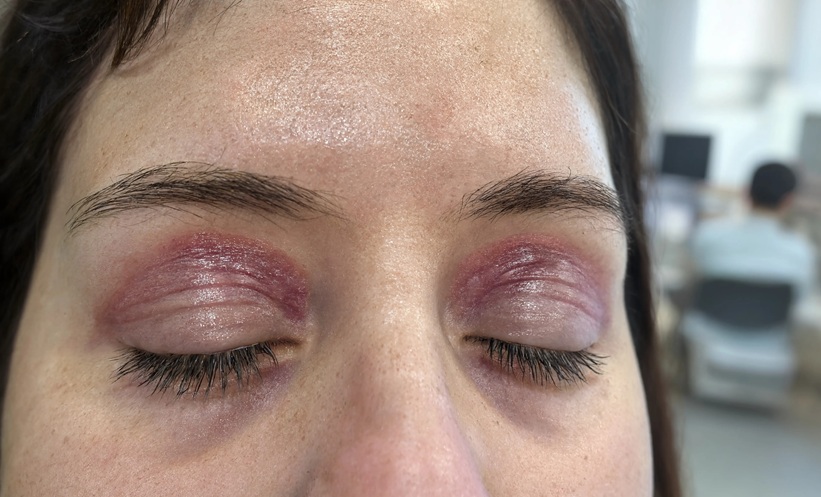
PATIENTS with SLE and active cutaneous lupus manifestations experienced significant, dose-dependent improvements in skin disease activity following treatment with enpatoran, an investigational oral Toll-like receptor 7/8 inhibitor evaluated in an international phase 2 clinical trial.
Targeting Immune Pathways in SLE Skin Disease
Researchers investigated whether enpatoran, a small-molecule oral inhibitor targeting these receptors, could improve skin disease activity in patients with cutaneous lupus erythematosus or SLE with active mucocutaneous involvement.
International Phase 2 Trial Evaluated Dose Response
The WILLOW study was a multicentre, international, randomised, double-blind, placebo-controlled phase 2 basket trial conducted across 132 centres in 22 countries. Cohort A enrolled adults aged 18–75 years with cutaneous lupus erythematosus alone or SLE with mild or no extra-mucocutaneous disease activity and a Cutaneous Lupus Disease Area and Severity Index activity score of at least 8. Participants were randomly assigned 1:1:1:1 to placebo or enpatoran 25 mg, 50 mg, or 100 mg twice daily for 24 weeks alongside standard care. Of 463 screened patients across both cohorts, 102 entered Cohort A and received treatment. Two participants were excluded from efficacy analyses because of ineligible disease activity scores, leaving 100 patients in the efficacy population. The primary endpoint was percentage change from baseline in Cutaneous Lupus Disease Area and Severity Index activity score at Week 16.
Dose-Dependent Improvements Observed With Enpatoran
At Week 16, adjusted mean reductions in Cutaneous Lupus Disease Area and Severity Index activity scores were −64 percentage points (95% CI −70 to −58) with enpatoran 25 mg, −68 percentage points (95% CI −75 to −61) with 50 mg, and −72 percentage points (95% CI −80 to −64) with 100 mg, compared with −44 percentage points (95% CI −55 to −33) in the placebo group. Researchers reported a significant dose-response relationship (p=0.0002). The most common treatment-emergent adverse event was upper respiratory tract infection, occurring in 8% of placebo participants, 8% receiving 25 mg enpatoran, 15% receiving 50 mg, and 19% receiving 100 mg. Serious adverse events occurred in one placebo participant, two participants receiving 25 mg, and one participant receiving 100 mg.
Potential New Therapeutic Option for SLE
Investigators concluded that enpatoran demonstrated clinically meaningful and dose-dependent reductions in lupus skin disease activity with an acceptable safety profile. The findings support further evaluation of TLR7/8 inhibition as a targeted therapeutic strategy for cutaneous manifestations of SLE and cutaneous lupus erythematosus.
Reference
Morand EF et al. Efficacy and safety of enpatoran, a Toll-like receptor 7/8 inhibitor, in patients with skin manifestations of cutaneous lupus erythematosus or systemic lupus erythematosus: findings from Cohort A of a multicentre, international, double-blind, placebo-controlled, dose-finding phase 2 trial. The Lancet Rheumatology. 2026;DOI:10.1016/S2665-9913(25)00337-6.
Featured image: well on Adobe Stock
- Author: