EVEN THE STRONGEST candidate vaccine for the Bundibugyo virus, causing the ongoing outbreak of Ebola in the Democratic Republic of the Congo and Uganda, could take months before it reaches clinical trial, WHO experts told reporters today at the 79th World Health Assembly.
Instead, they called for a scaled-up, co-ordinated response, helping affected communities to identify and care for suspected cases.
Outcome of the Emergency Committee
Infection has spread since yesterday, 19th May, with cases of Ebola disease now standing at 51 confirmed in the DRC, alongside almost 600 suspected cases, and 179 suspected deaths.
The WHO Director-General, Dr Tedros Adhanom Ghebreyesus, said that numbers are expected to increase, given the time the virus was spreading before detection.
Dr Ghebreyesus’ landmark decision to announce a public health emergency of international concern prior to convening the Emergency Committee was affirmed by the expert panel yesterday.
Vaccine Candidates
Dr Vasee Moorthy, acting lead for research developments and senior advisor, Science for Health Department, WHO, Geneva, Switzerland, told reporters today: “We must really scale up intensive care, patient referral pathways, and prepare for a fairly promising pipeline intensive therapeutic.”
Whilst there are no approved vaccines for Bundibugyo, Dr Moorthy described the most promising candidate as an rVSV Bundibugyo vaccine – the equivalent of Ervebo, a vaccine officially licensed for the more common Zaire strain of Ebola disease.
He continued: “There are no doses of this which are currently available for clinical trial, so this needs to be prioritised as the most promising Bundibugyo candidate vaccine.
“The information that we have is this is likely to take six to nine months.”
Dr Moorthy highlighted one other candidate vaccine, built on the same platform used in the AstraZeneca COVID-19 vaccine.
He added: “It is possible that doses of that could be available for clinical trial in two to three months but there is a lot of uncertainty.”
Collaboration with Affected Communities
Instead, WHO experts called for collaboration between international organisations, national institutions, and affected communities, with a view to effectively identifying and isolating cases.
Anaïs Legand, technical officer for high-threat pathogens, WHO, Geneva, Switzerland, said: “Our priority right now is to help set up the platform, starting with a safe and optimised treatment centre and patient referral pathway, to ensure that every single suspected case can be detected early and cared for.”
Experts reported that the WHO team is taking a ‘no regret’ and ‘no harm’ approach, whereby it is scaling up the response as much as possible to cater for maximum prevention.
Dr Legand noted: “This is being done as we speak.”
According to the Emergency Committee, national and regional risk is high but global risk remains low.
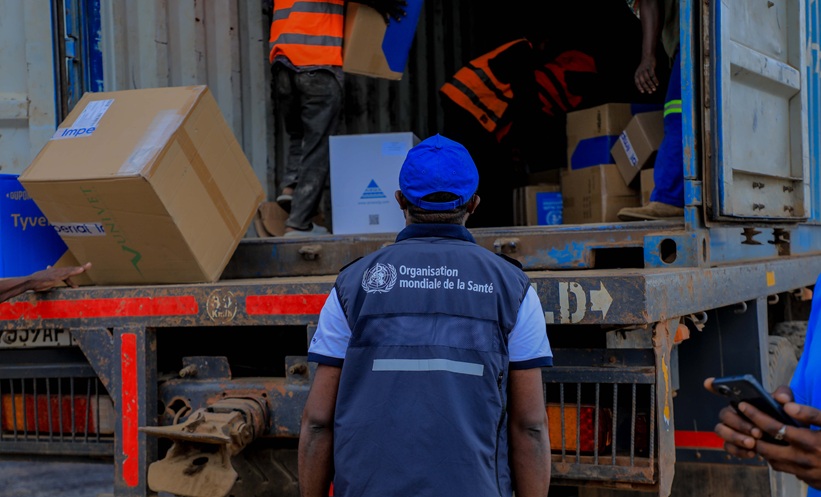
Featured image: World Health Organization
- Author: