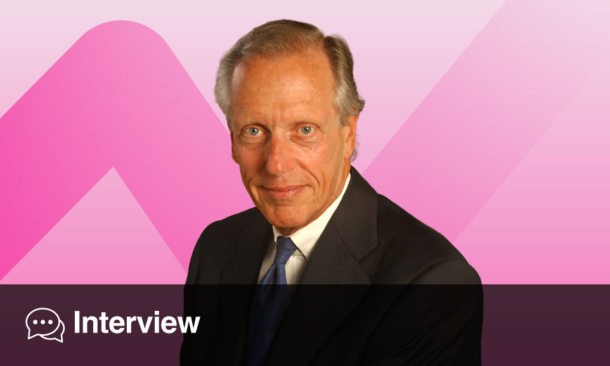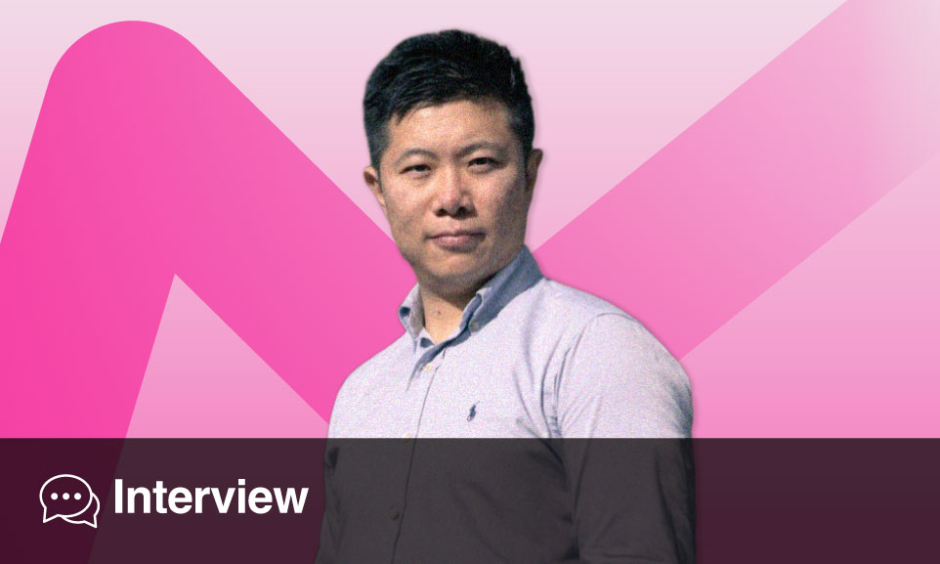
Daniel Pan | Honorary Clinical Research Fellow, University of Leicester; Resident Physician (Specialist Registrar) in Infectious Diseases and General Internal Medicine, University Hospitals of Leicester NHS Trust, UK
Citation: EMJ Microbiol Infect Dis. 2026; 7[1]:61-64. https://doi.org/10.33590/emjmicrobiolinfectdis/8009L799

You were recently awarded a Young Investigator Award at the European Society of Clinical Microbiology and Infectious Diseases (ESCMID) Global Congress 2026. What does this recognition represent for you and your work?
I think the most important thing this award recognises is the nature of the award itself. It brings together young scientists from across the world, because ESCMID is the largest infection conference globally, and submissions are judged by senior scientists as well.
This is probably the most prestigious award you can receive at this stage of your career. Any award after this isn’t as competitive; this is extremely competitive.
It also means that the work I’m doing is legitimate. That sounds strange, but when you’re doing the work, you’re just in your office or university, getting on with it; you don’t really think about these things. There are so many people doing really good work out there that it’s hard to put your own work into context.
You apply without expecting to get the award, and you just carry on. So it’s great to hear that your work is recognised at a much higher level. Pragmatically, it signals that this is important work; that I’m not just going down a rabbit hole, and that others may be interested in it too.
This helps me think about developing my career, moving towards independence, applying for grants, and targeting journals. If people think this is good work, then I know it is impactful, and it helps me believe in myself.
Could you describe the main scientific questions your research is addressing and the key findings that have emerged so far?
My work spans quite a wide range, from molecular virology to public health. It’s very translational. I’m a clinician by background, and I didn’t originally set out to do research.
During the pandemic, I was on the frontline as an infectious disease clinician. I was seeing a lot of patients, got infected myself, and ended up in intensive care. There was a strong, almost subconscious impetus to pursue this line of work.
Leicester, UK, is a great place for infection training because it’s very ethnically diverse; there’s no ethnic majority. People often travel to visit family and bring infections back, so we see a wide range of cases.
During the pandemic, we noticed that ethnic minority groups were coming to the hospital more, going to intensive care more, and dying more. We were one of the first groups to raise concerns that ethnic minority groups were disproportionately affected by COVID-19.
The question then became: why? We did work to disentangle this. What we found was that, at a population level, you’re more likely to be infected because you’re more likely to live in larger households, less likely to be able to isolate, and more likely to work in public-facing or key worker roles.
If more people are infected, then more people will be hospitalised and pass away, but that step often gets skipped. People see infection and mortality and assume a biological link. There may be some, but our large meta-analysis, including around 200 million people, showed that most of the effect was driven by increased risk of infection, not increased severity once infected.
This led us to focus on the infection itself. Transmission requires three things: someone to be infectious, to emit a virus, and for a susceptible person to receive it. So, we became interested in what makes someone infectious.
The tests we use, PCR or lateral flows, were designed to diagnose infection, not to measure infectiousness. Yet, we were using them to decide whether people could return to work or isolate. We showed that swabs are not very good at determining infectiousness at an individual level. That led to the idea that maybe we were sampling from the wrong place. A swab samples the nose, but not all the virus that is emitted into the air.
In Leicester, we developed a face mask sampling tool with strips that capture exhaled pathogens. The idea is that what you capture reflects what someone is breathing out, and therefore transmission risk.
We then conducted household transmission studies and showed that mask sampling was much better than swabs at predicting transmission. We also found that viral dynamics differ between nasal samples and exhaled breath.
This raises a broader point: depending on what you want to measure (diagnosis, disease severity, or transmission), you may need to sample different parts of the respiratory tract. This is a largely unexplored area and could become an entirely new field.
You’ve led large studies like BE-DIRECT and COVMASK, including measuring virus in exhaled breath. What has that work revealed about how respiratory viruses spread between people?
Those studies include a longitudinal household transmission study (COVMASK) and an immunological study in healthcare workers (BE-DIRECT).
For the household study, we needed to capture transmission at the right time. With COVID-19, transmission often occurs before symptom onset, so sampling people after they develop symptoms misses the key window.
To address this, I set up a system where healthcare workers who tested positive would immediately contact occupational health, which connected them to me. We recruited them on the same day. We also did public engagement, including at Leicester’s football stadium, to recruit participants early.
This allowed us to sample people before they became symptomatic. We then sampled both them and their household contacts. By doing this early, we could observe transmission practically in real time.
We also applied very strict criteria: participants had to be partners sharing a bedroom with their contact throughout the study. This removed confounders like exposure duration. What remained were key factors: the contact’s immunity and how much virus the index case emitted.
This design allowed us to detect meaningful effects with smaller sample sizes. We found that higher levels of exhaled virus increased transmission risk, and mask sampling was a better predictor than swabs.
The BE-DIRECT study complements this. It is a longitudinal immunology study in healthcare workers. We found that healthcare workers are increasingly asymptomatic or mildly symptomatic, but still potentially infectious. We also found that around 50% had serological evidence of infection each year, suggesting ongoing transmission.
Together, these findings suggest that healthcare settings may benefit from better tools, such as mask sampling, to detect infectious individuals.
Why has it been so difficult to move beyond PCR testing when trying to measure infectiousness?
There are several layers to this. First, there is a lot of misunderstanding. Terms like infectivity, infectiousness, and transmission are often used interchangeably, but they mean different things.
Infectivity refers to whether a virus can infect cells. Infectiousness is about the individual, whether they’re emitting a virus that can infect others. Transmission is the actual event of spread. We need to standardise these terms.
Second, PCR measures viral RNA. It was never meant to measure infectiousness. It’s like a fingerprint: detecting RNA doesn’t mean the virus is still active or transmissible. You might find my fingerprint in a room, but that doesn’t mean I’m still there.
Viral culture is closer to measuring infectivity, but it is technically difficult, resource-intensive, and not scalable. Lateral flow tests detect viral proteins and correlate somewhat with infectiousness, but again, they rely on nasal sampling rather than exhaled virus.
So, the issue is not just technical; it’s conceptual. We have been using the wrong proxies, and there is a broader misunderstanding of what infectiousness really is across different levels, from the public to clinicians to modellers.
In your ESCMID presentation, you ask whether we can develop better tests for infectiousness. What would a clinically useful test look like, and how might it change decisions around isolation or treatment?
A clinically useful test needs to accurately define when infectiousness starts and ends; that’s where current tests are weakest. It also needs to be scalable, simple, and acceptable.
PCR could still play a role, but we may need thresholds rather than just positive/negative results. And acceptability matters, especially with something like mask-based testing, because people have different views on masking depending on culture or politics.
Clinically, such a test could safely shorten isolation for patients or healthcare workers. From a public health perspective, it could help define contagious periods in new outbreaks.
Scientifically, it could improve transmission models. For example, models use the concept of ‘quanta’, the amount of virus needed to infect someone, but currently estimate it from nasal viral load. Measuring exhaled virus directly could improve those models.
It could also transform clinical trials. Right now, vaccines and antivirals are assessed based on immune response or disease severity, not transmission. A reliable proxy for infectiousness could change that.
Your research helped identify ethnic disparities during COVID-19 and fed into WHO guidance. How should those lessons shape the way we approach future pandemics or respiratory infections?
Ethnicity is not just biology. It’s social, cultural, and environmental, and these factors all influence exposure risk.
Existing frameworks focus on chronic disease, where risk factors affect both disease onset and severity. But infectious diseases are different; the risk of infection and the risk of severe disease are distinct.
Our work with WHO helped highlight this. For infectious diseases, you need to focus on transmission and prevention, as well as severity. That distinction is crucial for future policy.
You’ve worked closely with policymakers. What did that experience teach you about the gap between scientific evidence and real-world decision-making?
As a clinician, I always think about whether research benefits patients.
It is easy to get stuck in purely mechanistic science. For example, understanding exactly where the exhaled virus originates in the respiratory tract is interesting, but may not directly change policy.
From a policy perspective, what matters is whether something works and can be implemented. For example, with face mask sampling, the next step is testing it in real-world settings, like emergency departments. That is less intellectually driven, but it is where impact happens.
As a Young Investigator with a strong track record already, how important has mentorship and collaboration been, and what advice would you give to early-career researchers trying to have a real-world impact?
They’re essential, especially for multidisciplinary work. This kind of work can’t be done alone.
Collaborations often develop naturally. I didn’t actively seek out lots of mentors at the start. I did the work, met people, and collaborations grew organically. My advice is to keep an open mind and focus on doing good work. You don’t need forced networking; relationships develop naturally over time.
You also need to understand your role. You can’t be good at everything. For example, I’m not a mathematical modeller, but I understand it enough to bridge the gap between clinicians and modellers. That’s where my value lies.
Finally, not everyone needs to be a leader either. Good science is a team effort. My CV isn’t just mine; it reflects the work of many people. We all contribute to each other’s work.