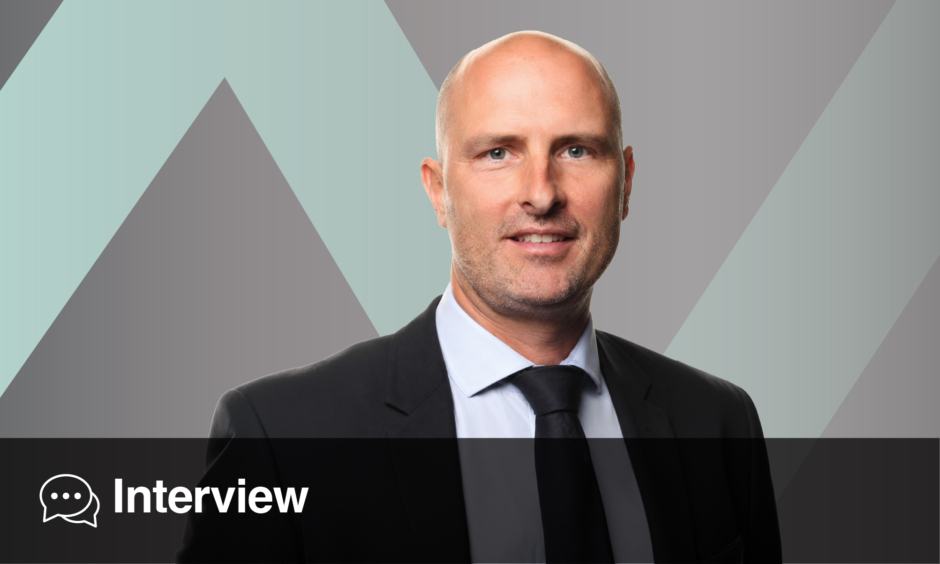
Thomas Cuisset | APHM Hôpital La Timone Adultes, Marseille, France
Citation: EMJ Int Cardiol. 2026;14[1]:42-44. https://doi.org/10.33590/emjintcardiol/T9REZL3I

As Course Director of the European Association for Percutaneous Cardiovascular Interventions (EuroPCR), how would you describe the evolution of the meeting in recent years, and what continues to make it unique within the global interventional cardiology landscape?
I think it’s actually quite difficult to describe precisely how the meeting has evolved in recent years, but what has remained absolutely constant is its DNA. EuroPCR has always been a very practical meeting.
The core idea is to come together to share practice, not just theory, and to improve collectively by exchanging knowledge, experience, and skills. That focus on real-world practice, and on learning from one another, is what continues to define EuroPCR and makes it unique.
Looking ahead to EuroPCR 2026, what central themes or ‘fil rouge’ can participants expect this year?
Each year, we define a kind of ‘fil rouge’, a central theme that runs throughout the meeting. For 2026, we have chosen to focus on complications.
This includes both the prevention of complications and their optimal management when they occur. We strongly believe that, while it is important to share successes, it is probably even more important to share difficulties and how they are overcome.
For us, that is where medical education truly has an impact and ultimately contributes to saving lives.
EuroPCR is known for its strong emphasis on education and live case learning. Are there any new formats, technologies, or session types being introduced in 2026 that attendees should be particularly excited about?
There are three key new elements I would highlight this year.
First, we are introducing a dedicated track on chronic total occlusion interventions, which will be part of EuroPCR for the first time. There is a clear and growing interest in this area within the community, and it felt important to reflect that with a focused programme.
Second, we are launching a ‘Calcium Skills Lab’. As our patient population becomes increasingly elderly and frail, we are seeing more calcified lesions. Rather than addressing devices or imaging modalities separately, we wanted to create a dedicated environment to approach this challenge more integratively, combining imaging and treatment strategies.
Finally, just before the official opening of the meeting, a dedicated physiology course will be held. This course has been developed by pioneers in the field, and, for the first time, it will be fully integrated into the EuroPCR Week, focusing on the use of physiology in coronary intervention.
These three initiatives, the chronic total occlusion track, the Calcium Skills Lab, and the physiology course, I think, are the main novelties attendees can look forward to.
Recent sessions you’ve been involved in have explored the intersection of transcatheter aortic valve implantation (TAVI) and coronary artery disease. What are the key unresolved challenges in managing these increasingly complex patients?
I would actually say that the situation is becoming more reassuring, because things are getting clearer. Recent data, including trials presented at the American College of Cardiology (ACC) Annual Scientific Session, have confirmed what many of us suspected.
Performing percutaneous coronary intervention (PCI) systematically before TAVI does not appear to provide significant benefit for most patients, and it may even expose them to additional risk, particularly bleeding related to dual antiplatelet therapy.
This has been a highly debated topic over the past decade, but we are now moving towards a more selective approach. In the past, many centres probably performed PCI before TAVI routinely. Current evidence suggests we need to be much more careful in selecting which patients truly benefit, as the overall advantage is limited and may, in some cases, be outweighed by harm.
You have contributed extensively to research in antithrombotic therapy. How do you see current strategies evolving, particularly in complex PCI and patients with high bleeding risk?
We increasingly recognise that many patients undergoing complex PCI, especially those with calcified lesions, are also elderly and therefore carry both high ischaemic and high bleeding risk.
In stable patients, advances in PCI optimisation, including newer-generation stents and the use of intracoronary imaging, now allow us to safely shorten the duration of dual antiplatelet therapy in selected cases.
In patients with acute coronary syndrome, the situation is slightly different, because we are not only treating the PCI but also the underlying atherothrombotic event. Here, we are seeing growing evidence supporting a de-escalation strategy: starting with potent dual antiplatelet therapy in the early phase after PCI, then reducing intensity after 1 month or 6 weeks, either by switching the P2Y12 inhibitor or discontinuing aspirin.
This approach aims to strike a better balance between efficacy and safety, maintaining protection against ischaemic events while reducing the risk of bleeding complications.
What do you see as the biggest unmet needs in cardiovascular intervention today, and where should the field be focusing its efforts next?
There has already been tremendous progress in the field, which is very encouraging. But if I could ask for one major advance in the coming years, it would be further improvement in non-invasive diagnostic tools.
Coronary CT is already highly effective, and CT-based physiology is becoming increasingly valuable. In an ideal world, we should not need to bring patients to the cath lab purely for diagnostic purposes. Diagnosis should be entirely non-invasive, and invasive procedures should be reserved for treatment.
In structural intervention, the need is different. We still require better, more dedicated devices for mitral and tricuspid valve disease, devices that are predictable, easy to use, and capable of delivering consistent and meaningful reductions in regurgitation.
Finally, if you had to summarise EuroPCR 2026 in one sentence, what would it be?
EuroPCR is the place where physicians and the wider cardiovascular community come together from all over the world to share, learn, and discuss, with the ultimate goal of improving their skills and, in turn, improving patient outcomes.
It is, in a way, the link between education and patient outcomes, through the continuous development of the physician.