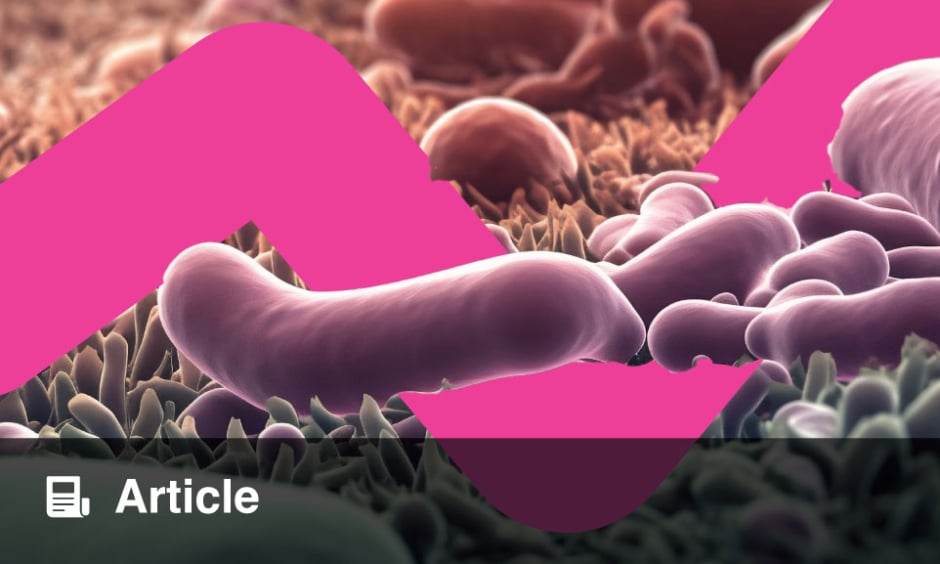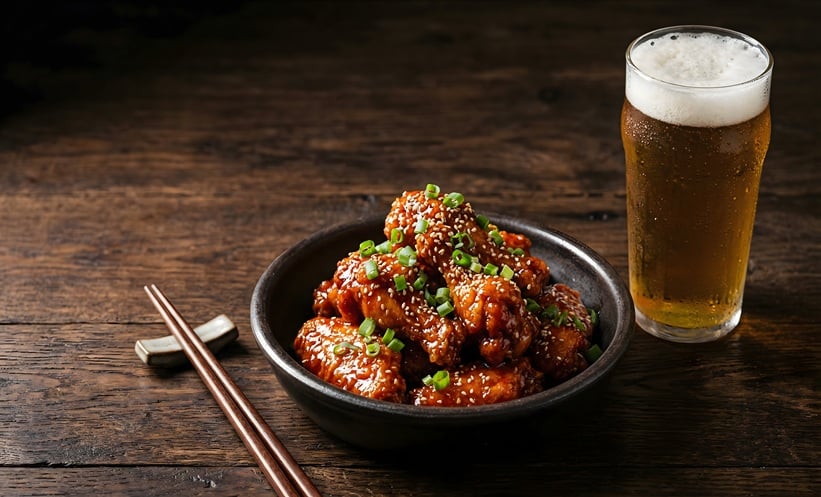
SPICY food intake can maintain moderate levels of gut microbiome health but can cause mucus degeneration and dysbiosis when ingested in conjunction with excessive amounts of alcohol according to a new Korean study.
Co-ingestion of Spicy Food and Alcohol
The benefits of consuming spicy food include a reduced risk of a variety of mortality and metabolic related diseases, but these may be, in part, negated when ingested with excessive amounts of alcohol.
Researchers performed a metagenomic study of 229 healthy Korean adults to understand how alcohol and spicy food ultimately affect the gut microbiome.
Shotgun metagenomic analysis was used to understand the effects of dietary factors on microbial metabolic networks by directly profiling the microbial genome. Epithelial injury related biomarkers including intestinal fatty acid binding protein (I-FABP) and liver fatty acid-binding protein (L-FABP) were quantified using urine samples.
Spicy Food and Alcohol Increase Risk of Dysbiosis
A dietary questionnaire was used to classify the adults into groups based on spicy food and alcohol intake and groups based on cross-dietary habits.
Shotgun metagenomic data indicated no significant difference in the taxonomic composition of the gut microbiome in any of the four cross-dietary groups (PERMANOVA, p = 0.218).
Spicy food intake supported mucus layer stability through the promotion of mucin metabolism. Conversely alcohol consumption caused micro epithelial injury because of increased I-FABP levels. There was no significant difference between I-FABP and L-FABP between Spicy-High and Spicy-Low groups however there were significantly high I-FABP levels in the Drink-High group in comparison to the Drink-Low group (p = 0.004).
Mucin metabolism and short-chain fatty acid (SCFA) production differed according to the level of spicy food intake indicating that metabolic network configurations are affected more strongly through the ingestion of spicy food and alcohol together. The Drink-Low-Spicy-High group showed enhanced amino acid metabolism potentially predisposing otherwise healthy adults to metabolic inflammation.
The Drink-High-Spicy-High group saw elevated levels of SCFA production elevated levels of Proteobacteria and Fusobacteria, negatively affecting the gut microbiome by increasing the risk of dysbiosis through mucin turnover.
Limitations and Future Studies
A limitation outlined in the study mentioned how Korean spicy cuisine has markedly different nutritional profiles where the fat, fibre and carbohydrate content of these could affect the gut microbiome. Researchers noted that in the Spicy-High groups the increased SCFA production may be a result of these varying nutritional profiles instead of the spicy foods themselves.
Additionally, it was mentioned that interpretation of mucin homeostasis relied on literature as opposed to measurements made directly from the individuals.
Looking forward, future studies could include more detailed information about the nutritional profiles of the cuisines to get a more accurate depiction of how spicy foods alone might affect mucin turnover and SCFA production.
Reference
Min U et al. Spicy food intake and dietary factors shape the gut microbiome and metabolism of mucin and short-chain fatty acids in healthy adults. Sci Rep. 2026;DOI: 10.1038/s41598-026-53556-7.
Featured Image: minsun on Adobe Stock
- Author: