BACKGROUND AND AIMS
Hippocampal damage is frequent in patients with multiple sclerosis (MS), and is clinically significant due to its impact on cognitive function and mood disorders.1 Also, damage of the subventricular zone (SVZ) has been associated with impaired processing speed in patients with MS.2 Neurogenesis may occur in the dentate gyrus (DG) of the hippocampus and the SVZ throughout the whole lifespan.3,4 In patients with MS, aerobic training may exert a neuroprotective role on the brain by stimulating neurogenesis in DG and SVZ.5
The aim of this study6 was to assess the effects of aerobic exercise on the volume of the hippocampus and its subfields and on diffusivity measures of the SVZ in patients with progressive MS.
MATERIALS AND METHODS
The authors retrospectively analyzed data from 84 patients with progressive MS enrolled at four sites participating in the CogEx MRI substudy.7 Thirty-nine patients with MS performed aerobic training, while 45 patients undertook a balance- and stretching-based sham exercise intervention. Both groups trained twice weekly for 12 weeks. At baseline, post-intervention, and 6-month follow-up, patients underwent MRI assessment on a 3.0 T scanner. FreeSurfer’s (CorTechs Labs, Inc. [now Cortechs.ai], San Diego, California; and The General Hospital Corporation doing business as Massachusetts General Hospital, Boston, Massachusetts, USA) longitudinal processing stream was used to analyze hippocampal subfields’ volumes. Fractional anisotropy and mean diffusivity were extracted from the SVZ and the thalamus, serving as control region.
RESULTS
There were no differences between the two groups in the assessed variables at baseline (p≥0.070). The DG showed a significant volume increase post-intervention in the aerobic exercise group (mean change: 0.63%; 95% CI: 0.04–1.22%; p=0.035; Figure 1), but not in the sham group (mean change: −0.26%; 95% CI: −0.81–0.28%; p=0.337). DG volume increase was significantly greater in the aerobic group compared to the sham group (p=0.029).
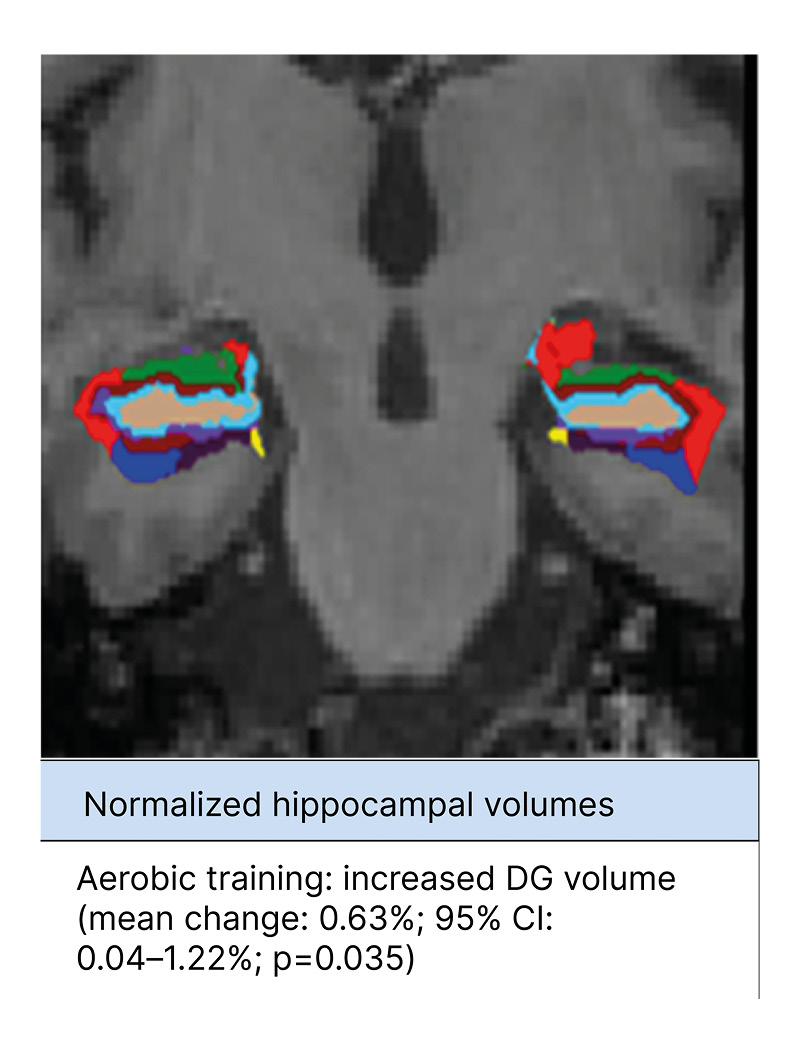
Figure 1: Hippocampal subfield segmentation and results of longitudinal analysis.
Results of hippocampal subfield segmentation using FreeSurfer (CorTechs Labs, Inc. [now Cortechs.ai], San Diego,
California; and The General Hospital Corporation doing business as Massachusetts General Hospital, Boston,
Massachusetts, USA) longitudinal processing, along with significant post-intervention volumetric changes observed in patients with multiple sclerosis undergoing aerobic training.
DG: dentate gyrus.
No significant volumetric changes were found in the other hippocampal subfields, nor in the diffusivity metrics of the SVZ (p≥0.057). No significant changes in either group were found between end of training and the 6-month follow-up (p≥0.061).
CONCLUSION
Aerobic exercise increased DG volume in patients with progressive MS, but did not modify microstructural integrity of the SVZ. The possible neuroprotective effect of aerobic training is particularly relevant, since the hippocampus is a common site of atrophy in MS, contributing to cognitive deficits experienced by these patients.