Advancing Primary Biliary Cholangitis Management Through Continuing Medical Education - European Medical Journal

This site is intended for healthcare professionals

Advancing Primary Biliary Cholangitis Management Through Continuing Medical Education

1 Mins
Hepatology
Download PDF
Authors:
* S. Christy Rohani-Montez , 1 Marinella Calle , 1 Margaux Le Berre , 1 Adriaan J. van der Meer , 2 Emma Culver , 3 David E. Jones 4
  • 1. Medscape Education Global, London, UK
  • 2. Erasmus MC, Rotterdam, the Netherlands
  • 3. John Radcliffe Hospital, Oxford, UK
  • 4. University of Newcastle, Newcastle upon Tyne, UK
*Correspondence to [email protected]
Disclosure:

van der Meer has received grants or contracts from Gilead, Ipsen, Mirum, and Intercept, with payments to the institution; consulting fees from Gilead, Ipsen, and Mirum; and payment or honoraria for lectures, presentations, speakers bureaus, manuscript writing or educational events from Gilead, Ipsen, Norgine, Mirum, and AbbVie. Culver has received grants or
contracts from NIHR BRC Oxford; consulting fees from Gilead, Mirum, GSK, Amgen, Ipsen, Zenus, Acepodia, Sanofi, Advance, and Intercept; payment or honoraria for lectures, presentations, speakers bureaus, manuscript writing or educational events from Gilead, Mirum, GSK, Amgen, Ipsen, Zenus, Acepodia, Sanofi, Advance, and Intercept; has participated on the Data Safety Monitoring Board or Advisory Board of Amgen, Zenus, Sanofi, Ipsen, Gilead, Mirum, and Advance; has been the Chair of BASL IMLD, Scientific Committee EASL, and Research Council UEG. Jones has received support for the present manuscript from Medscape as remuneration for unrelated educational activity delivery; grants from Intercept; consulting fees from Advanz, Ipsen, and Umecrine; payment or honoraria for lectures, presentations, speakers bureaus, manuscript writing or educational events from Ipsen and Gilead; has participated on the Data Safety Monitoring Board or Advisory Board of Mirum; and has been an unpaid Chair of the clinical advisory board for PBC Foundation. The other authors have declared no conflicts of interest.

Keywords:
Primary biliary cholangitis (PBC), peroxisome proliferator-activated receptor (PPAR) agonist, switching.
Citation:
EMJ Hepatol. ;14[1]:70-71. https://doi.org/10.33590/emjhepatol/G9936T51.

Each article is made available under the terms of the Creative Commons Attribution-Non Commercial 4.0 License.

BACKGROUND

Primary biliary cholangitis (PBC) management in Europe has undergone a significant transition following the European Medicines Agency’s (EMA) withdrawal of obeticholic acid1 and the subsequent approval of peroxisome proliferator-activated receptor (PPAR) agonists.2,3

AIMS

To address this overhaul in second-line therapies, the authors launched an educational initiative to increase gastroenterologists’ and hepatologists’ competence and confidence in using second-line therapy and assess their subsequent actions in clinical practice.4

METHODS

Physicians participated in a 38-minute, debate-style online continuing medical education (CME) activity on (re-)evaluation for second-line PBC therapy. The educational effects were measured in two phases: part A involved activity pre- and post-assessments, while part B was a Moore’s Level 5 performance survey completed 30 to 60 days after participation.

RESULTS

Of 1,413 gastroenterologists/hepatologists who had engaged with the programme, 58 completed all questions in part A and 33 in part B. Of which, 52% were community practitioners, 39% in academic settings, and 8% other.

Part A revealed significant improvements in physicians correctly identifying patient age and liver stiffness as critical indicators for second-line treatment, factors that were previously underestimated (pre-assessment: 16% correct versus post-assessment 45% correct; p<0.001). Furthermore, physicians demonstrated an increased understanding that PPAR agonists improve patient itch and biochemical responses, normalising alkaline phosphatase (pre-assessment: 62% correct versus post-assessment 76% correct; p<0.05).

This knowledge translated directly to increased confidence. While 84% of participants recognised they had patients requiring reassessment, 36% demonstrated measurably improved confidence in determining exactly which patients should be evaluated following the activity.

The programme subsequently successfully drove meaningful changes in clinical practice. The follow-up survey in part B revealed that 94% of respondents modified, implemented, or reinforced a clinical practice as a direct result of the education. Figure 1 outlines the specific practice changes implemented by specialists 30 to 60 days after the educational intervention.
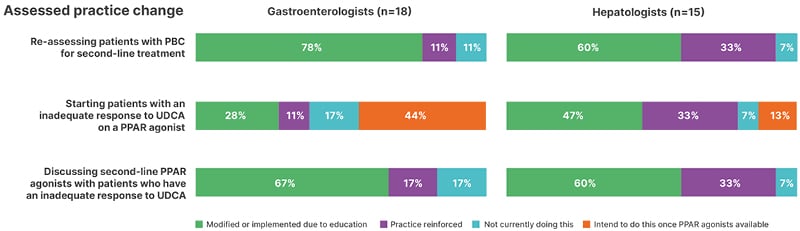
Figure 1: Physician practice changes post-education.
PBC: primary biliary cholangitis; PPAR: peroxisome proliferator-activated receptor; UDCA: ursodeoxycholic acid.

Despite the high rate of overall reassessment (91% actively reassessing patients), physicians reported practical barriers that limit broader implementation. The primary barriers cited were capacity challenges related to scheduling patient clinics and difficulties in securing access to PPAR agonists. 

CONCLUSION

Ultimately, the CME activity successfully boosted practitioner confidence and catalysed active reassessments of patients with PBC. Moving forward, continued education must focus on closing the gap between simply monitoring patients with PBC and actively prescribing these new second-line treatments by reinforcing clinical indicators and the expected benefits of PPAR agonists.

References
European Medicines Agency. EMA recommends revoking conditional marketing authorisation for Ocaliva. Available at: https://www.ema.europa.eu/en/news/ema-recommends-revoking-conditional-marketing-authorisation-ocaliva. Last accessed: 8 June 2026. European Medicines Agency. Iqirvo. Available at: https://www.ema.europa.eu/en/medicines/human/EPAR/iqirvo. Last accessed: 8 June 2026. European Medicines Agency. Lyvdelzi (previously Seladelpar Gilead). Available at: https://www.ema.europa.eu/en/medicines/human/EPAR/lyvdelzi. Last accessed: 8 June 2026. Rohani-Montez SC et al. Changes in gastroenterology and hepatology practice through primary biliary cholangitis education. Poster THU-290. EASL Congress, 27-30 May, 2026.

Rate this content's potential impact on patient outcomes

Average rating / 5. Vote count:

No votes so far! Be the first to rate this content.