BACKGROUND
Cancer immunotherapy has transformed outcomes for patients with advanced non-small cell lung cancer (NSCLC), enabling long-term survival in a subset of patients. However, resistance to immunotherapy remains a significant clinical challenge. Mutations in the p53 gene have been implicated in suppressing anti-tumor immunity within the tumor microenvironment, potentially contributing to this resistance.1 Serum p53 antibody, an autoantibody arising from p53 gene mutations, may serve as a clinically accessible biomarker, but its relationship to immunotherapy response, particularly across different treatment regimens, has not been well established.
AIMS
This study aimed to clarify whether p53 antibody positivity in NSCLC is associated with differential responses to immune checkpoint inhibitor (ICI)-based therapies, and whether treatment outcomes vary depending on the specific regimen used.2
METHODS
The study enrolled 173 patients with advanced NSCLC who received ICI therapy, with or without chemotherapy, at a single institution between November 2018–June 2024. Serum p53 antibody levels were measured before and after treatment initiation. Key outcome measures included early progressive disease (EP), progression-free survival, and overall survival. Subgroup analyses were performed to assess whether treatment regimen modified the impact of p53 antibody status.
RESULTS
The cohort had a mean age of 69.4 years, was predominantly male (76.7%), and had adenocarcinoma as the most common histology (58.4%). The majority of patients (75.1%) received ICI combined with chemotherapy rather than ICI alone. Serum p53 antibody was positive in 40.4% of patients at baseline. Among patients receiving ICI with chemotherapy, patients who were p53 antibody positive had a significantly higher rate of EP compared to patients who were p53 negative (28.6% versus 15.5%; p=0.04). Multivariate analysis confirmed that p53 antibody positivity was the only independent predictor of EP (hazard ratio: 3.11; 95% CI: 1.19–8.50; p=0.02). In patients with low programmed death-ligand 1 (PD-L1) expression (0–49%), progression-free survival was significantly shorter in the p53-positive group (3.7 months versus 7.2 months; p=0.01). When examining the effect of specific regimen components, no significant difference in treatment response was observed between ICI alone and ICI plus chemotherapy among patients who were p53 antibody positive. However, the addition of anti-vascular endothelial growth factor (VEGF) antibody therapy to ICI was associated with a markedly lower EP rate compared to regimens without anti-VEGF therapy (14.3% versus 30.2%; p=0.03), suggesting a potential benefit in overcoming p53-related immunotherapy resistance.
CONCLUSION
Serum p53 antibody status significantly influences the efficacy of cancer immunotherapy in NSCLC patients. p53 antibody-positive NSCLC demonstrates variable treatment responses depending on the regimen employed. Notably, combining ICI with anti-VEGF antibodies appears to be a promising strategy for improving outcomes in this subgroup (Figure 1). These findings support the clinical utility of pre-treatment p53 antibody measurement as a predictive biomarker and highlight the need for tailored therapeutic approaches in p53 gene mutation-positive NSCLC.
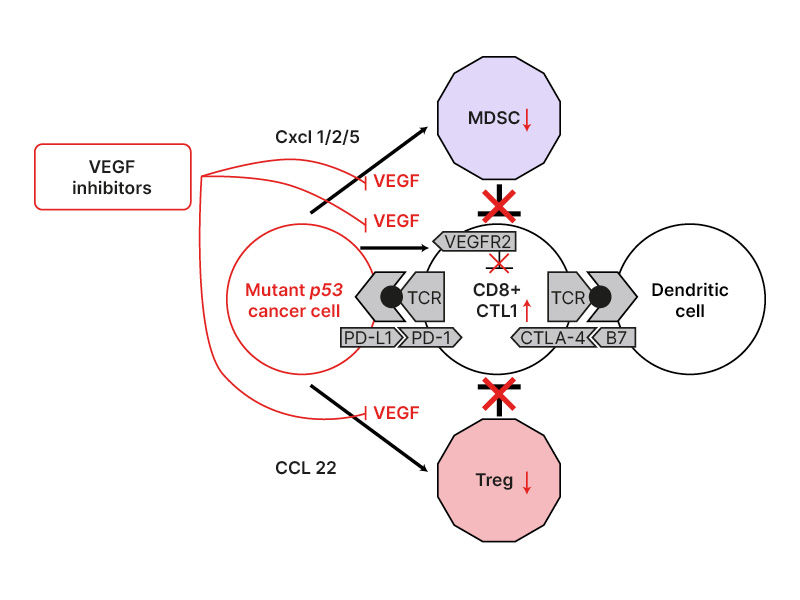
Figure 1: Anti-VEGF therapy in p53 antibody-positive non-small cell lung cancer.
B7: B7 costimulatory molecule family (CD80/CD86); CCL 22: C-C motif chemokine ligand 22; CD8+: cluster of differentiation 8-positive T cell; CTL: cytotoxic T lymphocyte; CTLA-4: cytotoxic T-lymphocyte-associated protein 4; Cxcl 1/2/5: C-X-C motif chemokine ligands 1, 2, and 5; MDSC: myeloid-derived suppressor cell; PD-1: programmed cell death protein 1; PD-L1: programmed death-ligand 1; p53: tumor protein p53; TCR: T-cell receptor; Treg: regulatory T cell; VEGF: vascular endothelial growth factor; VEGFR2: vascular endothelial growth factor receptor 2.