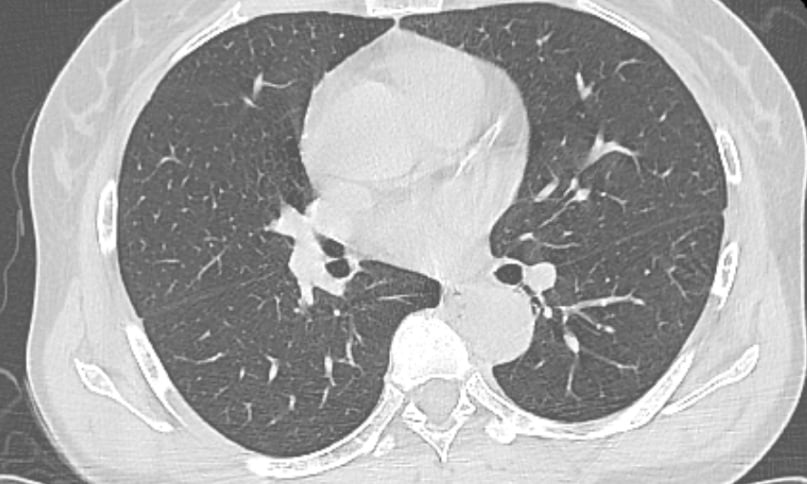
GROWTH-ADJUSTED MPA/AA ratio reference values could help place paediatric chest CT findings into a developmental context, according to a multicentre retrospective study.
Researchers found that the main pulmonary artery-to-ascending aorta (MPA/AA) ratio was highest in early life, declined progressively with growth, and then stabilised during later childhood and adolescence. In an independent cohort, age-adjusted values remained associated with invasively measured pulmonary arterial pressure.
Pulmonary hypertension encompasses a heterogeneous group of conditions characterised by elevated pulmonary vascular resistance and increased right heart burden. Right heart catheterisation remains the reference standard for diagnosis and haemodynamic assessment, while clinically indicated CT contributes structural and vascular information that may raise suspicion of abnormal pulmonary haemodynamics when clinically indicated. The MPA/AA ratio is widely used as a supportive imaging marker, but its interpretation in children has been complicated by normal changes related to growth.
Reference Values Reflected Normal Childhood Development
The investigators sought to establish growth-adjusted reference values for the paediatric MPA/AA ratio using clinically indicated chest CT scans and to assess their haemodynamic applicability in a separate right heart catheterisation cohort.
The modelling cohort included 1,306 children younger than 18 years from two paediatric centres who underwent chest CT for conditions not expected to directly alter pulmonary arterial morphology following predefined exclusions. The median age was 6.4 years, and the median MPA/AA ratio was 1.12.
The analysis showed that the ratio was highest during early life, declined with growth, and became relatively stable during later childhood. An age-based, sex-adjusted unified model was developed to generate growth-adjusted reference values.
Age-Adjusted Values Were Linked to Haemodynamic Status
An independent right heart catheterisation cohort comprised 175 children, with the primary analysis including 169 children older than 3 months. In this cohort, age-adjusted MPA/AA values were associated with invasively defined pulmonary arterial pressure elevation, with an area under the curve of 0.881 (95% CI 0.830–0.932).
The findings suggested that the same raw MPA/AA measurement may represent different positions within the age-specific distribution across childhood. R Rather than relying on a single threshold, the findings support interpreting MPA/AA measurements against age-adjusted reference values that account for normal childhood growth.
Reference-Based Approach Complements Clinical Assessment
The authors emphasised that the work was not intended to redefine the MPA/AA ratio as a stand-alone diagnostic test for elevated pulmonary arterial pressure. Instead, the reference values were designed to support interpretation of a familiar CT measurement when imaging had already been performed for clinical reasons. An elevated age-adjusted centile or z-score should be considered an imaging finding that warrants clinical correlation rather than a diagnostic criterion.
The retrospective design, incomplete clinical metadata, variation in CT acquisition protocols and the clinically heterogeneous catheterisation cohort were acknowledged as limitations. The researchers said future paediatric studies should investigate whether combining the MPA/AA ratio with other CT-derived measurements could further improve diagnostic performance.
Reference
Lyu Y et al. Growth-adjusted reference values for the main pulmonary artery-to-ascending aorta ratio derived from clinically indicated chest CT in children. Eur Radiol. 2026;DOI:10.1007/s00330-026-12746-7.
Featured image: therads on Adobe Stock