Key Summary:
- Every Illinois county reported at least one human tick-borne disease case.
- Human case numbers increased by an average of 23 cases each year.
- Northern and southern Illinois showed distinct vector-specific hotspots.
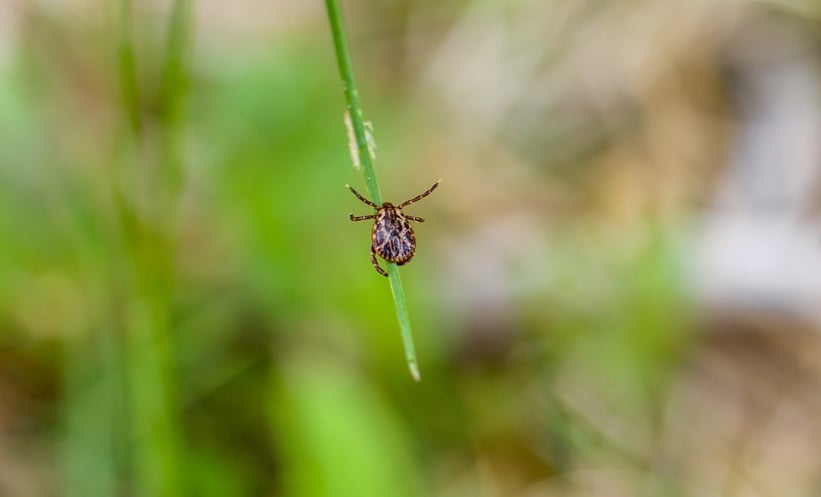
BOURBON virus was among eight reportable tick-borne diseases examined as cases increased throughout every Illinois county.
Researchers retrospectively analyzed 6,423 human cases reported in Illinois between 2004 and 2022, alongside county-level canine testing and seropositivity data available from 2009 through 2022.
The analysis covered Bourbon virus disease, Lyme disease, anaplasmosis, babesiosis, ehrlichiosis, spotted fever group rickettsioses, Powassan virus disease, and Heartland virus disease. Every Illinois county reported at least one human tick-borne disease case during the study period.
Annual human case numbers increased by an average of 23 cases each year, despite substantial year-to-year fluctuations. Illinois recorded 645 cases in 2021 and 343 in 2022. Lyme disease accounted for most of the overall increase, adding an average of 18 reported cases annually.
Lyme disease represented the greatest disease burden, with 4,297 cases, followed by 1,262 cases of spotted fever group rickettsioses. Most reported cases occurred among males, White and non-Hispanic residents, and adults older than 40 years.
Cases generally rose rapidly beginning in May, peaked during June and July, and declined gradually throughout the fall. However, every disease except babesiosis was reported during every month of the year.
Clear geographic differences emerged across Illinois. Diseases associated with Ixodes scapularis, including Lyme disease, anaplasmosis, and babesiosis, produced the broadest distribution and greatest overall burden. Hotspots associated with I. scapularis were concentrated across northern Illinois and expanded into north-central counties during 2019 to 2022.
Ehrlichiosis associated with Amblyomma americanum and spotted fever group rickettsioses associated with Dermacentor variabilis were concentrated primarily in southern Illinois. Bourbon virus disease is also transmitted by A. americanum, although the study did not report a separate temporal or geographic trend for Bourbon virus cases.
Canine seroprevalence broadly reflected human geographic patterns. Exposure to pathogens associated with I. scapularis clustered in northern Illinois, while exposure associated with A. americanum was more localized in southern counties. The findings suggest that consistently collected canine data may complement human disease surveillance and help identify emerging exposure areas.
Human incidence was generally higher in rural counties, counties with greater deer harvests, and counties with lower median household income. Greater rurality was associated with increased incidence for nearly all evaluated human diseases, while higher deer harvests were associated with increased Lyme disease and ehrlichiosis.
The authors cautioned that reported cases may not represent where infections were acquired. Acquisition and travel information were frequently missing, particularly for Lyme disease. Changes in disease definitions, testing patterns, healthcare access, and incomplete canine surveillance may also have influenced the observed trends.
The results support geographically targeted prevention messaging and greater clinical awareness of Bourbon virus and other tick-borne diseases throughout Illinois, including outside traditionally recognized hotspots.
Reference
Chakraborty S et al. Tick-borne diseases in Illinois (USA): A retrospective case analysis. Ticks Tick Borne Dis. 2026;17(4):102675.
Featured Image: Christine Grindle on Adobe Stock.
Each article is made available under the terms of the Creative Commons Attribution-Non Commercial 4.0 License.