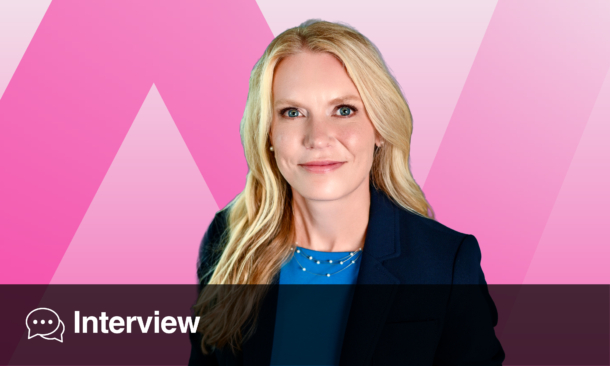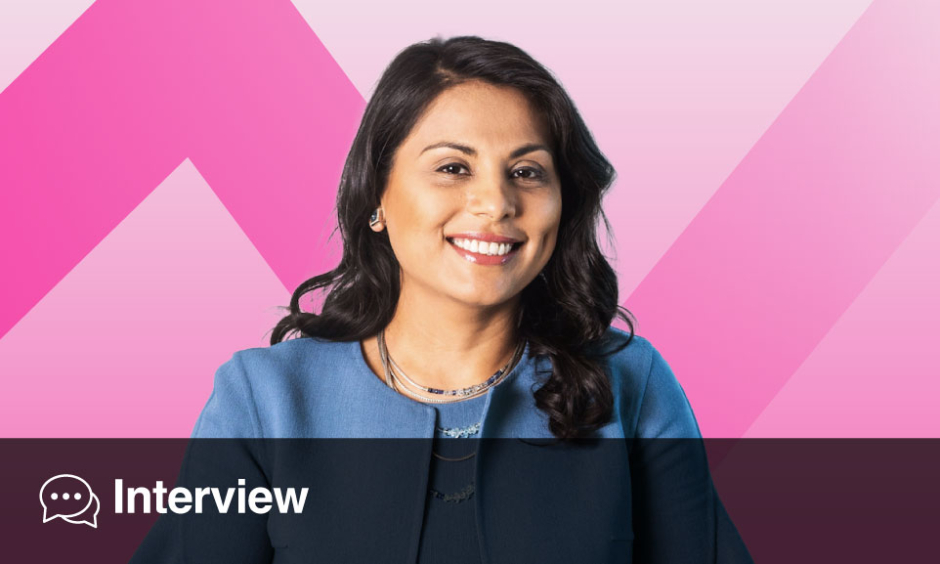
Nahid Bhadelia | Founding Director, Boston University Center on Emerging Infectious Diseases (CEID), Massachusetts, USA
Citation: Microbiol Infect Dis AMJ. 2026; https://doi.org/10.33590/microbiolinfectdisamj/S4W4KYC8

Reflecting on your education in infectious diseases and international diplomacy, how has your dual background shaped your bedside management of patients with high-consequence pathogens in biocontainment units?
One of the reasons I chose a degree in diplomacy and international relations rather than public health was that I wanted to understand the underlying dynamics that shape the way infectious diseases take advantage of our communities. If you look at the history of infectious diseases, they have always targeted those who fall through the cracks, those in the fault lines: communities that face marginalization, those living at the border of economic and environmental justice, and, when you think about spillover events, those affected by climate change. Understanding those underlying economic, political, and social dynamics is, in my mind, critical to handling large emergencies, such as epidemics and pandemics.
That training helped me understand the underpinnings of many of the pathogens that affect not just individual patients but communities at large, in a way that I do not think a public health degree alone would have. I did take a lot of public health courses as an infectious diseases fellow at Columbia University, New York City, New York, just not enough to finish a Master of Public Health. At that point, another degree felt like a bit of a luxury, so I decided I did not need it.
The inverse is also true, in that I never wanted to work only on policy. My primary identity is not public health leader; it is clinician. That is how I understand the world, and it is how I understand public health, because it is that firsthand patient contact, whether during an emergency or here in clinic, that crystallizes for me what needs to change. So, this combination of skills has played both ways for me.
Biothreats Emergence, Analysis and Communications Network (BEACON) integrates large language models (LLM) into event-based outbreak surveillance. How do you build LLM workflows to ensure experienced clinicians verify AI-generated findings before they inform public health action?
BEACON1 is event-based surveillance, which means it does not produce line listings of every case and every disease. We make editorial choices. We want to report things that are of high consequence, of course, but we also want to focus on areas that do not have very good formal reporting, so we may report many more endemic diseases. In Nigeria, for example, we are reporting diphtheria outbreaks because of what we are seeing there. Elsewhere, we will report a single Crimean-Congo hemorrhagic fever case in Namibia, because we want to make sure the world is aware of some of these pathogens. We focus specifically on events that we think have a public health impact or could change clinical practice.
I say that for a reason: on average we receive around 2,000 signals a day, and we end up publishing 6–10 reports on the BEACON website. A signal is any input, information, or report, whether from media, a public health body, or an individual, that is sent to us or collected by our subject matter experts. We have outbreak analysts based in 13 countries who cover 21 languages, and they screen their own media and their own networks of public health organizations. Many of them work with public health agencies in their home countries; our Lebanese outbreak analyst works with the Lebanese Ministry of Health (MoPH), and our Taiwanese analyst works with the Taiwan Centers for Disease Control (Taiwan CDC), for example. They are already doing horizon scanning as part of their jobs. They are affiliate faculty for my center and serve on BEACON as part of what they do outside those hours.
So, signals reach us from multiple sources: from the outbreak analysts, from our large network of public health partner organizations, and from users, because BEACON is open access and people send us information about what is happening in their communities. Some are sent in by clinicians who are part of networks such as GeoSentinel®(International Society of Travel Medicine, Inc., Alpharetta, Georgia, USA), a network of returning traveler clinics around the world that already has agreements and patient consent in place to send in something that seems unusual, such as a patient arriving from a country that has not declared an outbreak of the disease they present with. The majority of our volume comes from web scraping through our partner HealthMap (Tampa, Florida, USA) and from media sources, as well as our own LLM-enabled web scraping that scours the web for potential sources.
I mention the volume because 2,000 signals is a lot, and it is the human who goes in and picks the 6–8 things we want to report that day. We take that information, make choices about what to report, and then verify it. The humans use the LLM at different steps and in different ways, but verification itself is good old-fashioned digital investigation, or picking up the phone and talking to a public health colleague and asking whether it is true. Once we decide to publish, we use a LLM that is domain trained here at Boston University, Massachusetts, USA, specifically for infectious diseases to generate a draft report, which we then edit and add further human expertise to before we publish.
I would add briefly that open access matters for BEACON for three reasons. First, if information is only free for some people, it does not really help change the world or move the needle on what event-based surveillance can do, which is to act as an alarm bell for as many people as possible when you see trends; being open access serves the goal of the program, which is common public good. Second, being free makes it far more likely that people will share information with us. During the meningitis outbreak in Kent, UK, a woman there emailed us to say it was on the local news, that she had not seen it in the national news yet, and asked whether we could look into it. We hear from public health professionals but also from individual citizens, and they would not have done that if we were not open access. Third, when we cannot verify something ourselves, we can crowdsource verification. Putting out that we think something is important and that someone should look into it, but that we cannot find the right information, allows people to come back to us with more. We now have users in more than 200 countries and territories.
A published paper of yours highlighted that frontline hospitals often delay running basic bloodwork for suspected high-consequence infection due to safety concerns. What practical changes can community emergency departments make to safely run routine labs and prevent diagnostic delays?
Part of the reason is that, in many cases, hospitals do not feel they have the biosafety and biosecurity set-up to do it. In other cases, there is already a system in place to send a test to the Centers for Disease Control and Prevention (CDC) or to a referral laboratory, so they do not want to take the risk or make the investment in-house.
The way we change this is by creating more point-of-care diagnostics. At the moment, to run a lot of these tests you would have to take an entire PCR machine offline in order to run a hot sample. Early in COVID-19, what laboratories and biocontainment units that do this on site had to do was designate a space, determine what biosafety and biosecurity measures would apply in that area, and then set up the probes.
What would help are more diagnostics that are point-of-care, safe, and enclosed, so that they do not pose a biosecurity or biosafety risk. By that I mean a closed system where you could put everything into a box, something like a Biosafety Level 4 box, and conduct the test in there without exposing laboratory workers. Rapid diagnostic tests would be another route, and they could be done at the bedside, since you are already collecting the blood. The problem is that diagnostics for many of the priority pathogens are lacking. PCR testing exists, but the majority of it is done at referral laboratories.
In your work on the ethics of biocontainment, you discuss the challenges of limited isolation capacity. How should clinical teams handle bedside triage decisions when an outbreak surge exceeds isolation capacity, while keeping healthcare workers safe?
I wrote about this at the beginning of COVID-19 as well, on the shift that happens when a threat becomes bigger than what biocontainment care units are designed to do. What COVID-19 taught us is that hospitals have to identify in advance what their surge capacity is going to be and what their staffing plan will be in that scenario. In many cases during COVID-19, hospitals ended up designating a secondary closed ward, and that entire ward then became a biocontainment care unit.
The issue is that in many cases it is not space that is limiting, it is staff. There is a much higher healthcare worker-to-patient ratio for priority pathogens than for non-priority pathogens, so you need a large cadre of healthcare workers who can be deployed at any one time as a crisis grows, and that requires consistent investment. The Administration for Strategic Preparedness and Response (ASPR) has made that investment here in the USA, both through the regional hospitals and, more recently, through the National Special Pathogen System of Care (NSPS), which has designated a further group of Level 2 hospitals that hold some level of capacity. That is increasing biocontainment capacity in the USA.
It is a completely different challenge in other places, of course, because of a baseline shortage of healthcare workers, but also a baseline shortage of resources such as personal protective equipment. Generally, the equation people use is space, staff, stuff, and standard operating procedures. As you move from a single biocontainment unit to a larger space, you need to determine more space, more staff, more stuff, and different standard operating systems.
As the Founding Director of Boston University’s Center on Emerging Infectious Diseases (CEID), you teach both medical clinicians and international policy students. How should medical school and fellowship education evolve to equip infectious disease clinicians with the policy literacy necessary to translate bedside insights into health security decisions?
I wish there were more training at the medical school level for clinicians. It exists in some medical schools, but I think a basic understanding of the underpinnings of our healthcare system, delivered as a short course, would help. The trouble is that medical school is already long as it is, so at the very least it should be possible as an elective, within nursing, within physician assistant school, and within medical school, to learn how insurance works, what laws underpin our current healthcare system, and how public health is funded.
The classic thing that people do not recognize until later is that our healthcare system, for the most part, sits in the private sector, while our public health system here in the USA sits in the public sector. They are two very different beasts, and getting them to work together, particularly during healthcare emergencies, has to align with the incentives of both.
Having served as a member of the White House COVID-19 Response Team working on global COVID-19 response, you have operated at the highest levels of global health policy. Drawing from your advisory roles, how can leaders better translate emerging clinical and microbiological evidence during a fast-moving health crisis?
This is one of the things in life I wish I could work on more. When I was first deployed to West Africa in 2014 and 2015 for the Ebola response, over multiple deployments, that was my first hands-on patient care for viral hemorrhagic fever, even though I had run a biocontainment care unit for a few years beforehand. In the USA, thankfully, we do not see many viral hemorrhagic fever patients. One of the biggest lessons I learned there was that, with emerging infectious diseases, you are learning about the disease as you are taking care of patients. The connection between understanding what is happening to the first 100 patients and your ability to improve the care of the next 100 patients is direct.
This is where making sure we have some capacity for frontline clinicians to share their experiences of these patients, particularly in larger emergencies, becomes important. The Department of Health and Human Services (HHS) had a therapeutic learning platform during COVID-19, and there have been prior attempts, but we need a more formal way to capture that initial learning. It does not even have to sit all the way up at the policy level. When I was on the COVID-19 team at the White House, what we did was hold roundtables to bring in experts of different types, and that helped. More efforts like that during a crisis matter, but so does giving a larger group of healthcare workers digital tools through which they can share what they are seeing during emergencies.
Your career has taken you from Ebola response in West Africa to biocontainment units and White House policy. What advice would you give early-career physician-scientists hoping to combine frontline clinical care with global biodefense policy?
One thing I notice about a lot of people graduating from their educational degrees and going into this work is that they have a very clear idea of what their career is going to look like. I can tell you that your career does not go the way you think it will. You may not get that K award, you may not get that job, you may not get the fellowship you wanted. The interesting thing is that whatever you are doing in that moment is not what you will do for the rest of your life. Just look at my career: it is seven different careers in the same career, because every few years there is another challenge and my work takes me towards it.
That is how most careers work. You evolve, you understand what you are better at and what satisfies you more, but also what the world needs. That Venn diagram between what you are good at, what gives you passion, and what is good for the world changes over time, as you change and as the world changes.
The other thing I would say is that no experience is wasted. After college, I delayed medical school by a year and worked for Oxfam America, Boston, Massachusetts, USA, as a national outreach coordinator doing civic engagement, talking to churches and schools, and traveling around the country giving talks on the importance of foreign aid and economic development. I was 21. I would get a rental car and drive into small communities to talk about international development. I never thought I would use that again, and look at where I am now: of course, I use the same skills in oration, the same ability to talk about issues that are important, and the same framing methodologies I learned then. No job you ever do and no skill you ever learn is wasted. They get translated and melded into the person you are, and they allow you to add more dimension to whatever you do next.
What does the future look like for you?
We are launching a new initiative at my center. BEACON is one program within CEID, and the new one is focused on diagnostics, so that is going to be my big challenge. BEACON itself is growing like a beast. We heard this morning that the Ministry of Health in Tunisia is using us, and we have heard about a lot of ministries of health using us as part of their horizon scanning. Making sure we keep giving people what they need out of the platform is going to be a continuing challenge as well.