Meeting Summary
Early-stage cutaneous melanoma is common and often considered low risk. However, staging alone may fail to capture all patients with aggressive tumor biology, and a meaningful proportion of melanoma deaths still occur in patients initially diagnosed with Stage I or II disease. DecisionDx-Melanoma™ (Castle Biosciences, Inc., Friendswood, Texas, USA) is a comprehensive gene expression profile (GEP) prognostic test that assesses risk of recurrence, metastasis, and death in patients with melanoma, as well as predicts the likelihood of a positive sentinel lymph node (SLN) biopsy.
Data from large-scale analyses of the US Surveillance, Epidemiology, and End Results (SEER) registry presented at the American College of Mohs Surgery (ACMS) and the American Society of Clinical Oncology (ASCO) in 2026 highlight the clinical role of DecisionDx-Melanoma in informing risk-aligned management decisions and personalized care for patients with early-stage melanoma. In patients with T1a/T1b melanoma, 31-GEP testing accurately stratified melanoma-specific survival (MSS) in thinner tumors and identified those patients with higher mortality risk than predicted by staging alone. Similarly, in patients with Stage I–IIA disease and a negative SLN biopsy, 31-GEP successfully identified those at increased risk of death, including melanoma-specific death.
Collectively, these real-world data highlight the clinical utility of 31-GEP testing in providing additional personalized prognostic information for patients with melanoma who appear lower risk based on traditional staging alone. In clinical practice, DecisionDx-Melanoma may, therefore, help support dermatologists with surveillance planning, referral decisions, and treatment choice for patients with early-stage melanoma.
Addressing the Gaps in AJCC Staging
Most melanomas are diagnosed at an early stage, which is generally associated with good outcomes. However, a significant subset of patients with thin tumors or node-negative disease will still go on to experience distant metastases and death.1,2 The current American Joint Committee on Cancer (AJCC) approach to staging is inadequate for predicting clinical outcome in early-stage melanoma because it is based mostly on histopathology, and so can miss high-risk patients with aggressive underlying tumor biology.3-7 These gaps in AJCC staging are evidenced by the fact that over half of deaths due to melanoma occur in patients who were initially diagnosed with Stage I or Stage II disease, and thus considered to be lower risk (Figure 1).3-7
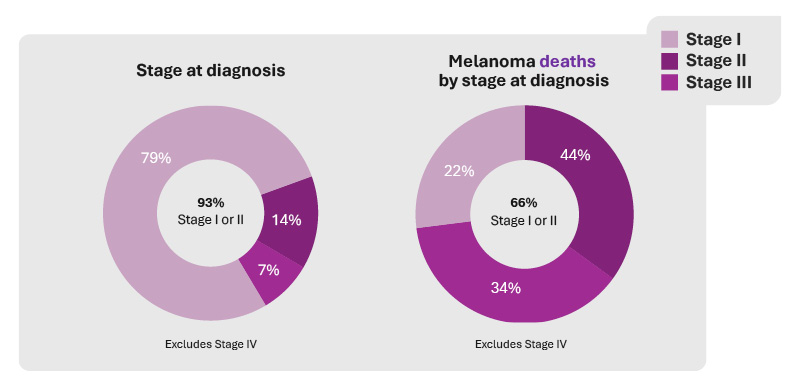
Figure 1: The majority of melanoma deaths occur in patients diagnosed with Stage I or II disease.3-7
Patients with AJCC Stage IIB and IIC melanoma have also been shown to have a high risk of disease recurrence and survival outcomes that are similar to Stage IIIA and IIIB melanoma;8 while in the landmark MSLT-I trial, approximately two-thirds of melanoma deaths among patients undergoing SLN biopsy for intermediate-thickness melanoma occurred in those with a negative biopsy result.9
Why Molecular Risk Matters
High-risk tumors may be misidentified as low-risk when relying on AJCC staging alone, creating an unmet need for tools that identify aggressive tumor biology earlier in patients with melanoma.3-7 Patients with melanoma are twice as likely to survive if recurrence is detected when asymptomatic versus symptomatic, hence improving prognostic accuracy can inform overall patient management decisions.3-7
DecisionDx-Melanoma is a GEP-based test designed to provide individualized molecular risk information in the form of three actionable risk results. It can help answer real-world clinical questions such as how to manage patients with early-stage melanoma, whether to refer for SLN biopsy consideration, and how to manage patients who are node-negative. By measuring and analyzing expression of 31 key gene targets associated with melanoma metastasis, the 31-GEP Class result assesses the aggressiveness of the underlying tumor biology, with Class 1A indicating low risk, Class 1B/2A denoting increased risk, and Class 2B identifying high-risk patients. In both retrospective and prospective studies, the 31-GEP test has been shown to accurately stratify risk of recurrence, metastasis, and death in patients with melanoma.2
New DecisionDx-Melanoma Data in Thin Tumors and Node-Negative Patients
Results from two real-world analyses drawing on the National Cancer Institute’s (NCI) SEER program presented at leading congresses in 2026 further illustrate how DecisionDx-Melanoma results can stratify risk for patients with early-stage and node-negative melanoma. These analyses looked at 5-year outcomes from large real-world cohorts of patients with early-stage melanoma whose tumors underwent clinical testing with 31-GEP between 2013–2019 and were linked to the SEER registry database.1,2
The first study was a retrospective subset performance analysis presented at ACMS 2026 by Harrison Nguyen from the University of Houston College of Medicine and Baylor College of Medicine in Houston, Texas, USA. In this study, Kaplan–Meier analysis was used to estimate 5-year MSS in patients with at least 5 years of follow-up or who died of melanoma. Survival differences between groups were compared using the log-rank test, and univariate analysis was conducted to identify predictors of MSS. In patients with T1a (n=721) and T1b (n=329) melanomas, 11.2% and 21.9%, respectively, had an increased risk (Class 1B–2B) result on 31-GEP testing. Those with Class 2B or Class 1B/2A results had significantly lower 5-year MSS than those with Class 1A results (p<0.001; Figure 2). Univariate analysis confirmed 31-GEP to be a significant predictor of MSS.1
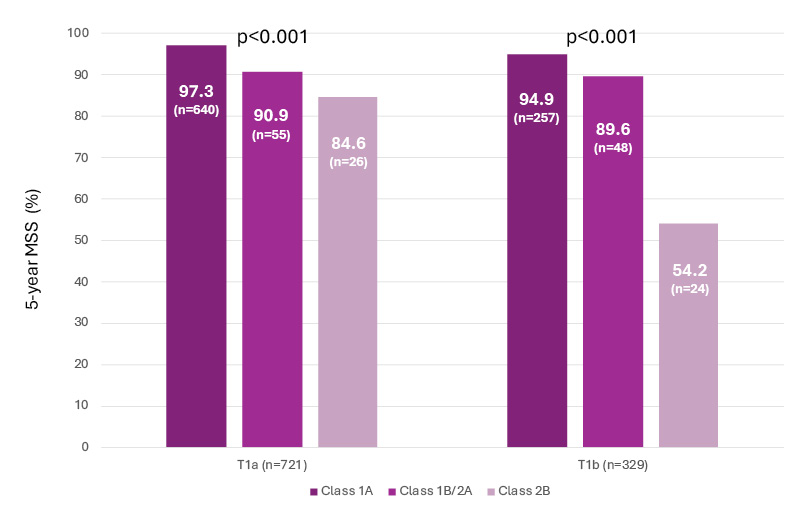
Figure 2: 31-GEP identified increased risk of death in patients with T1a/T1b melanoma.1
31-GEP: 31-gene expression profile; MSS: melanoma-specific survival.
Among those who went on to die from melanoma, only 11.5% (T1a) and 20.0% (T1b) of patients were upstaged to Stage III disease, the traditional approach to identifying increased risk. However, increased risk 31-GEP results (Class 1B–2B) identified an additional 31% of patients with T1a and 36.7% of patients with T1b who died from melanoma compared with staging alone. In total, 42.3% (T1a) and 56.7% (T1b) of the patients who died from melanoma were classified as high risk by combining 31-GEP with staging. Class 1B/2A and 2B indicated elevated mortality risk and Class 1A conferred a good prognosis.1
The second analysis, presented at ASCO by J. Michael Guenther from St. Elizabeth Physicians in Edgewood, Kentucky, USA, analyzed 5-year MSS and overall survival in 8,896 patients with early-stage, node-negative melanoma tested with 31-GEP. Data were analyzed using Kaplan–Meier methodology and compared between groups using the log-rank test. Multivariable Cox regression analysis was carried out to evaluate significant predictors of melanoma-specific and all-cause mortality.2
Results showed that the 31-GEP profile identified risk of death in patients with node-negative melanoma with Stage I–IIA disease and significantly stratified for both 5-year MSS (p<0.001) and 5-year overall survival (p<0.001; Figure 3).2
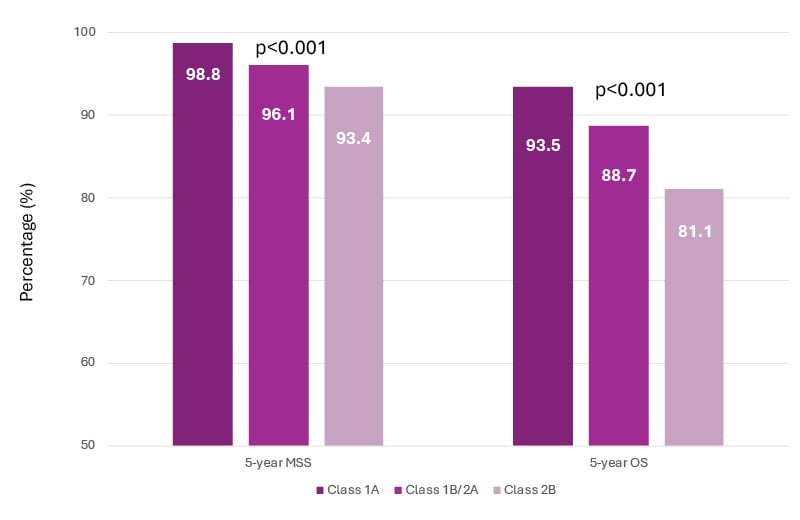
Figure 3: 31-GEP identified increased risk of death in patients with Stage I–IIA melanoma.2
31-GEP: 31-gene expression profile; MSS: melanoma-specific survival; OS: overall survival.
In multivariable analysis, 31-GEP Class 1B/2A (hazard ratio [HR]: 2.34), Class 2B (HR: 2.94), and age (HR: 1.04) were found to be significant predictors of melanoma-specific mortality. 31-GEP Class 2B (HR: 1.68), Breslow thickness (HR: 1.23), and age (HR: 1.09) were also significant predictors of all-cause mortality. Notably, no variable was shown to be more predictive of death from melanoma than Class 2B results, even Breslow thickness.
When evaluating the results from these two real-world SEER studies, it is important to recognize that each involved a distinct analysis approach. The T1a/T1b analysis included some Stage III patients (because some T1a/T1b melanomas are node positive) and was restricted to patients with at least 5 years of follow-up or an event. By contrast, the Stage I–IIA analysis also included patients with shorter follow-up and no events, which may have led to higher MSS estimates.
Clinical Implications of 31-GEP Testing
Collectively, these results presented at leading congresses in 2026 highlight how DecisionDx-Melanoma can help to support more personalized, risk-aligned management for patients with early-stage and node-negative melanoma.1,2
Patients with early-stage disease and a higher-risk 31-GEP result, such as those identified in the SEER analyses, may benefit from closer surveillance, more intensive imaging and follow-up schedules, and/or onward referral to oncology or surgery. In terms of treatment, whether patients with higher-risk 31-GEP signatures may benefit from more intensive therapeutic strategies (such as adjuvant use) is an interesting clinical question, while lower-risk results can provide confidence to support appropriate de-escalation decisions. Current guidelines do not recommend either increased surveillance or systemic therapies for those patients with early-stage I–IIA (tumor Stage T1–T3a) melanomas.2
In clinical consultations, 31-GEP results can also support dermatologists with patient counseling, notably around risk communication and shared decision-making, and provide additional reassurance and peace of mind for patients.
Patient Perspectives on Testing
Evidence suggests that patients with melanoma have a broadly favorable view of prognostic testing, even if it reveals a high-risk result.10 In a recent survey, 90% of patients with melanoma expressed a desire for prognostic information about their tumors at the time of diagnosis.10 Patients felt that testing was useful to increase knowledge about their disease, relieve uncertainty about the future, and inform treatment decisions.10 In order to facilitate access to the DecisionDx-Melanoma test, the manufacturer Castle Biosciences (Friendswood, Texas, USA) provides patient-focused financial assistance and insurance billing services for both insured and uninsured patients.
Conclusion
Early-stage or node-negative melanoma does not always equal low risk. These new data presented at ACMS and ASCO in 2026 reinforce how personalized molecular risk information provided by 31-GEP testing, used alongside traditional AJCC staging, can help clinicians to accurately identify those patients at risk of poor outcomes. In this way, DecisionDx-Melanoma can support risk-aligned surveillance, management, and treatment decisions across the early-stage melanoma continuum, with the overarching goal of improving clinical outcomes for patients.1,2