INTRODUCTION
Migraine has two main forms: migraine with aura (MwA) and migraine without aura (MwoA).1 The former is less common and only affects around 30% of patients with migraine.2 Even in those who experience aura, these symptoms tend not to accompany every attack.3 Rarer still are the genetic forms of MwA, such as familial hemiplegic migraine, which can pose a specific diagnostic and therapeutic challenge, as aura tends to be particularly disabling and prolonged in those affected.4
International migraine treatment guidelines do not establish significant distinctions between the preventive and acute treatment of MwA and MwoA, adopting a generally unified therapeutic approach.5 This uniformity of practice, whilst pragmatic, is also consistent with growing evidence, largely mechanistic, for a dissociation between the aura and the headache phases of the migraine attack;6 therefore, treatments that are targeted at headache, or headache prevention, should, at least in theory, be considered consistently efficacious across MwA and MwoA. Treatment or prevention of problematic aura symptoms in the minority of patients in whom these are present poses a separate challenge, and to date no RCTs have been published that specifically evaluate aura-targeted treatments in this patient subset. A summary of the comparisons between MwA and MwoA is shown in Table 1.
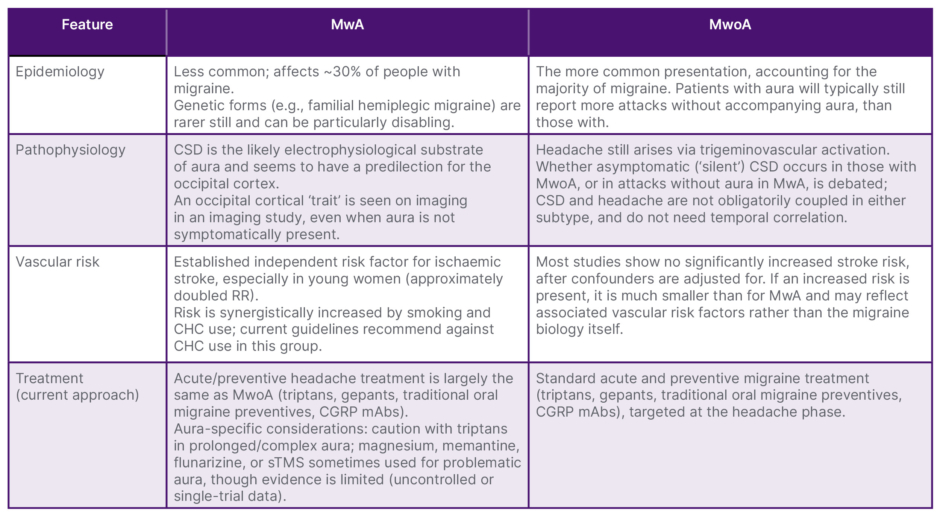
Table 1: Summary of comparisons between MwA and MwoA.
CGRP mAbs: calcitonin gene-related peptide monoclonal antibodies; CHC: combined hormonal contraceptive; CSD: cortical spreading depression; MwA: migraine with aura; MwoA: migraine without aura; RR: relative risk; sTMS: single-pulse transcranial magnetic stimulation.
BIOLOGICAL MECHANISMS
Biologically, cortical spreading depression (CSD) is deemed a likely electrophysiological substrate of the migraine aura.7 In animal models, CSD can activate the trigeminovascular system and meningeal nociceptors.8 Human neuroimaging studies have shown changes in cerebral blood flow and blood-oxygen-level dependent signal during aura, supporting CSD as a plausible substrate, which may then link cortical events to subsequent trigeminovascular activation.7,9 However, CSD and trigeminal nociception are not obligatorily coupled; aura can occur without subsequent headache, and headache without a preceding aura.8 This temporal dissociation, the fact that the majority of patients with migraine have MwoA, and the fact that those who experience aura typically have more attacks without aura than with, help explain why MwA and MwoA share broadly similar treatment strategies, since the headache itself appears to arise through trigeminovascular activation, whether or not an aura is symptomatically present. The precise mechanistic and temporal relationships between CSD and headache generation in humans, while increasingly supported by imaging evidence, are not yet fully resolved. A summary of possible links between the processes is shown in Figure 1.
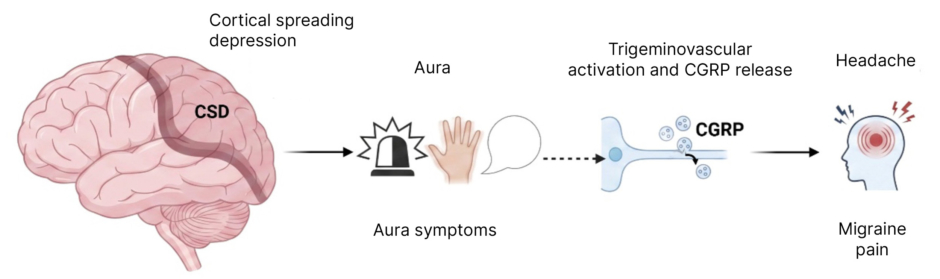
Figure 1: The possible links between CSD, aura, CGRP release, and migraine headache.
Image made using BioRender.com.
CGRP: calcitonin gene-related peptide; CSD: cortical spreading depression.
TREATMENT
Some agents that act on CSD may, on mechanistic grounds, offer greater benefit in MwA, although this idea rests on pathophysiological plausibility rather than direct clinical evidence, and it remains debated whether CSD occurs in an asymptomatic form in silent cortex in patients who never experience aura,10 or indeed in those with MwA who also have attacks without accompanying aura. Imaging studies suggest an aura ‘trait’ within the occipital cortex in patients with MwA regardless of whether aura is symptomatically present, pointing to a genetic vulnerability of this brain area in this patient group.11 Single-pulse transcranial magnetic stimulation (sTMS) inhibits CSD in animals,12 and, in a randomised sham-controlled trial, was an effective option for the acute treatment of MwA via neuromodulation of the occipital cortex.13 Magnesium may be beneficial in MwA, possibly through N-methyl-D-aspartate (NMDA) antagonism, both in the acute phase, including termination of prolonged aura,14 and in migraine prevention.15
However, intravenous magnesium can paradoxically and anecdotally worsen headache in some patients (although there is no strong published evidence that magnesium directly worsens migraine in a reproducible subset of patients), and evidence for an aura-specific benefit is limited to small case series and open-label data rather than controlled trials. Gastrointestinal side effects can complicate treatment. Among NMDA receptor antagonists, memantine has also been reported, in uncontrolled data, to reduce aura,16 and is used in some settings for migraine prevention.17 In the authors’ experience, they are more likely to offer flunarizine18 or memantine in patients with problematic aura. sTMS is not widely available in most clinical settings. The safety of triptans in MwA remains debated. In the authors’ practice, they avoid them in patients with prolonged or complex aura (such as hemiplegic or brainstem aura), but are less cautious when typical aura is present and lasts less than an hour.
In clinical practice, there are therefore common themes in managing MwA and MwoA, although a few special considerations exist in MwA. These include the modestly increased stroke risk in MwA, especially in young women who are smokers and/or using oestrogen-containing contraceptives. Co-existing vascular comorbidities like hypertension may contribute to this risk in those affected. New or prolonged aura, aura without headache, and associated atypical neurological features (an abrupt onset with the deficit maximal symptom intensity from the onset, predominantly negative symptoms, associated fever, altered mental status, or focal neurological deficit) are among some of the red flags when evaluating a patient with headache, and should prompt investigation for alternative causes such as ischaemic stroke or transient ischaemic attack. In observational and meta-analytic data, MwA is an established independent risk factor for ischaemic stroke, reflecting shared vascular pathophysiology and some overlapping risk factors between aura and stroke.19 A central hypothesis is that CSD induces focal oligaemia that can progress to infarction in neural tissue with a genetic or metabolic predisposition. The aura phase also appears to release inflammatory cytokines. These trigger endothelial activation, oxidative stress, and a systemic prothrombotic state.19 In women with MwA, observational data indicate that combined hormonal contraceptives increase stroke risk synergistically, particularly in smokers.20 Current guidelines from major medical societies therefore contraindicate or recommend against their use in this population.21 Whilst recent large-scale observational studies suggest that modern low-dose formulations of combined hormonal contraceptives may carry lower absolute stroke risk than previously estimated,22 these findings remain insufficient to change current recommendations. Shared decision-making that carefully weighs individual cardiovascular risk factors, age-related absolute risk, and alternative contraceptive options remains essential when counselling women with MwA about contraception. Smoking is a major modifiable contributor to ischaemic stroke risk in this group, and its cessation should be actively encouraged as a priority in reducing that risk.
NOVEL THERAPIES
The newest drugs in clinical practice for migraine are the calcitonin gene-related peptide (CGRP)-targeted treatments, which comprise the preventive CGRP monoclonal antibodies (mAbs) and the acute and preventive small-molecule CGRP receptor antagonists (gepants). Although CGRP mAbs effectively reduce migraine frequency, their large molecular size limits penetration across the blood–brain barrier, so their primary site of action has been thought to be predominantly peripheral. However, preliminary data suggest that some cerebrospinal fluid penetration occurs.23 Accordingly, preclinical evidence indicates that mAbs probably do not prevent the initiation of CSD itself, but may modulate it by attenuating the subsequent trigeminovascular sensitisation.24 In animal models, gepants may also modulate CSD without blocking its initiation,25 although they may penetrate the blood–brain barrier at higher concentrations than mAbs.26 Gepants have a more favourable vascular profile than triptans and mAbs, owing to their lack of vasoconstrictive properties, short half-lives, and reversible receptor antagonism. Unlike triptans, they do not typically raise blood pressure. The acute treatment of the headache is similarly unaffected by aura status: triptans taken during the aura, before pain onset, neither prevent nor delay the subsequent headache,27 confirming that the aura offers no window for earlier abortive treatment in studies to date. Further studies evaluating gepants administered during aura may follow, as recent evidence suggests efficacy when taken during the migraine prodrome for preventing subsequent headache.28 For patients with complex or prolonged aura, the non-vasoconstrictive profile of gepants makes them a reasonable alternative to triptans; here the relevant consideration is vascular rather than temporal. Future research should clarify how these novel therapies influence CSD, and therefore aura, so that treatment can be directed at neuronal mechanisms rather than chosen on vascular grounds alone.
CONCLUSION
Despite the mechanistic and clinical features that set MwA apart, its treatment remains, for now, largely indistinguishable from that of MwoA. This shared approach is pragmatic and has a mechanistic rationale: the headache appears to arise through trigeminovascular activation regardless of migraine subtype, and the newer, mechanism-specific treatments were tested in trials that combined MwA and MwoA, and were not powered to detect differences between them. The aura itself is the exception, with no evidence-based targeted treatment of its own. Historically, we have relied on non-specific agents developed for other indications for migraine treatment, and side effects and poor tolerability have caused patient and physician frustration and delayed adequate control. CGRP-targeted therapies have started to change the landscape for both acute and preventive migraine treatment, but their value in MwA compared with MwoA remains currently undefined, as does their relationship to CSD, a process that appears distinct from, and perhaps parallel to, trigeminovascular activation. Progress towards treatments tailored to MwA will depend on several advances in the current era: clarifying how CGRP-targeted therapies act on CSD, and whether this brings any subtype-specific benefit; and developing treatments aimed at the aura itself, by testing their effect on both the aura and any headache that follows. Designing trials that stratify patients by phenotype rather than combining all heterogeneous patients together, with endpoints and biomarkers able to separate aura from pain mechanisms, will likely contribute to our understanding of any fundamental biological differences between MwA and MwoA going forwards. Until these questions are answered, treatment at the moment cannot be usefully personalised to migraine phenotype broadly in the absence of aura-specific treatment evidence. Hopefully, in the future, advances in human neuroimaging, biological and treatment-related biomarkers, and further understanding of the role of CGRP and other neuropeptides like pituitary adenylate cyclase-activating polypeptide-38 (PACAP-38) in aura, will allow us to better manage the currently underserved MwA patient group.