INTRODUCTION
Across Europe, people living with Parkinson’s disease (PD) increasingly benefit from strong patient advocacy organisations and community-based support groups. These initiatives provide education, psychosocial support, and advocacy, while acting as a bridge between patients, caregivers, and healthcare systems.1,2
It is important to distinguish between patient organisations (PO) and patient support groups (PSG). POs typically operate at a systems level, focusing on advocacy, policy influence, and large-scale awareness initiatives. In contrast, PSGs are centred on the individual illness experience, providing direct peer support, practical guidance, and psychosocial connection throughout the disease journey. While both structures are complementary, PSGs address immediate day-to-day needs that are often unmet within formal healthcare systems.3
In Latvia, however, there is currently no national PSG or formalised network for those with PD. This absence leaves patients and caregivers without a central hub for reliable information, peer connection, or advocacy. Estimates suggest that several thousand individuals are living with PD in Latvia, consistent with prevalence patterns across Europe, yet structured support services remain limited.4
The creation of such a group in Latvia is not just desirable but urgently needed. This feature discusses why PD patient support structures matter, the current gaps in Latvia, the potential benefits for patients and healthcare providers, and the practical steps that could make this initiative a reality.
WHY PSGs MATTER
PD is a complex neurodegenerative disorder with both motor and non-motor symptoms. Beyond tremor, rigidity, and bradykinesia, many individuals experience fatigue, sleep disturbances, anxiety, and cognitive challenges.5,6 These symptoms often extend beyond what neurologists can fully address in brief clinical visits, highlighting the value of community-based support.
POs across Europe play a pivotal role in filling this gap. They provide educational resources tailored to patient and caregiver needs; offer psychosocial support, reducing feelings of isolation and stigma; advocate for equitable access to treatment and services at the national and EU level; and serve as a platform for peer-to-peer knowledge exchange, allowing patients to learn from others’ lived experiences.
More specifically, PSGs provide safe, structured environments where individuals can share personal experiences, develop coping strategies, and receive emotional support from peers facing similar challenges. This peer-based model has been shown to reduce isolation and improve psychological resilience.3
Evidence suggests that participation in support groups improves patient empowerment, disease knowledge, coping strategies, and even adherence to treatment.7 For example, European initiatives have demonstrated that patient-centred engagement enhances patients’ ability to participate in care decisions and improves communication with healthcare providers.8 Moreover, such groups act as a structured way for policymakers and clinicians to hear directly from those affected.
THE CURRENT SITUATION IN LATVIA
Despite the benefits seen elsewhere, Latvia lacks a national PD patient support organisation. From informal conversations with patients, it is clear that many feel isolated and uncertain about how to navigate their disease outside of clinical encounters. For example, patients frequently report feeling that clinical consultations focus primarily on symptom management, while broader concerns, such as coping with fatigue, maintaining social participation, or managing uncertainty about disease progression, remain insufficiently addressed.
Challenges are particularly acute in rural regions. Patients often face long travel distances to see neurologists, limited local resources, and few opportunities to connect with others who share their experiences. Some informal peer networks exist in small circles, but there is no coordinated national structure, educational platform, or collective voice.
The absence of such a group also places Latvia at a disadvantage compared with other European countries. Organisations like Parkinson’s Europe and the Parkinson’s Foundation list dozens of member associations across the continent.1,2 In fact, the majority of European countries have at least one national PD support group, highlighting Latvia as a notable gap in the regional support landscape.
LESSONS FROM OTHER CONTEXTS
The impact of support groups in other countries demonstrates what Latvia could gain. For instance, surveys across Europe have shown that patient advocacy improves quality of life, enhances patient involvement in care, and strengthens collaboration with healthcare providers.5
In addition, recent research conducted in Latvia itself highlights how clinical symptoms, such as fatigue and cognitive impairment, profoundly affect quality of life for patients with PD.6 Yet, without a support infrastructure, these issues are rarely addressed outside clinical management. Establishing a support group would provide a mechanism to address exactly these unmet needs.
Importantly, PSGs also contribute to biomedical research. They facilitate patient recruitment for studies, support the dissemination of research findings in accessible formats, and help ensure that research priorities reflect patient needs and lived experiences. Engaged patient communities have been shown to strengthen the relevance and impact of clinical and translational research in PD.7
PRACTICAL STEPS TOWARDS BUILDING A LATVIAN PD SUPPORT GROUP
Creating a PO does not require large-scale infrastructure or funding. Successful models elsewhere suggest a phased, community-driven approach:
- Establish a core team: A small group of patients, caregivers, neurologists, and allied health professionals could serve as the founding committee.
- Develop a central contact point: This could begin as a website or social media platform offering curated educational resources in Latvian and links to reliable international materials.
- Organise pilot meetings: Monthly virtual or in-person meetings could provide a forum for sharing experiences and inviting guest speakers.
- Seek collaboration: Partnerships with Parkinson’s Europe and regional POs would enable knowledge transfer and potential funding opportunities.
- Scale gradually: Over time, the initiative could grow into a national advocacy body, representing Latvian patients at European levels and engaging policymakers in dialogue. (Table 1) outlines a simple staged roadmap.
This gradual scaling approach is particularly important, as it allows PSGs to evolve organically into broader POs, thereby linking individual-level support with system-level advocacy.
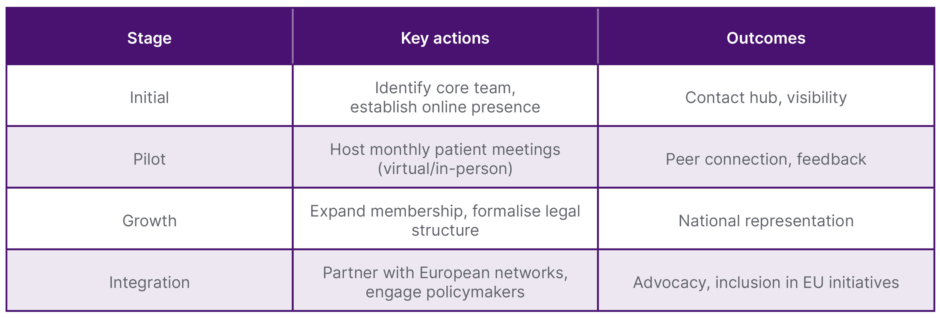
Table 1: A staged roadmap for establishing a Latvian Parkinson’s disease support group.
IMPLICATIONS FOR HEALTHCARE AND POLICY
The establishment of a PD support group in Latvia would not only benefit patients and caregivers, but also healthcare providers and policymakers. Neurologists and allied health professionals would gain a channel to better understand patient experiences, while policymakers would receive direct feedback from those affected by PD.
From a health system perspective, PSGs may also contribute to improved self-management, reduced healthcare utilisation for preventable complications, and more efficient use of specialist services.
At a societal level, such an initiative would help reduce stigma, promote early diagnosis, and encourage more proactive disease management. Importantly, Latvia’s integration into European PD networks would amplify the patient voice in shaping research and policy agendas.7
A clear call to action is therefore warranted: national stakeholders, including the Ministry of Health, neurological societies, and patient advocacy bodies, should prioritise the establishment and support of a PD PSG as part of a broader strategy for chronic disease management.
FUTURE PROSPECTS AND REMAINING QUESTIONS
Looking ahead, the question is not whether Latvia needs a PD support group, but how to make it happen. The barriers, such as limited resources, lack of awareness, and geographic dispersion, are real but not impossible to overcome.
Key unanswered questions include:
- Who will take the lead in initiating this effort?
- How can patients in rural regions be meaningfully included?
- What role can digital platforms play in overcoming geographic barriers?
- How can sustainable funding be secured without overburdening patients?
Addressing these questions requires collaboration across patients, clinicians, non-governmental organisations, and policymakers. Even small first steps, such as creating an educational website or hosting a regular patient meeting, would represent meaningful progress.
CONCLUSION
Latvia’s patients with PD and caregivers currently lack a structured support system. Lessons from across Europe show that PSGs enhance empowerment, improve quality of life, and provide a collective voice in healthcare decision-making. Establishing such a group in Latvia would not require major resources but would deliver significant benefits for patients, families, and the healthcare system.
The time to act is now.