BACKGROUND AND AIMS
Clinical predictors such as maternal age and ovarian reserve are well-established determinants of IVF success.1 Increasing evidence suggests that environmental and lifestyle exposures also influence reproductive outcomes; however, these factors remain insufficiently investigated in low- and middle-income countries.2,3 In Lebanon, reproductive research has historically focused on maternal and child health, with limited attention paid to the role of environmental exposures in assisted reproductive technologies.4,5 This study aimed to investigate the specific contribution of environmental, chemical, and lifestyle exposures to live birth outcomes among Lebanese patients who have undergone IVF, while integrating complementary biomonitoring evidence from the Environmental Exposures in Lebanese Infants (EELI) mother–child cohort to provide a broader, evidence-based understanding of reproductive and early-life environmental health.4-7
MATERIALS AND METHODS
This prospective cohort study was conducted within the Fertility in Light of Environmental Exposures and Lifestyle (FEEL) study and included infertile patients undergoing IVF treatment.6 Participants were prospectively followed throughout their treatment cycles to accurately assess cumulative live birth outcomes. Demographic, clinical, lifestyle, dietary, and environmental exposure data were collected using standardised questionnaires and clinical assessments. Principal component analysis was performed to derive robust composite environmental exposure measures, while multivariable logistic regression was used to identify independent predictors of live birth after adjustment for relevant clinical and sociodemographic confounders. To complement these findings, biomonitoring evidence from the EELI cohort, including analyses of heavy metals and legacypesticides in cord blood, was incorporated to contextualise environmental exposure pathways during pregnancy and early life.4,5,7
RESULTS
Higher anti-Müllerian hormone (AMH) was independently associated with greater odds of live birth (odds ratio [OR]: 1.94; 95% CI: 1.28–2.94). A principal component representing lower cumulative chemical exposure was also positively associated with live birth (OR: 1.72; 95% CI: 1.12–2.64). Conversely, household pesticide exposure was associated with significantly lower odds of live birth (OR: 0.54; 95% CI: 0.31–0.93), while higher environmental noise exposure demonstrated a negative association with reproductive success, including perceived noise affecting sleep (moderate disagreement: OR: 0.020; 95% CI: 0.0007–0.55; strong disagreement: OR: 0.051; 95% CI: 0.003–0.80). Higher maternal education and greater dietary energy intake were positively associated with IVF outcomes. Complementary evidence from the EELI cohort demonstrated widespread prenatal environmental exposure, with heavy metals detected in nearly all cord blood samples (n=74), a median cord blood lead concentration of 5.45 μg/L, and detectable levels of legacy pesticides, confirming fetal exposure to environmental contaminants before birth. An overview of the principal findings from the FEEL and EELI cohorts, together with the integrated reproductive exposome framework, is presented in Figure 1.
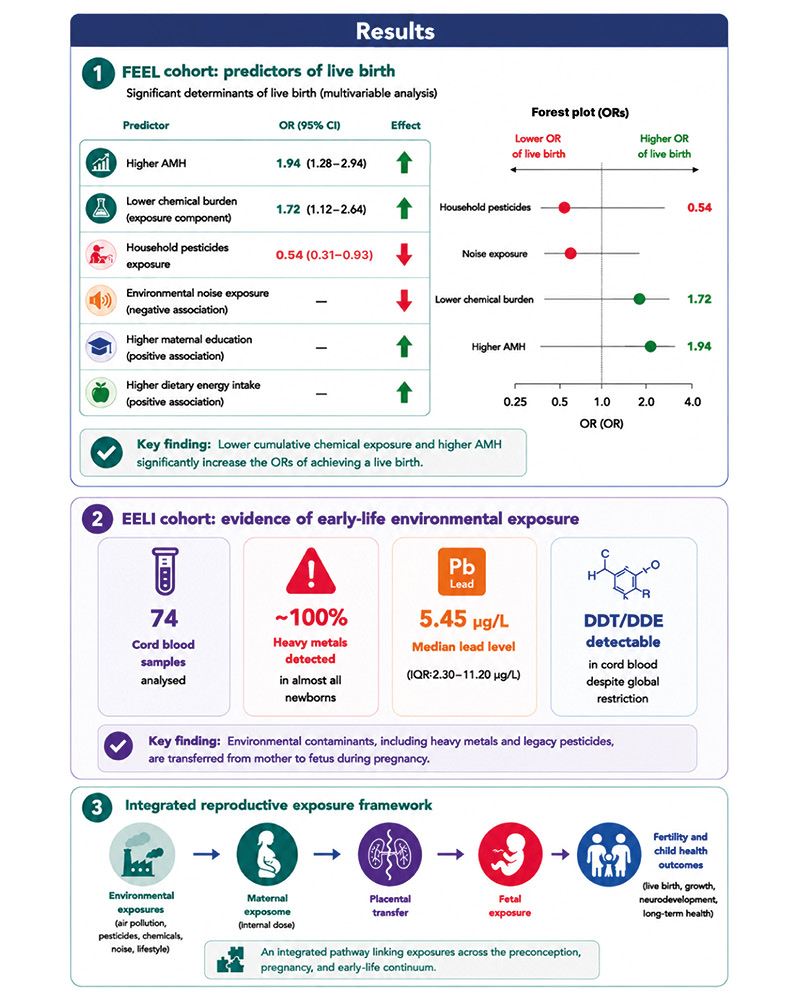
Figure 1: Environmental, lifestyle, and biomonitoring determinants of live birth outcomes in Lebanese patients undergoing IVF.
Created using ChatGPT (OpenAI, San Francisco, California, USA).
AMH: anti-Müllerian hormone; DDE: dichlorodiphenyldichloroethylene; DDT: dichlorodiphenyltrichloroethane; IQR: interquartile range; OR: odds ratio.
CONCLUSION
Clinical factors remain important determinants of IVF success, but modifiable environmental and lifestyle exposures also contribute to reproductive outcomes. Lower chemical exposure and reduced household pesticide exposure were associated with improved live birth outcomes, while biomonitoring evidence confirmed that environmental contaminants are transferred to the fetus during pregnancy. These findings support the integration of exposome assessment into routine fertility care as a feasible, preventive strategy that complements conventional clinical management. Incorporating environmental health perspectives into reproductive medicine may improve IVF success rates, promote healthier pregnancies, and contribute to better long-term health outcomes across the life course.