Abstract
Non-obstructive azoospermia and severe oligoasthenoteratozoospermia are among the most challenging forms of male factor infertility, with few disease-modifying options. Intratesticular injection of autologous platelet-rich plasma (PRP) has recently emerged as a regenerative strategy to modulate the testicular microenvironment, support spermatogenesis, and improve sperm retrieval. PRP is an autologous blood product enriched with growth factors such as platelet-derived growth factor, vascular endothelial growth factor, transforming growth factor-β, and insulin-like growth factor-1, which promote angiogenesis, cell proliferation, and tissue repair. A search of PubMed/MEDLINE, Scopus, Web of Science, and ClinicalTrials.gov (January 2000–February 2026) identified 21 relevant items, including clinical studies, reviews, registrations, and case reports. Uncontrolled prospective series report sperm retrieval in a proportion of patients with non-obstructive azoospermia after failed microsurgical sperm retrieval from the testicle following intratesticular PRP, although the absence of control arms means a causal contribution of PRP cannot be established; a single randomised trial in severe oligoasthenoteratozoospermia provides controlled evidence of improved sperm parameters. Overall, current evidence is limited by small, mainly single-arm studies, heterogeneous protocols, and short follow-up. RCTs with standardised PRP preparation are needed before routine clinical use can be recommended.
Key Points
1. Non-obstructive azoospermia and severe spermatogenic impairment remain major causes of male infertility, with limited options for improving endogenous sperm production before surgical sperm retrieval.2. This review examines the biological rationale, available clinical evidence, and practical considerations for intratesticular platelet-rich plasma administration in men with impaired spermatogenesis.
3. Intratesticular platelet-rich plasma is an investigational approach; larger well-designed controlled studies are needed to establish efficacy, safety, optimal protocols, and its role alongside testicular sperm extraction.
INTRODUCTION
Male factor infertility contributes to approximately half of all infertility cases, affecting one in six couples worldwide.1 Azoospermia, defined as the complete absence of spermatozoa in the ejaculate, represents the most severe manifestation of male infertility, diagnosed in approximately 1% of all men and 10–15% of those presenting for fertility evaluation.2,3 Non-obstructive azoospermia (NOA), which accounts for the majority of men with azoospermia, results from impaired spermatogenesis due to primary testicular failure, genetic abnormalities, or hypothalamic–pituitary dysfunction, rather than from ductal obstruction.3-5
The histological landscape of NOA is heterogeneous, encompassing Sertoli cell-only syndrome, maturation arrest at various stages, and hypospermatogenesis.5 These patterns arise from diverse aetiologies, including Y-chromosome microdeletions, Klinefelter syndrome, cryptorchidism, gonadotoxic exposures, and a substantial proportion of idiopathic cases.3-5 Severe oligoasthenoteratozoospermia (OAT), while not strictly azoospermia, represents another clinically challenging phenotype, in which sperm concentration, motility, and morphology are simultaneously impaired, often accompanied by elevated oxidative stress and DNA fragmentation.
Current management of NOA centres on microdissection testicular sperm extraction (mTESE), which yields positive sperm retrieval in approximately 40–60% of cases, depending on the underlying histology.4 Varicocelectomy in the presence of clinical varicocele and hormonal optimisation (gonadotropin therapy for hypogonadotropic hypogonadism, aromatase inhibitors, or selective oestrogen receptor modulators) may enhance outcomes in selected patients.5 However, when mTESE fails, few evidence-based options exist, and repeat mTESE success rates decline with each subsequent attempt.6-8
In this context, platelet-rich plasma (PRP) has emerged as a regenerative adjunct aiming to modulate the testicular microenvironment and stimulate residual spermatogenesis.5,6 Intratesticular PRP injection has been proposed specifically as a salvage strategy for NOA patients with prior failed mTESE and as an adjunctive therapy for severe OAT.7-9 This narrative review synthesises the current evidence on intratesticular PRP in severe male factor infertility and NOA, evaluating biological rationale, preclinical data, clinical outcomes, safety, and research gaps, with the aim of informing future clinical practice and trial design.
METHODS
Search Strategy
A comprehensive literature search was performed using PubMed/MEDLINE, Scopus, Web of Science, and ClinicalTrials.gov databases from January 2000–February 2026. The following keywords and their combinations were used: “platelet-rich plasma,” “PRP,” “intratesticular,” “testicular injection,” “non-obstructive azoospermia,” “azoospermia,” “severe oligoasthenoteratozoospermia,” “male infertility,” “sperm retrieval,” and “spermatogenesis.” Reference lists of identified articles were manually screened to capture additional relevant publications.
BIOLOGICAL RATIONALE FOR INTRATESTICULAR PRP
PRP Composition and Growth Factors
PRP is an autologous, centrifuged blood product with a platelet concentration 3–7 times above physiological levels.10,11 Once activated, platelets release the contents of their α-granules, including platelet-derived growth factor (PDGF), vascular endothelial growth factor (VEGF), transforming growth factor-β (TGF-β), epidermal growth factor (EGF), fibroblast growth factor (FGF), and insulin-like growth factor-1 (IGF-1), along with cytokines, chemokines, and adhesive proteins such as fibrin, fibronectin, and vitronectin. Together, these factors drive angiogenesis, cell migration, proliferation, differentiation, and extracellular matrix remodelling.5,10 The principal growth factors and their proposed testicular actions are summarised in Table 1.
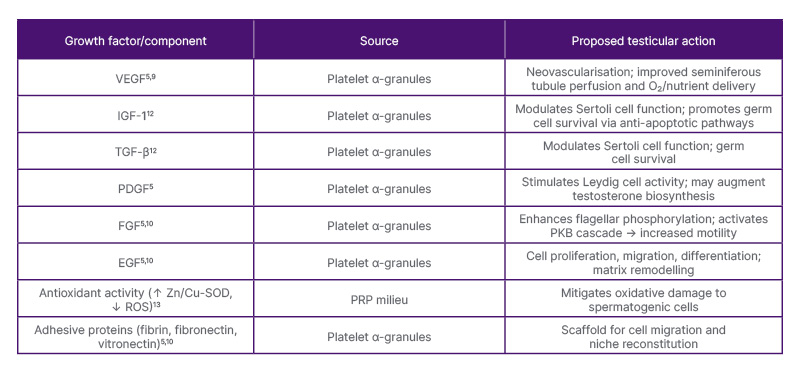
Table 1: PRP growth factors and proposed mechanisms in testicular tissue.
EGF: epidermal growth factor; FGF: fibroblast growth factor; IGF-1: insulin-like growth factor-1; PDGF: platelet-derived growth factor; PKB: protein kinase B; PRP: platelet-rich plasma; ROS: reactive oxygen species; SOD: superoxide dismutase; TGF-β: transforming growth factor- β; VEGF: vascular endothelial growth factor; Zn/Cu-SOD: zinc/copper-containing superoxide dismutase.
Mechanism of Action in Testicular Tissue
Within the testicular microenvironment, PRP-derived growth factors may exert their effects through several complementary mechanisms. VEGF promotes neovascularisation and enhances perfusion of the seminiferous tubules, thereby facilitating nutrient and oxygen delivery to the germinal epithelium.5,9 TGF-β and IGF-1 modulate Sertoli cell function and promote germ cell survival via activation of anti-apoptotic pathways.12 PDGF stimulates Leydig cell activity and may augment testosterone biosynthesis.5 FGF enhances flagellar phosphorylation and activates the protein kinase B signalling cascade, thereby increasing sperm motility. In addition, PRP demonstrates antioxidant activity through upregulation of superoxide dismutase and attenuation of reactive oxygen species generation, mitigating oxidative damage to spermatogenic cells.13
PRP has further been shown to support the self-renewal and proliferation of spermatogonial stem cells (SSC) in both 2D and 3D culture systems derived from human testicular tissue.13,14 PRP-based scaffolds reconstitute a permissive niche for SSC proliferation, with functionality confirmed by xenotransplantation into azoospermic mice. Collectively, these findings provide a mechanistic basis for the hypothesis that intratesticular PRP may stimulate residual spermatogonial progenitors in men with NOA.
Ex Vivo Evidence on Human Testicular Tissue
Demyashkin et al.12 investigated the effect of leukocyte-poor PRP (LP-PRP) on archival testicular biopsies from patients with NOA. LP-PRP administration led to an exponential release of growth factors from platelet α-granules, including TGF-β, IGF-1, and VEGF-A, resulting in increased expression of proliferation markers (Ki-67) and the anti-apoptotic protein Bcl-2, alongside decreased levels of pro-apoptotic markers caspase-3 and p53. These data indicate that LP-PRP can restore the proliferative–apoptotic balance in the germinal epithelium, providing a potential cellular basis for improved spermatogenesis following intratesticular PRP injection.
INTRATESTICULAR PRP IN NON-OBSTRUCTIVE AZOOSPERMIA: CLINICAL EVIDENCE
The clinical studies of intratesticular PRP in NOA and severe OAT are summarised in Table 2.
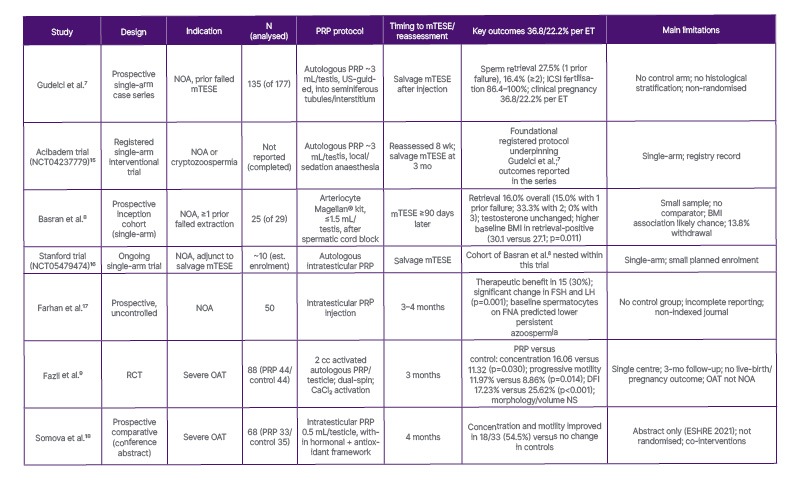
Table 2: Clinical studies of intratesticular PRP in NOA and severe OAT.
ET: embryo transfer; Magellan®: Arteriocyte (now Isto Biologics), Hopkinton, Massachusetts, USA; mTESE: microdissection testicular sperm extraction; mo: month; NOA: non-obstructive azoospermia; OAT: oligoasthenoteratozoospermia; PRP: platelet-rich plasma; US: ultrasound; Wk: week.
Acibadem Prospective Series
The largest published clinical experience with intratesticular PRP in NOA comes from the Acibadem Maslak Hospital group in Istanbul, Türkiye.7 Gudelci et al.7 reported a prospective case series of 177 men with NOA, of whom 135 met eligibility criteria, who underwent intratesticular autologous PRP injection prior to salvage mTESE. PRP was prepared from autologous blood and injected percutaneously into the seminiferous tubules or interstitial tissue under ultrasound guidance, with approximately 3 mL per testis and without tension on the tunica albuginea.5,7
Positive sperm retrieval rates were 27.5% after a single prior failed mTESE and 16.4% after two or more failures. Among those with successful retrieval, ICSI fertilisation rates were 86.4% and 100%, and clinical pregnancy rates 36.8% and 22.2% per embryo transfer, respectively. These data suggest that PRP may offer a meaningful chance of sperm recovery even in the salvage setting, though the absence of a control arm precludes causal inference. The series’ principal strengths are its sample size, the largest to date, and its real-world salvage context. Its interpretation is nonetheless limited by the single-arm, non-randomised design and the lack of histological stratification of responders.
Acibadem Clinical Trial (NCT04237779)
The Acibadem group also registered a single-arm interventional trial (NCT04237779) evaluating intratesticular PRP in men with NOA or cryptozoospermia.15 Autologous PRP (approximately 3 mL per testis) was injected under local or sedation anaesthesia, and participants were reassessed at 8 weeks (semen analysis, testicular volume, follicle-stimulating hormone, testosterone), followed by salvage mTESE at 3 months post-injection.15 This trial, listed as completed, represents the foundational registered protocol for the clinical series published by Gudelci et al.7,15 The narrative review by Cakiroglu et al.6 synthesised the rationale, animal data, and clinical outcomes from this programme, concluding that intratesticular PRP is a promising, but investigational approach warranting controlled trials.6,15
Stanford Inception Cohort
Basran et al.8 at Stanford University, California, USA, reported an inception cohort of 29 men with NOA and at least one prior failed surgical sperm extraction, enrolled between January 2023–February 2025.8 PRP was prepared using a Magellan® kit (Arteriocyte, now Isto Biologics, Hopkinton, Massachusetts, USA), and up to 1.5 mL was injected into each testicle following a spermatic cord block; microscopic-assisted testicular sperm extraction was performed at least 90 days later.8
Of 25 patients who completed the protocol, four (16.0%) achieved positive sperm retrieval: three out of 20 (15.0%) with one prior failed procedure, one of three (33.3%) with two prior failed procedures, and zero of two with three prior failed procedures. Total testosterone was unchanged after treatment, and those with successful retrieval had a higher baseline BMI (30.1 versus 27.1; p=0.011). Four patients (13.8%) withdrew. The authors concluded that autologous intratesticular PRP is feasible and well tolerated, with a low complication rate and rapid recovery, but that current evidence is insufficient to establish efficacy. Its limitations are the small sample, the absence of a comparator arm, and the counterintuitive BMI-retrieval association, which more likely reflects chance in a small dataset than a true predictor.
This cohort is nested within the ongoing single-arm Platelet Rich Plasma Testis Treatment for Infertile Men trial (NCT05479474) at Stanford University, which has an estimated enrolment of 10 participants and investigates PRP as an adjunct to salvage mTESE in NOA.16
Al-Nahrain University, Iraq
An earlier study by Farhan et al.17 examined 50 patients with NOA who underwent intratesticular PRP injection. Therapeutic benefits were observed in 15 patients (30%) within 3–4 months after PRP injection.17 Results showed a highly significant difference in follicle-stimulating and luteinising hormonal levels following PRP injection (p=0.001). Patients with spermatocytes identified on initial fine needle aspiration had a lower percentage of persistent azoospermia compared to those without pre-existing spermatocyte evidence, suggesting that baseline histological status may predict PRP response.17 This study is limited by the absence of a control group, incomplete methodological reporting, and publication in a non-indexed regional journal, so its findings should be regarded as hypothesis-generating rather than confirmatory.
INTRATESTICULAR PRP IN SEVERE OLIGOASTHENOTERATOZOOSPERMIA
IRCT20220317054318N2 Clinical Trial
Fazli et al.9 conducted an RCT in 88 men with severe OAT (sperm count ≤4×10⁶ /mL, progressive motility ≤30%, normal morphology ≤1%) at Fatemieh Hospital, Hamedan, Iran (IRCT20220317054318N2). Participants were allocated to control (n=44) or PRP intervention (n=44) groups, the latter receiving 2 cc of activated autologous PRP per testicle, prepared by dual-spin centrifugation and activated with calcium chloride.9
At 3 months, the PRP group showed significantly higher sperm concentration (16.06±15.16 versus 11.32±8.44; p=0.030) and progressive motility (11.97±11.82% versus 8.86±7.79%; p=0.014), and a significantly lower DNA fragmentation index (17.23±9.15% versus 25.62±12.84%; p<0.001) than controls. No significant differences were observed in morphology (p=0.628) or semen volume (p=0.663). These results are shown in Figure 1.
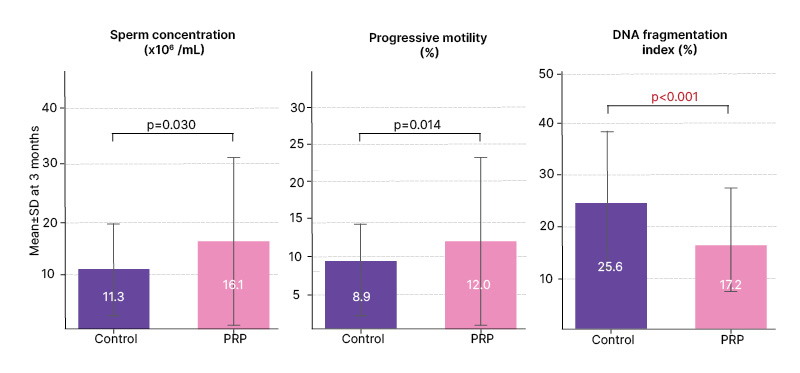
Figure 1: Randomised trial of intratesticular PRP in severe OAT: sperm parameters at 3 months.9
PRP n=44, control n=44. Lower DNA fragmentation index indicates improvement. Only controlled (randomised) datasets in this review.
OAT: oligoasthenoteratozoospermia; PRP: platelet-rich plasma.
2021 Prospective Study
Somova et al.18 compared sperm parameters in 33 men with severe OAT who received intratesticular PRP (0.5 mL per testicle) with 35 controls who did not receive PRP, all within a 6-month treatment framework that included hormonal and antioxidant therapy.18 After 4 months, sperm concentration and motility improved in 18 of 33 men (54.5%) in the PRP group compared with their baseline, while no changes were observed in the control group. While published only as a conference abstract, this study provided early clinical signals for the potential of intratesticular PRP in OAT.
IN VITRO AND CRYOPRESERVATION APPLICATIONS RELEVANT TO INTRATESTICULAR PRP
PRP and Oxidative Stress Protection
Bader et al.13 treated semen samples from 30 healthy men with increasing PRP concentrations (2%, 5%, 10%) in the presence or absence of hydrogen peroxide-induced oxidative stress.13 The 2% PRP concentration yielded optimal results, significantly improving progressive and total motility while reducing reactive oxygen species-positive cells, DNA fragmentation, vacuolisation, and cell death in both stressed and non-stressed spermatozoa. These findings demonstrate that PRP can directly protect spermatozoa from oxidative damage, a mechanism relevant to the intratesticular microenvironment in NOA and OAT where oxidative stress is elevated.
PRP in Spermatogonial Stem Cell Culture
Khadivi et al.14 used PRP as a scaffold for SSC culture from donors who were brain-dead (ages 17–26 years), demonstrating maintained self-renewal markers and functionality confirmed by xenotransplantation into azoospermic mice.14
PRP as a Cryoprotectant
Lorian et al.19 evaluated autologous PRP as an additive to cryopreservation media for OAT semen samples at three platelet concentrations (1×10⁵ /μL, 0.5×10⁵ /μL, and 0.25×10⁵ /μL). Adding PRP at 1×10⁵ /μL was shown to reduce the adverse effects of cryopreservation on sperm parameters, including DNA fragmentation and protamine deficiency.19 Here, the concentration is reported as platelet count per microlitre of PRP rather than as a percentage volume fraction, reflecting a different reporting convention across studies.
SYSTEMATIC REVIEWS
Moradian et al.20 conducted a PRISMA-compliant, PROSPERO-registered systematic review and it concluded that PRP supplementation of culture media may enhance in vitro sperm generation; its incorporation into incubation and cryopreservation protocols is associated with improved motility, viability, and structural integrity; in vivo intratesticular injection may improve sperm parameters, hormonal balance, and testicular tissue restoration; and PRP may reduce testicular toxicity and ischaemia-reperfusion injury through antioxidative and tissue-reparative mechanisms.20 The authors emphasised the need for standardised protocols, long-term efficacy and safety evaluation, and elucidation of molecular mechanisms before clinical translation.
Pang21 conducted the first systematic review focusing exclusively on human studies of PRP in male factor infertility, following the PRISMA 2020 statement with risk-of-bias assessment using JBI checklists. Of 119 articles retrieved, 10 met pre-defined population, intervention, comparison, and outcome criteria. PRP appeared to improve semen parameters, reduce DNA fragmentation, enhance recovery of cryopreserved sperm, and increase surgical sperm retrieval rates.21 The review noted substantial heterogeneity in inclusion criteria and outcomes that limited quantitative synthesis, concluding that early data are promising but that further well-designed clinical studies are needed.
SAFETY, TECHNIQUE, AND PRACTICAL CONSIDERATIONS
Injection Technique
Across published protocols, intratesticular PRP is an outpatient procedure performed under local anaesthesia (spermatic cord block) or sedation, typically with ultrasound guidance.7,8 PRP is injected percutaneously into the seminiferous tubules or interstitial space using a fine-gauge (21G) or butterfly needle, avoiding tension on the tunica albuginea.5,7 Injection volumes range from 0.5–3 mL per testis, and the interval to subsequent mTESE or semen re-evaluation varies from 8 weeks to 3–4 months.7-9,17,18
PRP Preparation Variability
A critical limitation is the lack of standardised preparation, with protocols differing in centrifugation (single- versus dual-spin), platelet concentration, leukocyte content, activation method, and injectable volume.8,9
Safety Profile
No serious adverse events have been reported across published human series. Intratesticular PRP is described as feasible and well tolerated, with low rates of haematoma, infection, or significant pain, and no documented testicular atrophy on short-term follow-up. However, long-term endocrine and oncologic safety remain unknown, as no study has followed patients beyond the immediate assisted reproductive technology (ART) outcome period.20,21
DISCUSSION
The evidence on intratesticular PRP in male infertility is encouraging, but it is still early. A few themes stand out.
Taken as a whole, the studies point in the same direction despite using very different methods. Ex vivo works on NOA biopsies by Demyashkin et al.12 and in vitro studies of oxidative stress and cryopreservation by Bader et al.13 and Lorian et al.19 show that PRP can protect sperm directly. SSC culture models by Khadivi et al.14 show that testicular cells respond to PRP.14 Uncontrolled NOA series by Gudelci,7 Basran,8 Farhan,17 and their colleagues report sperm retrieval in patients who previously had no options left.7,8,17 The one randomised OAT trial by Fazli et al.9 offers controlled evidence that semen parameters improve.9 The two systematic reviews by Moradian et al.20 and Pang21 arrive at the same overall conclusion on their own. What matters most is that the quality of evidence runs opposite to disease severity. The controlled data come from OAT, while every NOA study lacks a control group. It is this pattern, not the result of any one paper, that shapes how the rest of the findings should be read.
Promise of Intratesticular PRP as a Salvage Strategy
For patients with NOA who have exhausted conventional options, including failed mTESE, the prospect of a minimally invasive autologous intervention that may enable subsequent sperm retrieval is clinically significant. Sperm retrieval rates of 16–27.5% were observed by Gudelci et al.7 and Basran et al.8 in this previously ‘no-option’ population.7,8 These rates are notable, but because both series were uncontrolled, it cannot be determined how many of these retrievals would have occurred at repeat mTESE without PRP; the figures should therefore be read as outcomes associated with, rather than caused by, the intervention. Similarly, the improvements in semen parameters and DNA fragmentation reported by Fazli et al.9 in severe OAT suggest that PRP may modulate testicular function beyond the NOA population.9
Biological Plausibility
The ex vivo data from Demyashkin et al.,12 demonstrating LP-PRP-mediated restoration of the proliferative–apoptotic balance in the germinal epithelium through upregulation of Ki-67 and Bcl-2 and downregulation of caspase-3 and p53, provide a plausible cellular mechanism. Combined with evidence from SSC culture studies and oxidative-stress models, these data establish a coherent mechanistic rationale.12-14 It must be emphasised, however, that biological plausibility and demonstration of cellular effects ex vivo or in vitro do not by themselves establish clinical efficacy. Mechanistic findings indicate that PRP can act on spermatogenic cells under controlled conditions. Whether this translates into clinically meaningful sperm retrieval or live birth in vivo remains an open question that only controlled trials can answer.
Critical Limitations
Despite these encouraging signals, the evidence base has substantial limitations. No RCT has compared intratesticular PRP with sham injection or standard-of-care (observation or repeat mTESE without PRP) in patients with NOA. All prospective NOA series are single-arm and lack blinding, introducing the possibility that observed sperm retrieval could reflect natural heterogeneity or improved surgical technique rather than a PRP effect.7,8 The only controlled, randomised data come from the OAT setting, permitting cautious causal inference there,9 whereas all NOA evidence is observational and single-arm, supporting associations only. In uncontrolled series, improvements observed after PRP cannot be causally attributed to PRP, because regression to the mean, sampling variability between surgical attempts, and refinements in microsurgical technique are uncontrolled alternative explanations. PRP preparation protocols vary substantially across studies, making dose–response relationships and optimal formulations impossible to determine.20,21 Follow-up is limited to sperm retrieval and early ART outcomes; no study reports live birth rates or long-term safety endpoints. Patient selection criteria are inconsistent, and sub-group analyses by histological pattern (Sertoli cell-only versus maturation arrest versus hypospermatogenesis) are largely absent. When these limitations are weighted collectively, the evidence base rests disproportionately on small, single-arm, methodologically heterogeneous studies whose protocols are not directly comparable. Consequently, the apparent consistency of positive signals across reports should not be mistaken for cumulative confirmation, since shared design weaknesses, lack of controls, variable PRP preparation, and short follow-up affect most studies in the same direction and could bias the literature toward favourable outcomes.
FUTURE DIRECTIONS
The most pressing need is a multicentre RCT comparing salvage mTESE with and without intratesticular PRP, with a sham injection arm and blinded sperm retrieval assessment. PRP preparation must also be standardised; centrifugation protocol, platelet concentration, leukocyte content, and injection volume currently vary too much between studies to permit meaningful comparisons. Future trials should stratify by testicular histology and genetic background to identify which patients actually respond, and should report live birth as the primary endpoint rather than sperm retrieval alone. Long-term safety data are missing entirely: no published series has tracked endocrine function, testicular volume, or oncologic outcomes beyond the immediate ART cycle. These gaps must be closed before intratesticular PRP can move from an experimental salvage attempt to a defined treatment option.
CONCLUSION
The case for intratesticular PRP differs by indication. In severe OAT, one randomised trial shows measurable improvement in sperm concentration, motility, and DNA fragmentation, which is controlled evidence, but from a single study. In NOA, the picture is more complicated. Several prospective series report sperm retrievals in patients who had previously failed mTESE, which matters clinically, but none included a control arm, so it is impossible to determine how many retrievals would have occurred regardless. Ex vivo data support the mechanism, where PRP shifts the germinal epithelium toward proliferation and away from apoptosis, but mechanistic plausibility does not substitute for a randomised trial. Preparation methods, patient selection, and follow-up periods vary too much across studies to pool results reliably. Until multicentre RCTs report live-birth outcomes using standardised protocols, intratesticular PRP should remain confined to clinical trials rather than routine clinical practice.